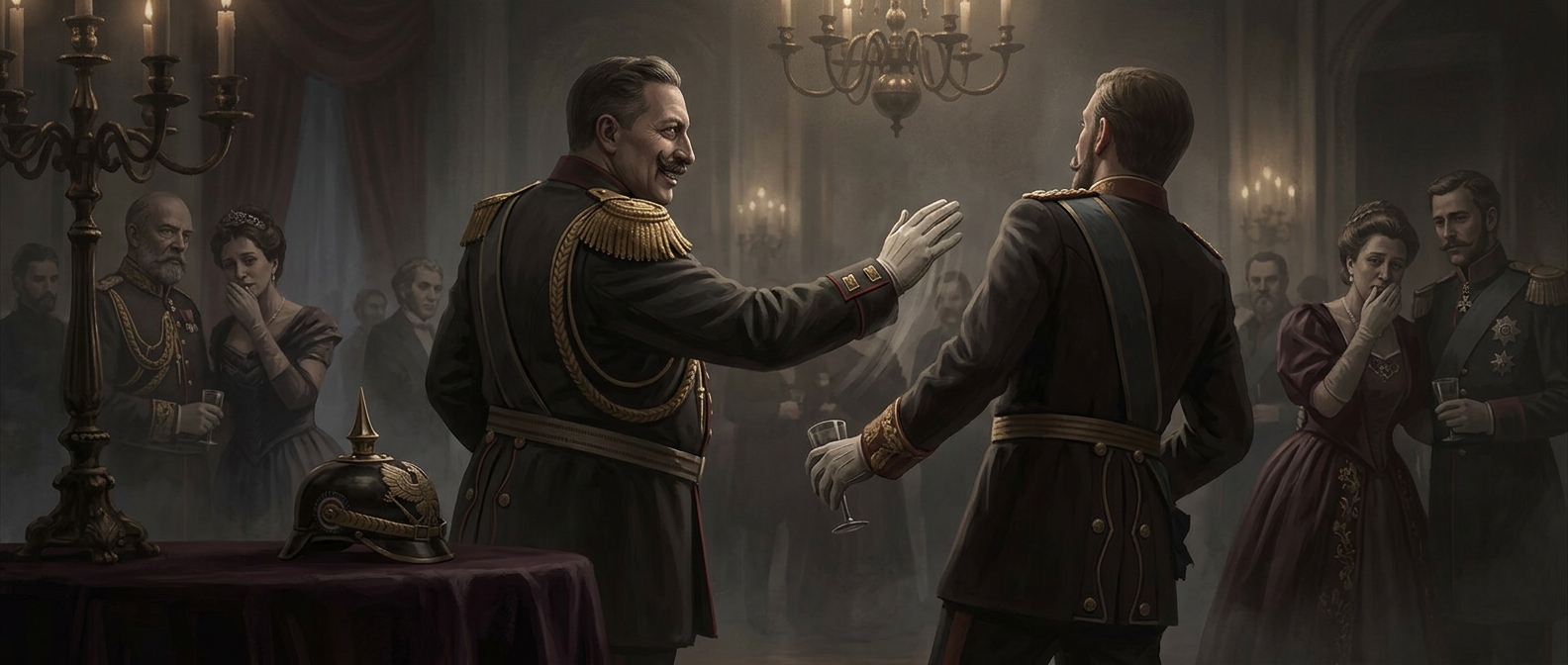
When a Family Joke Crossed a Royal Line
Wilhelm II’s reported slap of Bulgaria’s monarch is striking because it compresses two kinds of relationship into one awkward moment. European dynasties were tightly connected by marriage and ancestry, so rulers could meet as cousins. But kinship did not make them ordinary relatives: each monarch also represented a state, and public respect carried political weight.
The anecdote says the encounter happened during a yacht trip and that the Bulgarian king packed up and left after Wilhelm struck him hard. The king was Ferdinand I of Bulgaria, whose country had its own ruler and interests. Even among royal relations, a physical joke could therefore feel less like harmless teasing than a breach of personal dignity—and a reminder that one sovereign could not simply treat another as a subordinate.
The Limits of Royal Familiarity
A yacht offered an unusually informal setting, away from the ceremony of a court or a formal diplomatic reception. Yet informality could not erase rank or national standing. A gesture intended as horseplay, or remembered that way by later tellers, could become an insult when the person on the receiving end was both a relative and a king.
The story survives as a reported episode, not a detailed record of what either man intended. Its appeal lies in the sharp contrast: Europe’s monarchs could share family ties and private leisure, but their public roles followed them aboard ship. In this version of royal cousinhood, one slap was enough to end the visit.