Why a Tall Cargo Stack Is Hard to Keep Upright
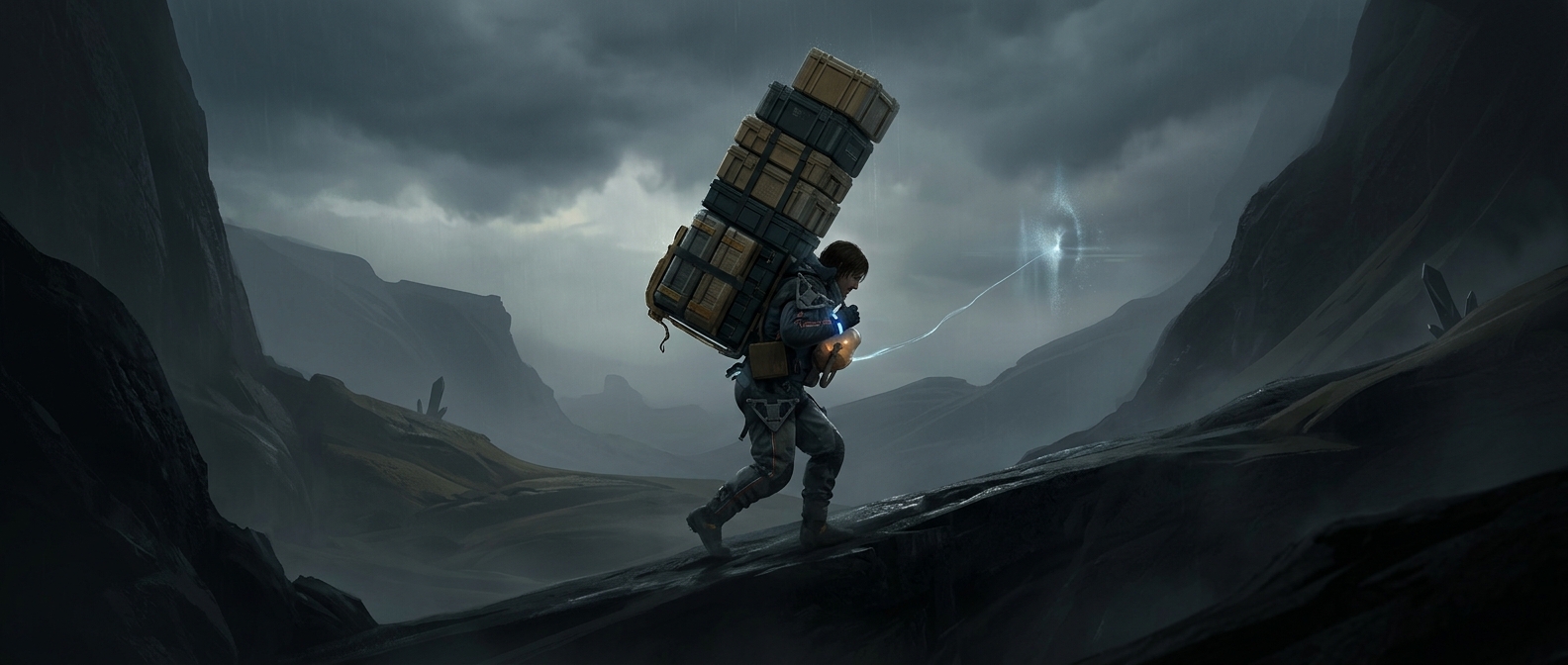
In Death Stranding, carrying cargo is not just a matter of moving from point A to point B. The game models a basic problem of balance: when a load sits high above the body, its weight can make a small tilt harder to correct. The higher the stack, the more leverage its weight has to pull the porter farther off balance.
How the Game Turns Balance Into Input
As the character leans or moves across uneven ground, the cargo can begin to sway. The player can countersteer—pressing in the opposite direction—to bring the load back over the character’s support. This resembles a person shifting their stance under a heavy, awkward package, though the game translates that physical adjustment into controls rather than requiring the player to move their own body.
The result is a linked system: route and movement affect the character’s footing, while the height and arrangement of cargo affect how readily the load tips. A sudden correction may help, but steering too far the other way can start a new imbalance. The player has to respond to the motion instead of treating the stack as fixed scenery.
Why That Changes the Journey
This mechanic makes cargo placement and careful movement part of the challenge. A tall stack may let the character carry more, but it also makes stability more demanding. On rough terrain, a slower, measured approach can be more valuable than simply pushing forward. Each sway is a small reminder that the packages have weight—and that carrying them safely depends on managing the load, not just reaching the destination.