The army that existed mostly in appearances
The Allies’ “Ghost Army” was the U.S. Army’s 23rd Headquarters Special Troops, a unit built to make German commanders believe that more American forces were nearby than actually were. Its deception worked by giving the enemy several kinds of evidence at once—not just a view of fake tanks.
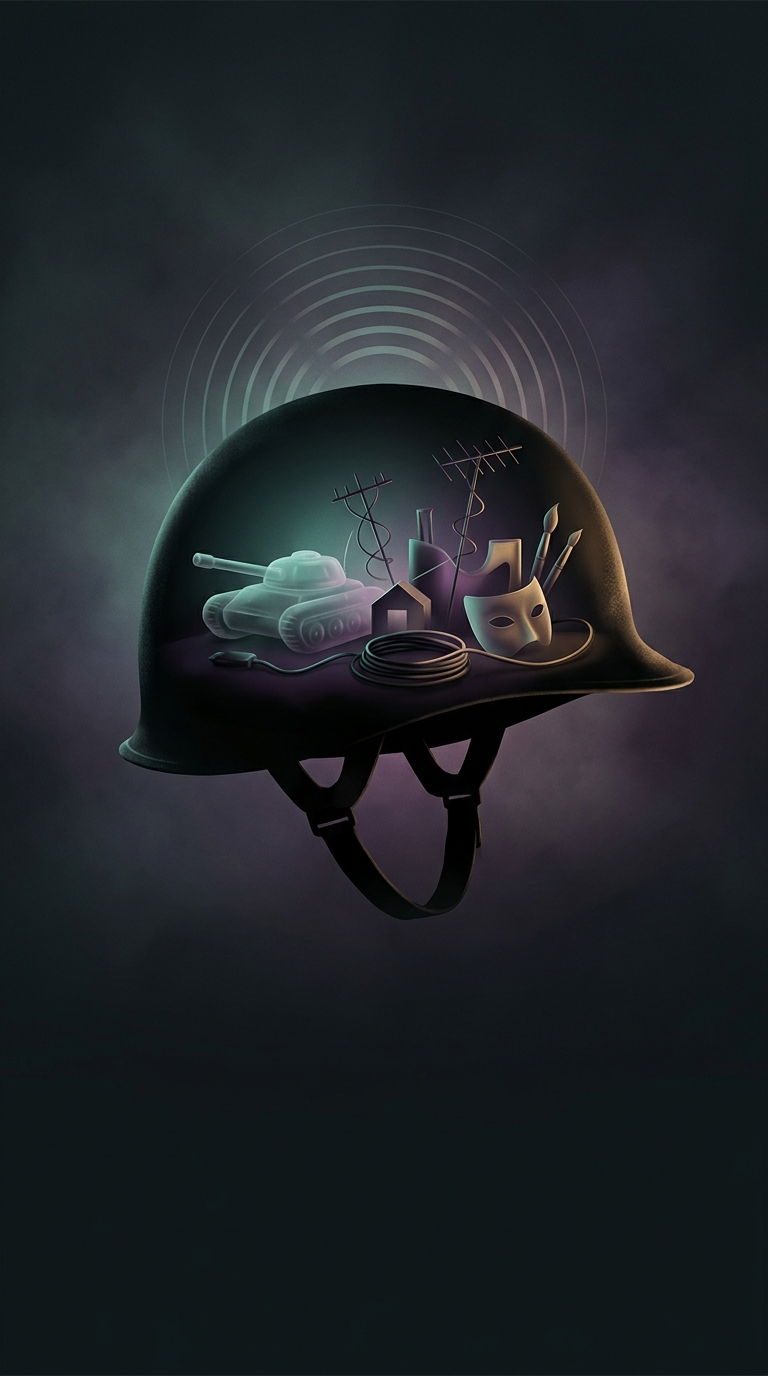
Artists and technicians assembled inflatable tanks, trucks, and artillery in exposed positions where German observers might spot them. From a distance, these props could suggest a substantial armored force. But a visual trick alone was fragile: a suspicious enemy might listen for engines, watch radio traffic, or compare reports from different locations.
Sound and signals completed the illusion
The unit used recorded vehicle and troop noises, broadcast through powerful speakers, to make quiet areas seem busy. Radio operators sent messages in patterns that imitated the communications of real military units. Together, the sights, sounds, and signals gave German intelligence a more convincing—but false—picture of Allied strength and movement.
The deception also relied on people. Soldiers sometimes wore the insignia of other units and circulated in nearby towns, letting ordinary encounters reinforce the impression that those units were present. The artists’ work mattered too: they helped create realistic-looking decoys and staged scenes that could withstand a closer look than a hastily placed prop.
A battlefield shaped by what the enemy believed
The Ghost Army could not make an illusion work everywhere. It needed suitable terrain, carefully timed setups, and an enemy willing or able to observe the area. Its purpose was to draw German attention away from actual Allied movements or persuade commanders to prepare for an attack that was not coming.
That made deception a form of battlefield force: it could redirect troops and buy room for real operations without meeting the enemy in a direct fight. The unit’s most important weapon was not any single inflatable tank or recording, but the coordinated impression that a whole army was in the wrong place.