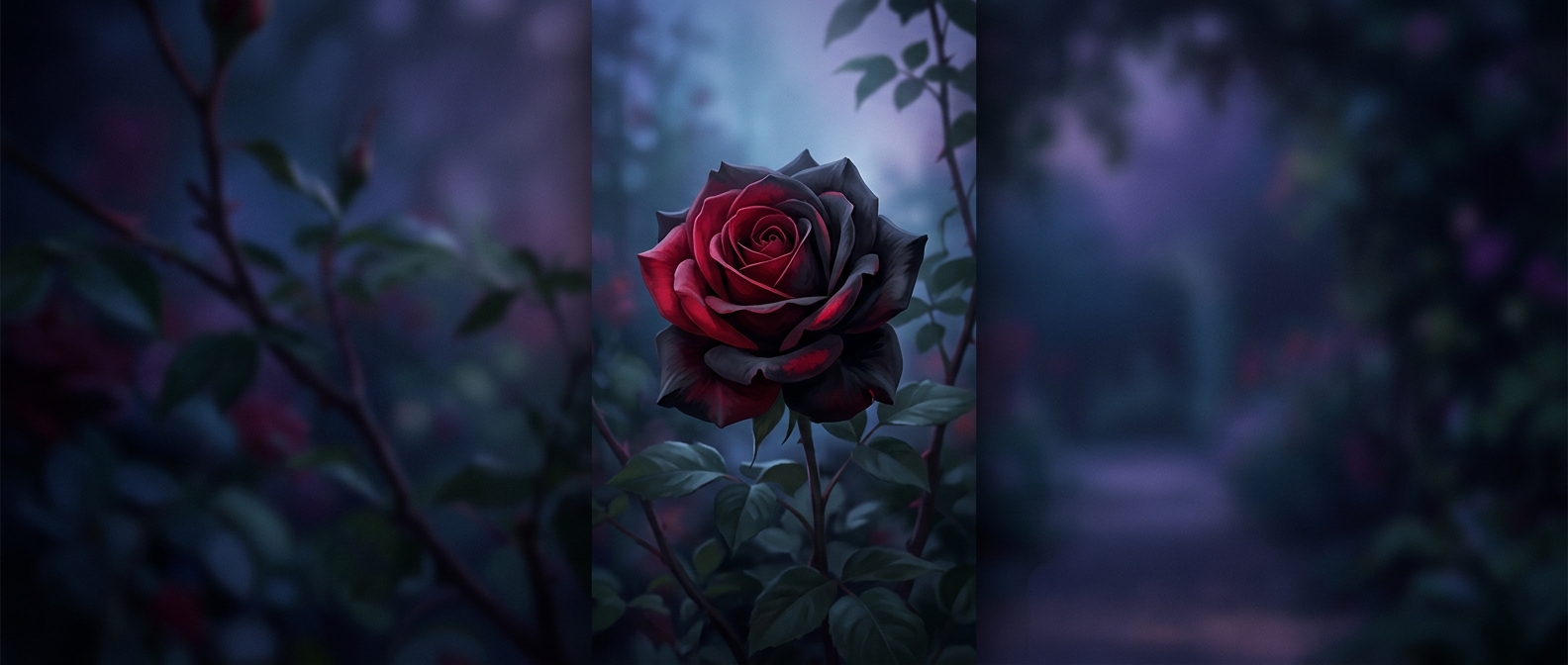
Why red loses its brightness first
A rose’s color depends on the light its petals reflect and on which light-sensing cells in your eye are doing most of the work. In daylight, cone cells provide color vision. Red petals reflect much more long-wavelength light than other wavelengths, so cones register them as vivid red.
As the scene dims, cones become less effective and rod cells take over. Rods are highly sensitive in low light, but they respond to a limited range of wavelengths and cannot distinguish colors. They are also much less responsive to the long-wavelength light that gives red its brightness. The petal therefore sends a weak signal to the visual system just as the eye is relying more on rods.
A shift in what looks bright
This change is called the Purkinje shift: as illumination falls, blue-green objects tend to look brighter relative to red ones. It is not that every red object suddenly becomes black. The effect depends on the object’s reflectance, the available light, and what surrounds it. A red rose against a pale surface may remain easier to make out than one among dark leaves, even when its color has largely faded from view.
At dusk, the flower can still be there in full detail, but its red petals may contribute so little usable signal that they blend into shadow. Wait for brighter light, and the cones can read the reflected red again.