An assassination attempt turned into a street fight
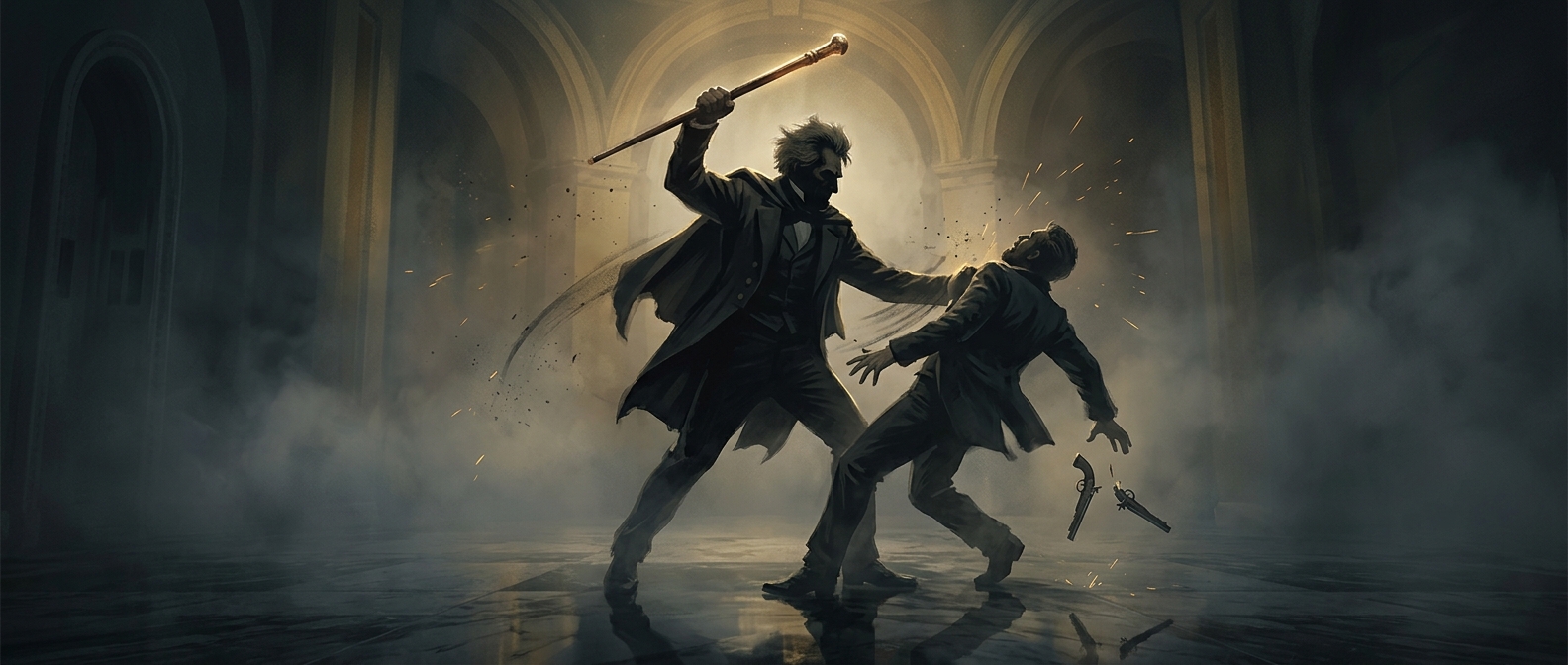
On January 30, 1835, President Andrew Jackson was leaving a congressional funeral at the U.S. Capitol when Richard Lawrence stepped out and fired a pistol at him. The weapon failed. Lawrence drew a second pistol, but it, too, misfired. Jackson, then 67, rushed at him with his cane, striking as people nearby grabbed the would-be assassin and pulled the president back.
The scene was startling partly because Jackson was not surrounded by the protective detail a president would expect today. The attack happened in a public passage, close enough for Lawrence to take aim at arm’s length. Jackson’s cane was an ordinary walking aid, not a planned weapon; in the sudden confusion, it became the tool he could reach.
What the misfires changed
A pistol misfire means the trigger mechanism operates but the gun does not fire as intended. Lawrence’s two failures left Jackson alive and gave the people around him time to intervene. Later tests showed that the pistols could fire, making the double failure seem extraordinary—but it did not establish why they failed in that moment.
Davy Crockett, then a congressman, was among those who helped restrain Jackson. Accounts of the encounter emphasize that others had to stop the president from continuing to attack Lawrence. Jackson’s immediate response was not to retreat behind a protective cordon; he tried to overpower the man who had just attempted to shoot him.
A political shock, not a proven conspiracy
The attempt fed Jackson’s suspicion that political enemies might be behind the attack. But Lawrence was judged mentally ill, and investigators found no demonstrated plot connecting him to Jackson’s opponents. That distinction mattered: the event was frightening and politically charged, yet it did not confirm the conspiracy Jackson feared.
The episode is remembered as the first known attempt to assassinate a U.S. president. Its vivid image—a president swinging a cane after two guns failed—also reveals how exposed the officeholder could be in the era’s public life.