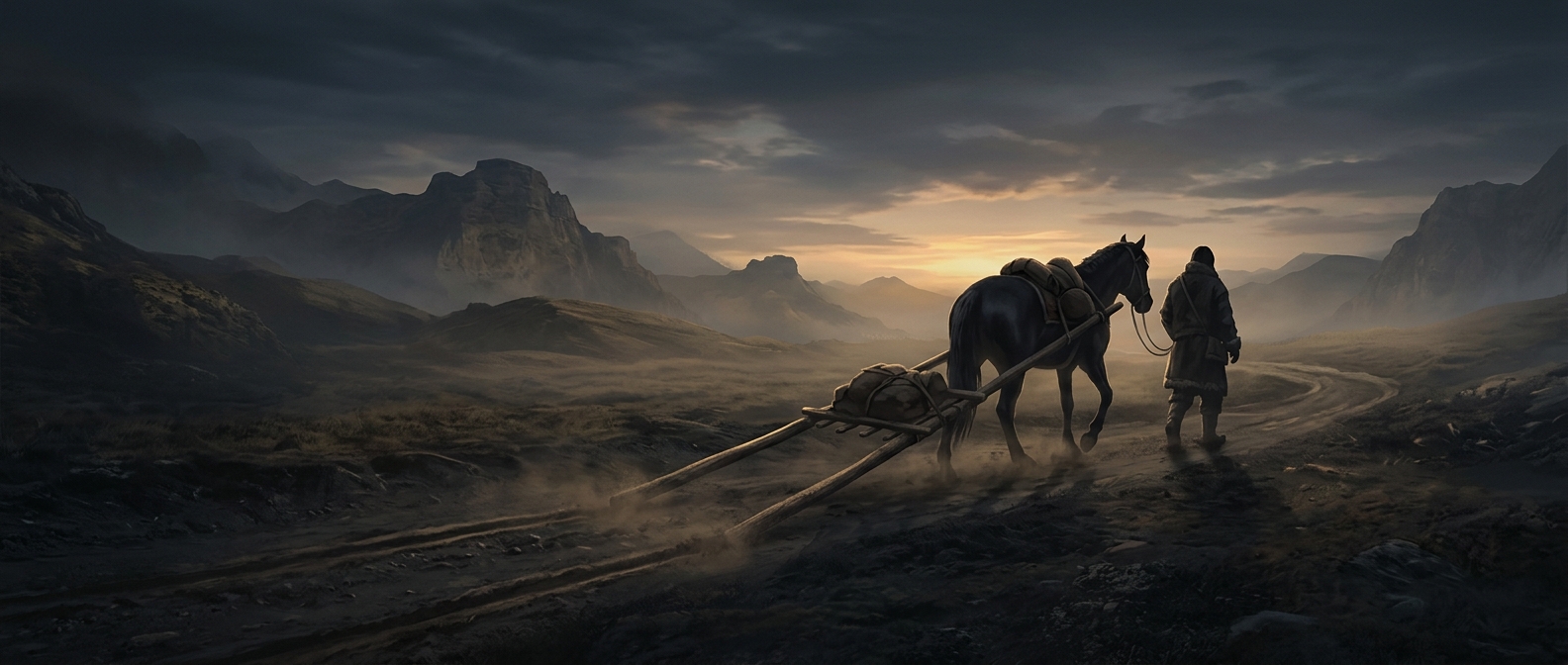
How a travois turns poles into a moving frame
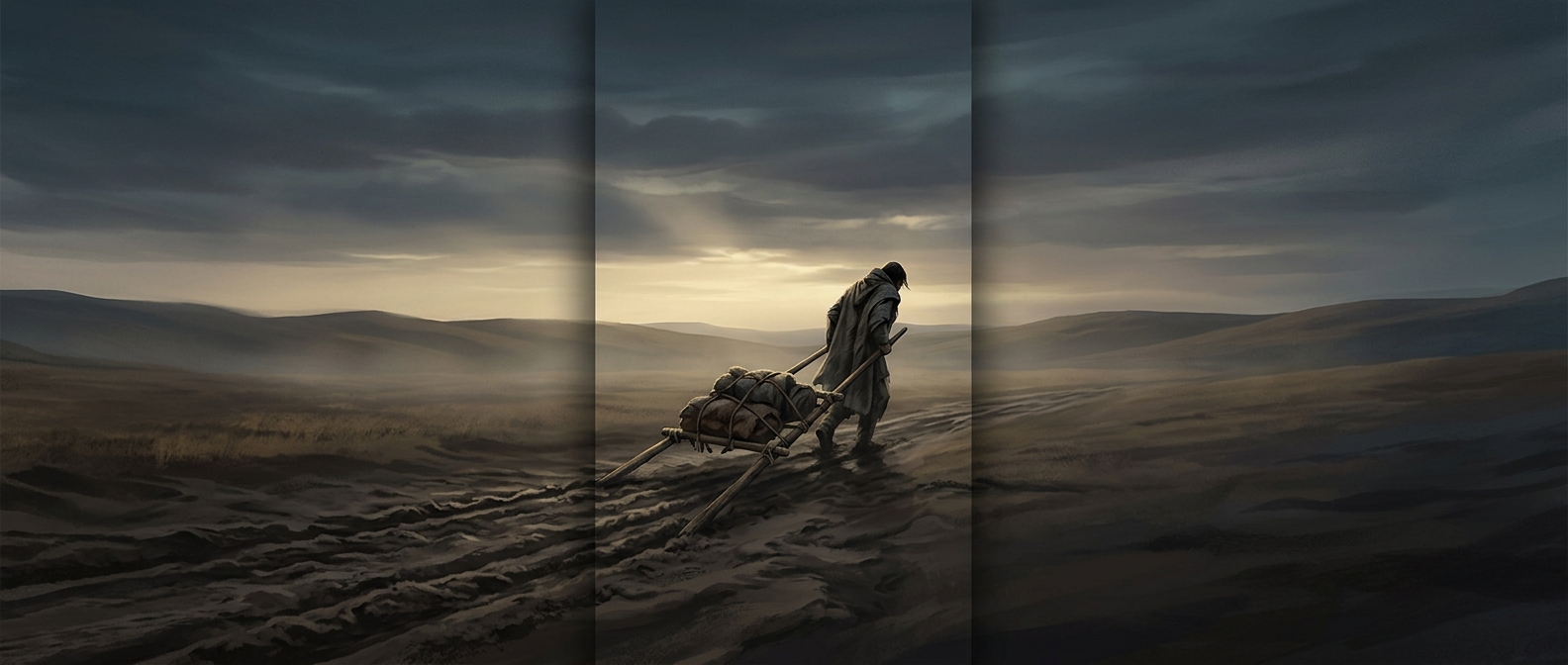
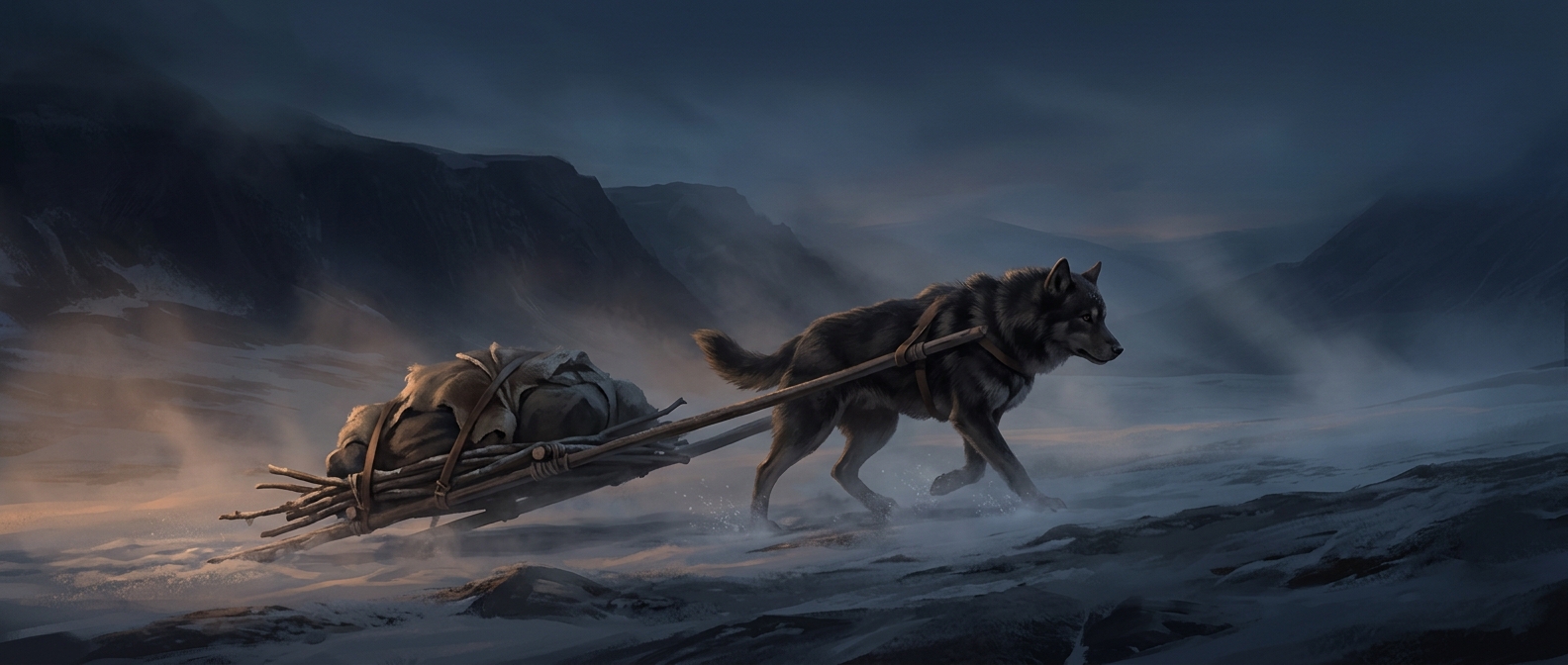
A travois has no axle or wheels. Instead, two long poles form its sides: their forward ends are attached to an animal, while their rear ends trail along the ground. Crosspieces or a platform hold the cargo between the poles. The result is a simple frame that moves as the animal walks.
The poles do more than keep the load together. They extend the support over a long span, with the animal carrying some of the forward weight while the ground supports the trailing ends. That arrangement can make a bulky load manageable without asking the animal to lift all of it clear of the ground.
The tradeoff: simple, but not effortless
Because the pole ends stay in contact with the ground, they act as runners. They can slide over terrain where a wheeled vehicle would struggle with ruts, stones, or soft patches—and the design needs no wheels, axle, or bearings. But sliding creates friction: the animal must pull against the ground, and a pole can catch on an obstacle rather than roll over it.
The long frame also has to be arranged so the cargo stays balanced between the poles. Too much weight toward the rear can make the front harder to control; a load that shifts can pull unevenly on the animal or drag awkwardly. A travois exchanges the efficiency of wheels for a simpler way to carry a load over uneven ground.