Why a Metro Station Has Bronze Heroes
Ploshchad Revolyutsii—“Revolution Square”—is more than a place to catch a train. Its platform arches are lined with bronze figures representing people associated with Soviet life, including workers, soldiers, and athletes. The statues turn an underground passage into a kind of public gallery: commuters meet the figures at close range while moving between trains and exits.
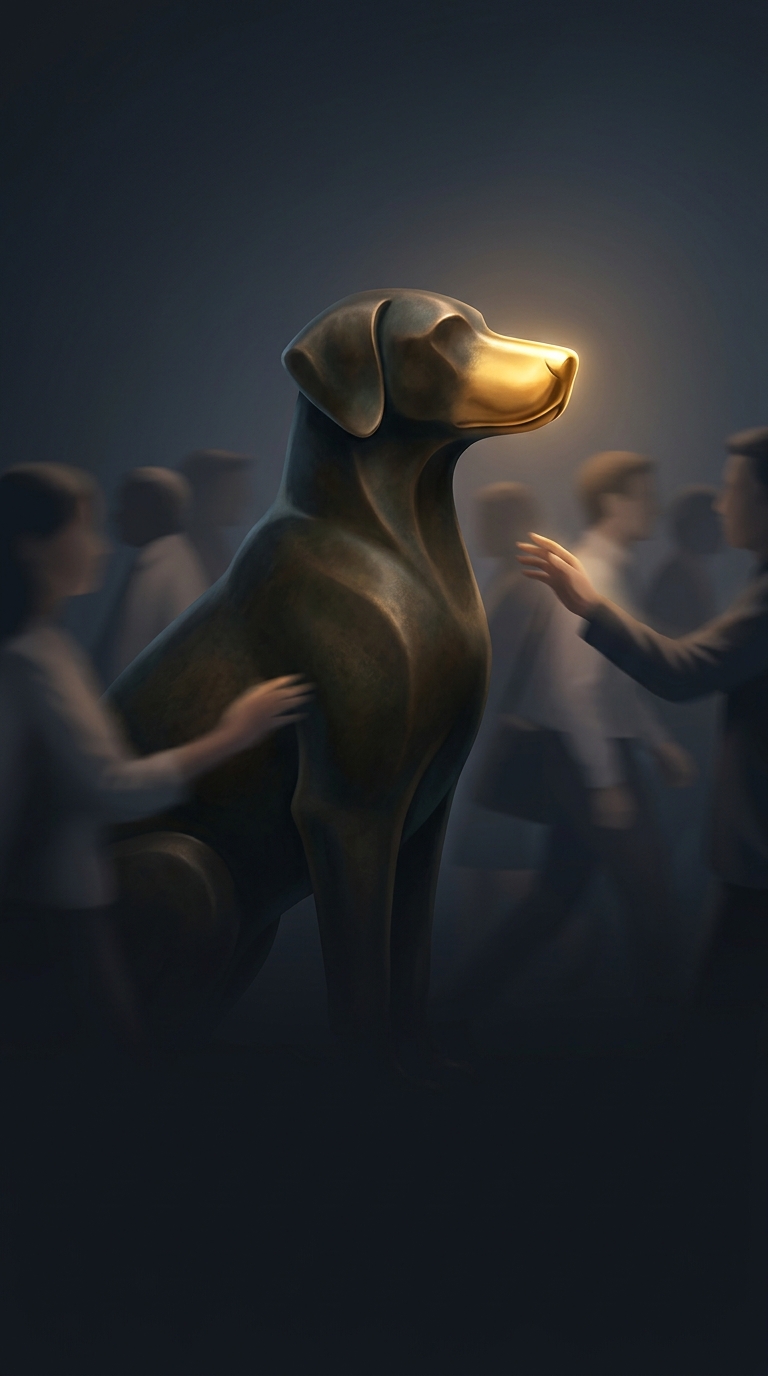
Among them is a border guard seated beside a dog. The dog’s nose is conspicuously brighter than the surrounding bronze, polished by repeated touches from visitors hoping for good luck.
How a Passing Gesture Became a Ritual
The appeal is easy to understand in a busy station. A traveler can pause for a moment, touch the dog’s nose, and carry on—with a small hope attached to an ordinary journey. Repetition has made the gesture recognizable to locals and visitors alike, even though luck itself is a matter of belief, not something the bronze can guarantee.
The shine is physical evidence of that habit. Hands gradually rub away the dark surface patina—the thin layer that forms on bronze over time—leaving the frequently touched spot brighter. The dog’s nose has therefore become both a detail of the sculpture and a record of how people use the station.
A Monument Shaped by the Commute
The figures are arranged in the arches along the platforms, where waiting passengers can see and approach them. That setting gives the sculptures a life beyond formal commemoration: they are part of the daily route, encountered at walking pace and woven into small personal routines.
The border guard’s pose suggests vigilance; the polished nose tells a different, more playful story. In a station built for people passing through, years of brief touches have turned one bronze detail into a shared custom—and made the crowd’s movement visible on the statue itself.