The Gesture Is a Safety Check
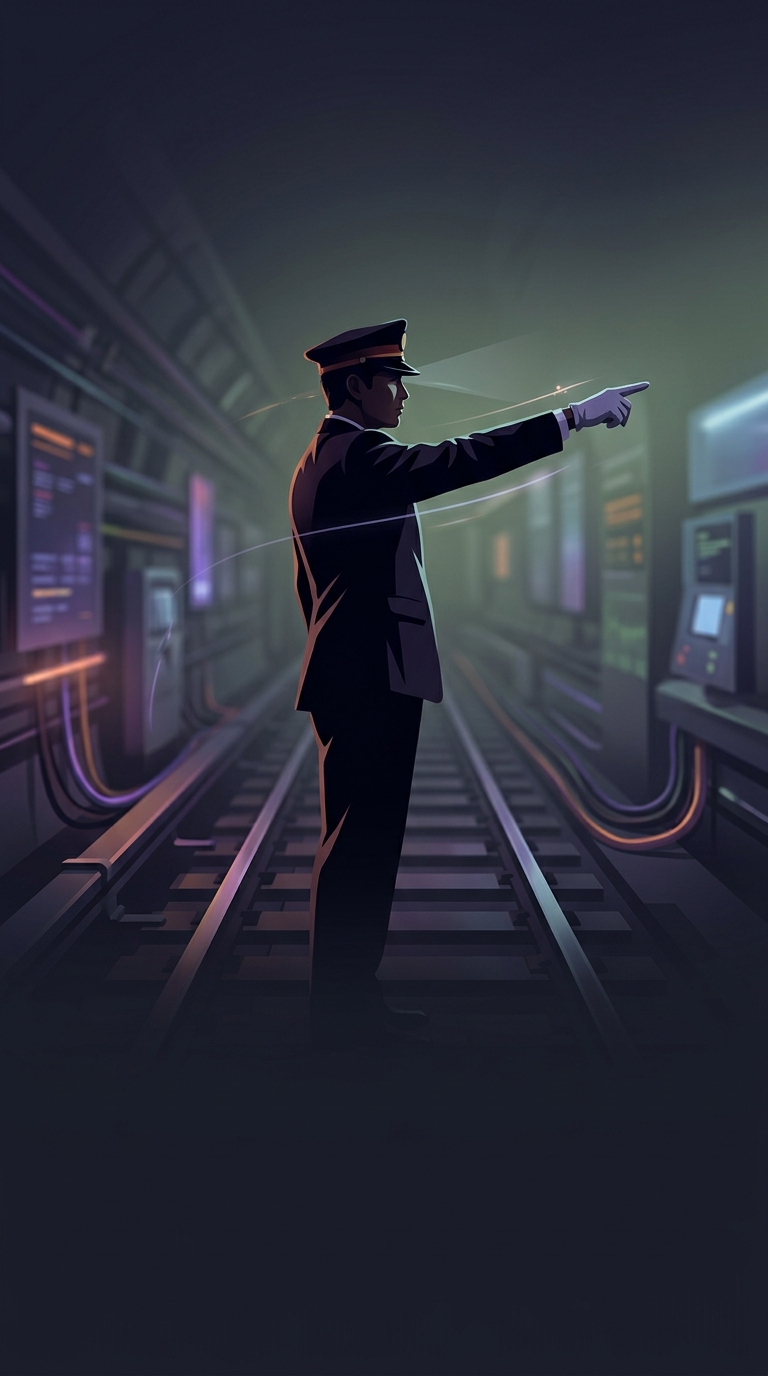
A subway worker’s finger may seem aimed at empty air, but the check is usually directed at something small, distant, or visible only from the worker’s position: a signal, a marker on the platform, or an indicator confirming that doors are closed. On some trains, the conductor also watches the platform as the train departs, checking that passengers and belongings are clear.
The pointing is part of a Japanese railway practice called shisa kanko, or “pointing and calling.” The worker points to the item being checked and says the relevant condition aloud. That turns a fleeting glance into a deliberate sequence: look, point, name, confirm.
Why Pointing Helps
Routine tasks invite people to rely on habit. A worker may look at a signal without fully registering its state, especially while coordinating several checks in a noisy, time-pressured environment. Pointing makes the eyes land on a specific target; speaking the observation adds another step that can make a missed or mistaken check easier to catch.
The gesture is not a performance for passengers. It is a simple way to make attention visible to the worker—and, in some cases, to colleagues. Different rail jobs and stations require different checks, so the exact target varies. From inside a moving train, a worker’s line of sight may also be hard to read, making a purposeful check look like a point at nothing.
A Small Habit in a Demanding System
A departure depends on several conditions lining up: the signal must permit movement, doors must be secured, and the platform must be clear. Pointing and calling helps workers handle those checks consistently rather than trusting a quick, silent glance. The next time a conductor points beside the train, the target may be invisible to you—but the check is part of what makes the departure safe.