A hairstyle built to hold its shape
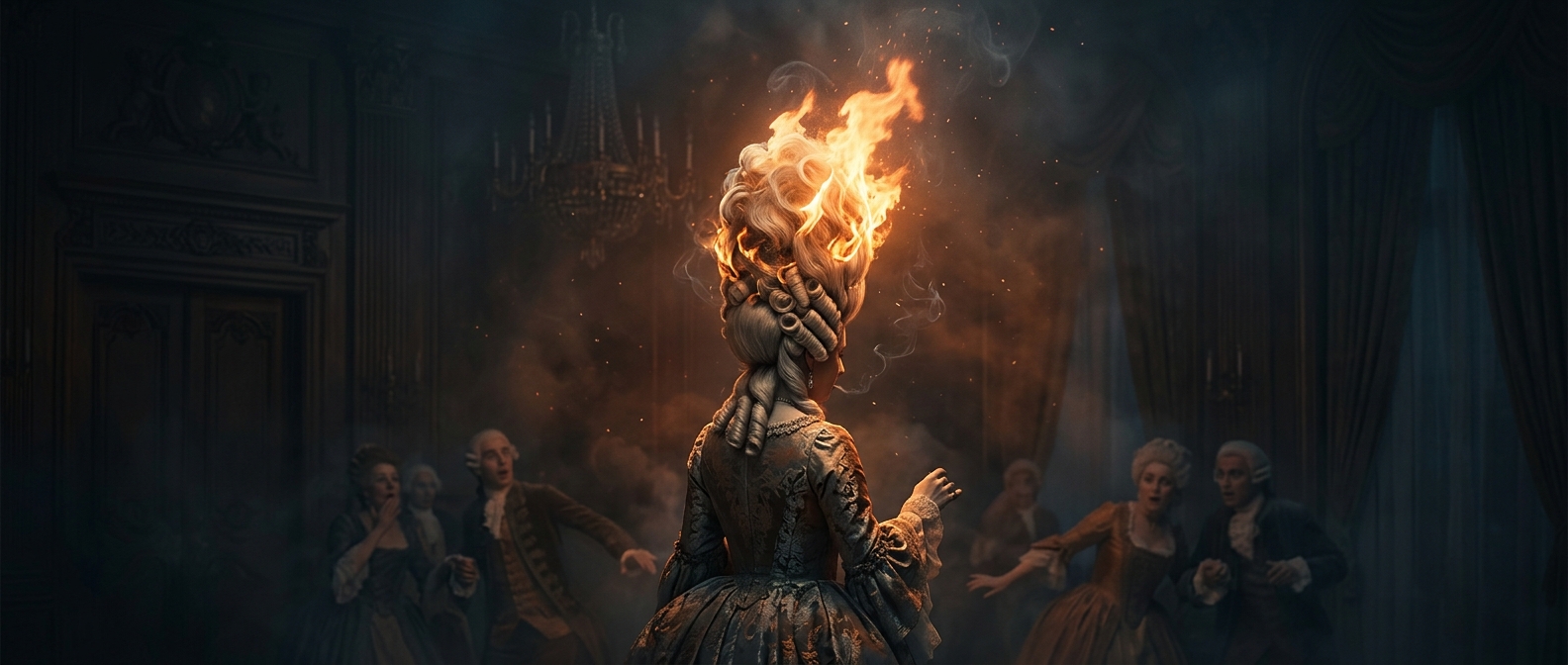
In fashionable 18th-century coiffures, height came from more than hair alone. Stylists could build up a base with pads, false hair, or supports, then shape natural and added hair into elaborate forms. A greasy dressing called pomatum helped keep the arrangement in place; powder was often worked over it to finish the look. The result was durable enough to wear for a time, but its materials could burn.
How a flame could reach the hair
A room lit by candles presented many small, open flames: on tables, wall fittings, and chandeliers. A tall coiffure brought the wearer’s head unusually close to them. If hair or its dressing touched a flame, the oils could ignite and carry fire through the piled-up hair. The danger was not that every hairstyle would spontaneously combust; it was the ordinary, close-range hazard of combustible styling materials meeting an exposed flame.
Fashion had a practical cost
The risk followed from the same choices that made the style impressive. Building upward created a striking silhouette, while sticky dressing helped keep a complex shape together. But those choices made the coiffure both flammable and awkward around low ceilings, doorways, and candlelight. In a room where lighting depended on open flames, a fashionable headpiece was not merely decorative: it changed how close its wearer could safely come to the room’s most common source of light.