Charles II and the Habsburg jaw
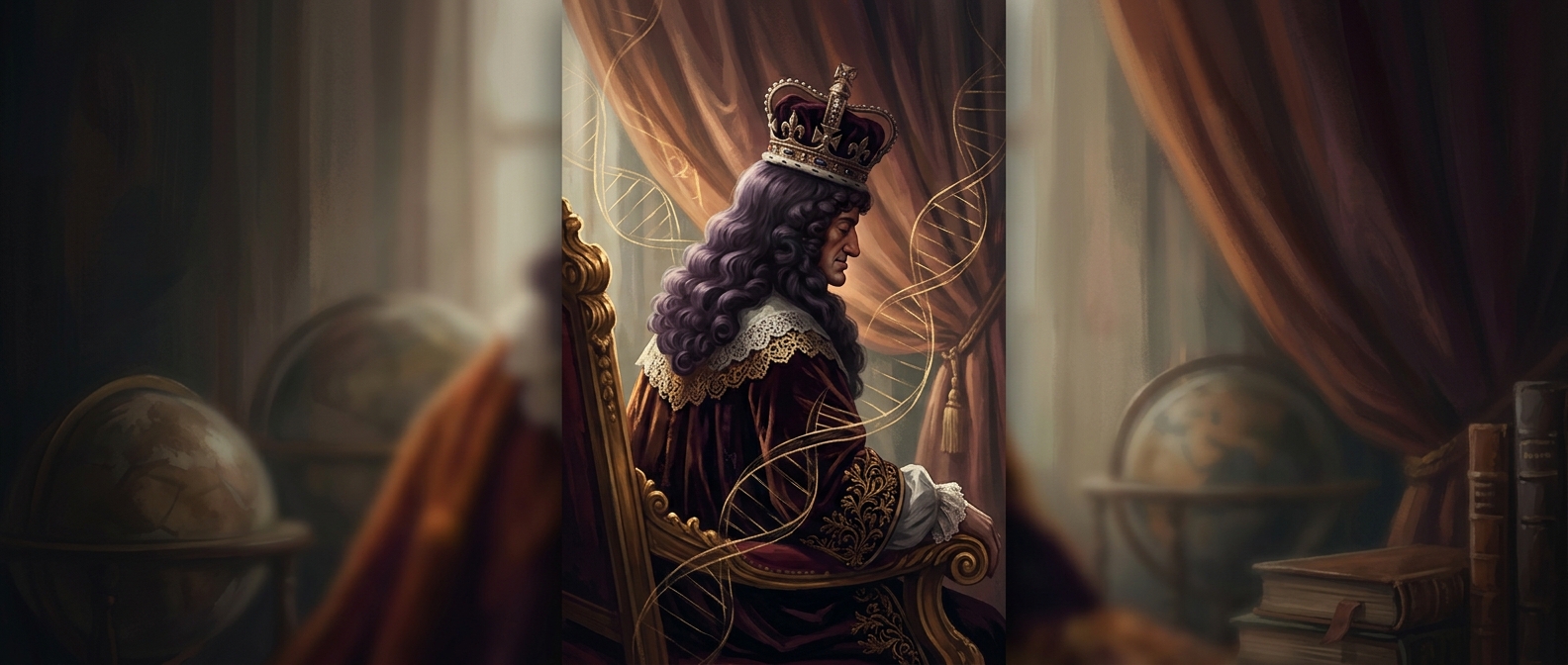
The Spanish king was Charles II, the last ruler of Spain’s Habsburg dynasty. His prominent lower jaw—often called the “Habsburg jaw”—was part of a family pattern visible in portraits of earlier Habsburgs. In Charles’s case, the mismatch between his upper and lower jaws was pronounced enough to interfere with chewing and closing his mouth.
How a dynasty narrowed its family tree
Royal marriages were political tools: they could secure alliances, preserve claims to territory, and keep power within a ruling house. But generations of marriages among close relatives also meant that the same ancestors appeared repeatedly in a family tree. That raised the chance that children would inherit matching copies of gene variants from both parents, which can affect development. Facial shape involves many genes, so it is too simple to treat one marriage—or one gene—as the whole explanation for Charles’s features.
His parents, Philip IV of Spain and Mariana of Austria, were uncle and niece. Their marriage continued a long Habsburg pattern of close-kin unions, concentrating inherited traits as well as political connections.
A family strategy with a state-sized consequence
Charles’s health and inability to produce an heir made the question of succession increasingly urgent. When he died in 1700, he named Philip of Anjou, a French Bourbon prince, as successor. The resulting dispute over who would inherit the Spanish monarchy helped trigger the War of the Spanish Succession.
The jaw became the most visible sign of a dynastic system that had repeatedly chosen political closeness over a wider marriage pool. By Charles’s reign, that strategy had left Spain facing a succession crisis as well as a king whose face carried the family history in plain view.