A statue could stand in for a living presence
In ancient Egyptian religion, a statue was more than a portrait. When made and ritually consecrated, it could serve as a physical home for a person’s or deity’s presence, receiving offerings and participating in worship. That made damage to an image potentially meaningful: harming the statue could be a way to diminish the power or presence it represented.
Why strike the nose?
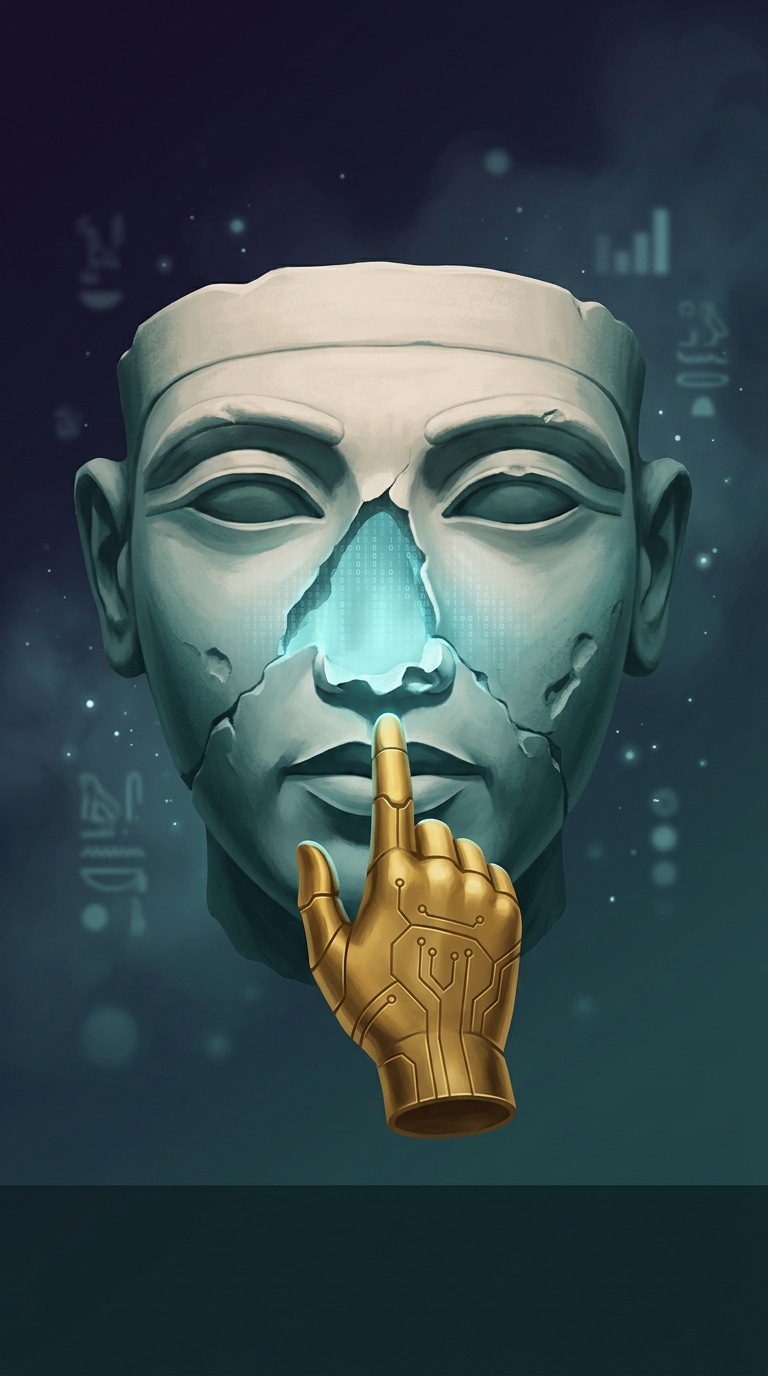
The nose was both prominent and easy to recognize—and, in Egyptian thought, breath was closely tied to life. Breaking a statue’s nose could therefore symbolically deprive its represented person or god of breath. The damage was practical as well as symbolic: a sculpted nose projects from the face, making it especially vulnerable to a deliberate blow.
This was one part of a broader practice of damaging images. Attackers might also remove names, faces, hands, or other features, depending on what they wanted to disable or erase. Such destruction could serve political or religious purposes, including weakening the memory or authority attached to a ruler’s image.
Not every missing nose tells the same story
A broken nose is not, by itself, proof of an ancient attack. Statues could also be damaged by falls, reuse, weathering, or later handling. But when the break is sharply targeted—and other vulnerable features have been deliberately damaged too—the pattern can point to purposeful image destruction.
The striking implication is that an Egyptian statue’s face was not merely meant to be seen. For those who treated the image as an active presence, damaging it could be a way of acting on the person or power it embodied.