How a hydrofoil turns forward motion into lift
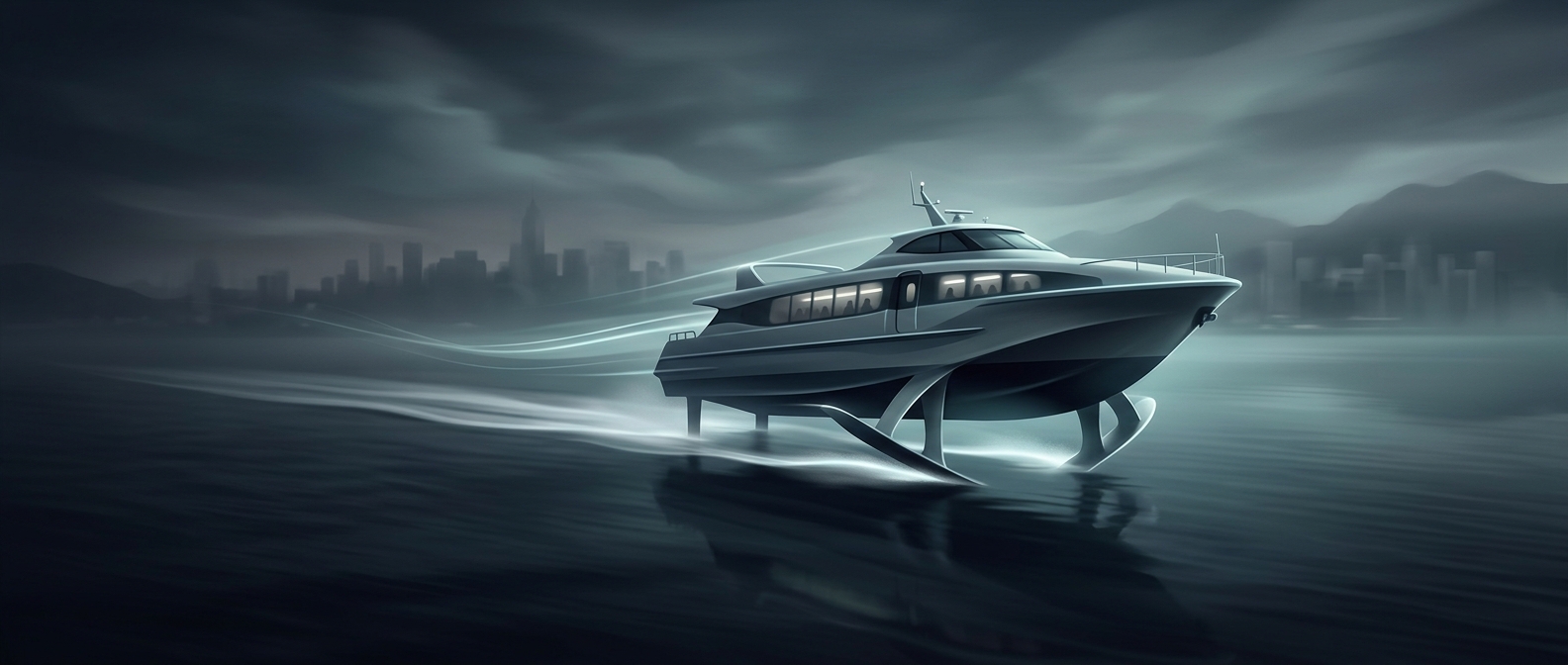
A hydrofoil is a submerged wing attached beneath a boat. As the boat moves, water flows around the foil; its shape and angle redirect that flow, creating an upward force. The faster the boat travels, the stronger the lift. Once the foils support much of the boat’s weight, the hull rises and no longer has to push through as much water.
That change matters because a conventional hull creates substantial resistance as it shoves water aside and forms waves. A lifted hull has less contact with the water, so the boat can travel quickly without needing to overcome the same degree of drag. The foils still meet resistance, but their relatively small area can make the overall ride more efficient at speed.
The lift comes with conditions
A hydrofoil needs enough speed to generate lift, so it cannot remain raised while idling or moving slowly. During acceleration, the hull stays in the water; as speed builds, the foils take on more of the load. Slow down, and the boat settles back onto its hull. That transition is part of the design, not a failure of the system.
Foils also have to cope with changing water and loading. Waves, turns, and shifts in passenger weight affect how the boat rides, while underwater obstacles can threaten the submerged wings. Designers balance lift, stability, and clearance: the foil must sit deep enough to keep working, but not so deep that it is needlessly exposed.
For passengers, the striking result is that speed depends on a carefully managed underwater surface. The boat may look as if it is flying above the water, but its ride is being shaped by wings they can barely see.