Why Tokyo became a target for fire
By early 1945, American commanders had a practical problem: B-29 bombers flying high over Japan often struggled to hit individual factories. Winds at altitude could shove aircraft off course, and clouds could hide the ground. The U.S. Army Air Forces changed tactics, sending bombers lower at night and aiming not at one building but at broad urban areas.
The change also reflected what Japanese cities were made of. Many homes and workshops used wood and paper, and small industrial businesses were mixed into residential neighborhoods. That made it difficult to separate wartime production from civilian life—and made fire a weapon capable of spreading far beyond any single aim point.
How separate fires became a citywide disaster
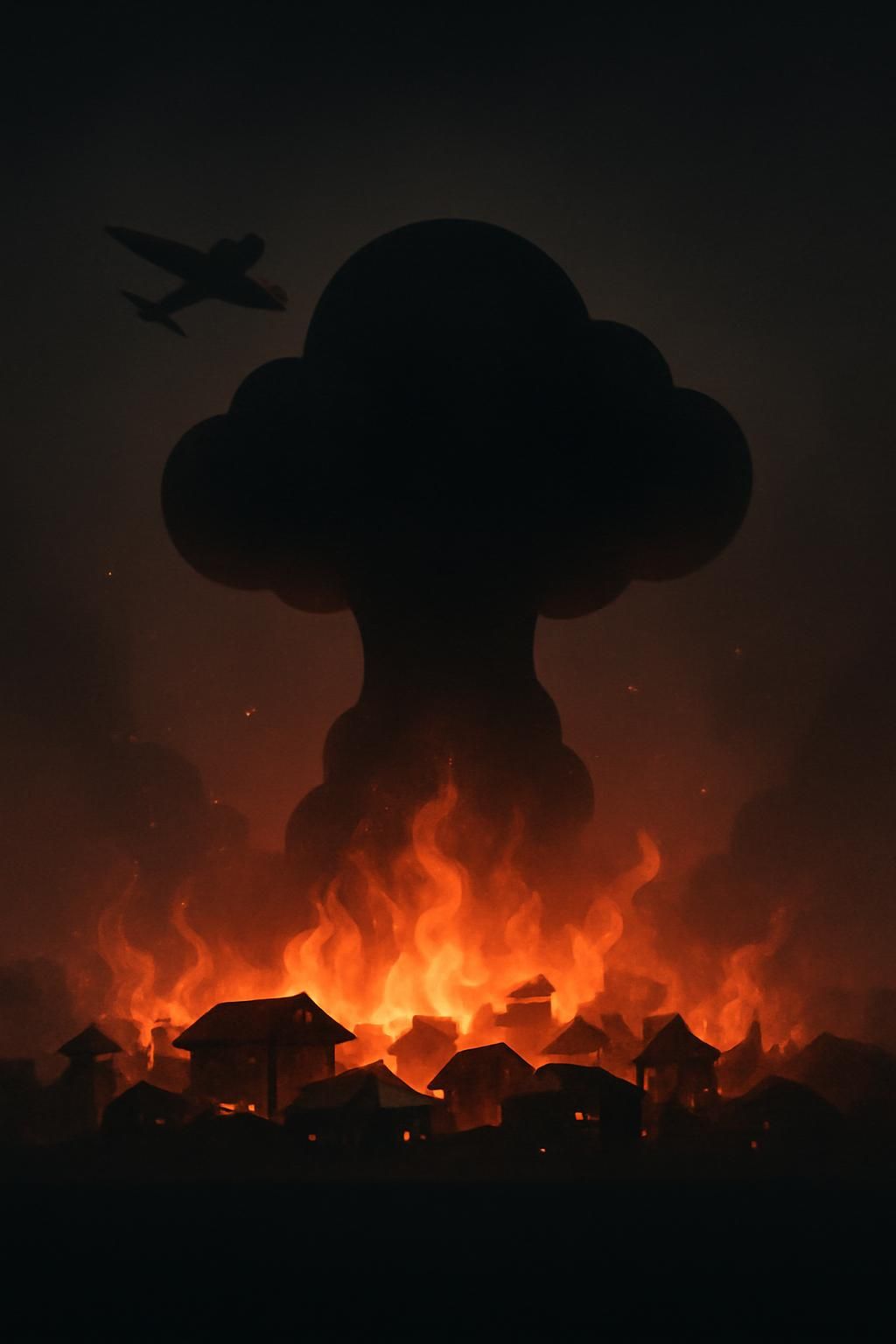
The bombers carried incendiary weapons designed to start fires. In dense neighborhoods, flames could leap from building to building; as fires merged, they generated intense heat and powerful drafts that pulled air toward the burning area. Streets and narrow lanes that might have served as escape routes could instead funnel smoke and fire, while shelters offered little protection from an overwhelming blaze.
The raid’s effects were therefore not confined to the places where bombs landed. Once fires joined, the city’s layout and building materials helped carry destruction outward. The attack devastated homes as well as workshops, leaving survivors to face mass displacement and the loss of everyday infrastructure.
The consequence of changing the target
This was a consequential shift in air warfare: instead of treating a factory as the target, planners treated the urban fabric that supported production as a target area. The distinction mattered little to people whose homes stood among workshops. Tokyo’s destruction showed how a strategy aimed at weakening an enemy’s capacity to fight could make civilian neighborhoods—and the people living in them—the immediate focus of the attack.