Why a long life can outlast reproduction
In most mammals, females remain fertile through much of their lives. Some orcas are different: females can stop reproducing years or even decades before they die. That gap is puzzling because pregnancy and raising a calf take substantial energy. Why would evolution favor a life stage with no new calves?
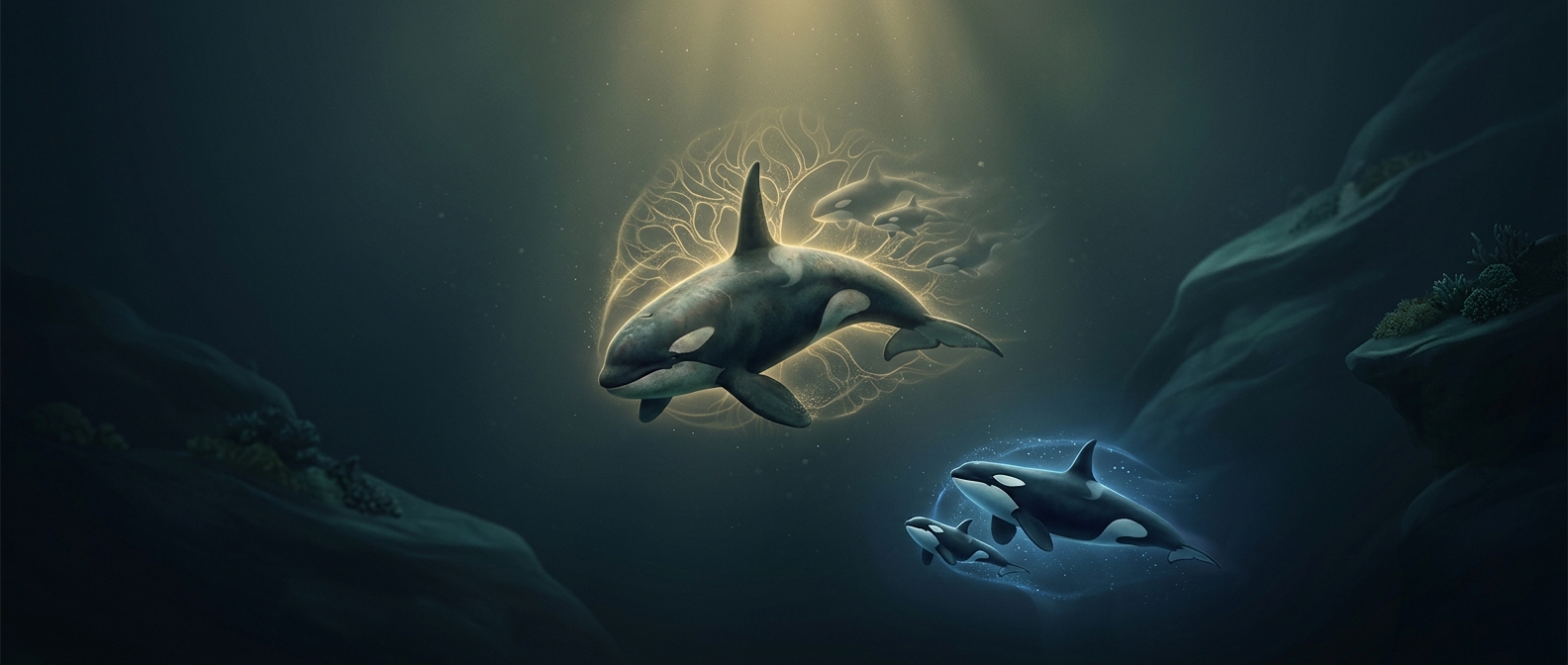
One answer is that an older female can contribute in ways that do not require her to reproduce. Orca families often travel together, and generations can share the same feeding grounds. A female that has lived through many seasons may know where prey is likely to be and how conditions change. That knowledge can help relatives make better choices, particularly when food is hard to find.
Experience can change the family’s odds
The benefit is not simply that an elder knows a location. Finding prey involves timing, routes, and responses to changing conditions—information built up over years and difficult for younger whales to acquire quickly. When a family follows an experienced female, her decisions can shape where the group searches and how long it spends there.
Researchers see this as one possible explanation for menopause in orcas: natural selection may favor females that stop producing calves but continue helping close relatives survive. The idea is especially compelling in a species whose family members remain closely associated, allowing an elder’s experience to benefit descendants. It is not a complete answer to why every female stops reproducing, and its importance may vary with the population and its food supply.
The striking consequence is that an older female’s reproductive value may shift rather than disappear. Instead of adding one more calf to the family, she may help guide a whole group through a difficult search for its next meal.