Damage becomes evidence
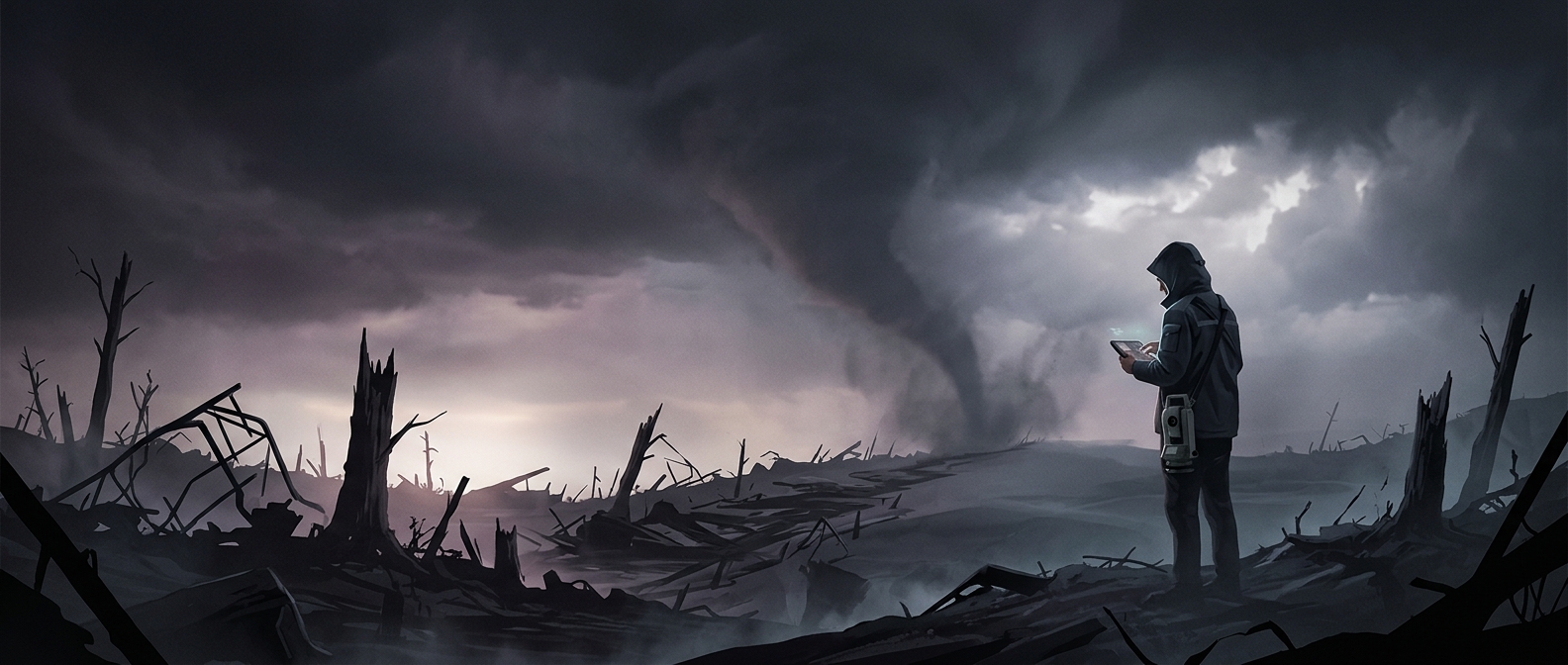
A tornado usually passes before anyone can measure its strongest winds directly. Surveyors therefore work backward from the damage it leaves. They inspect damage to buildings, trees, and other objects, then compare it with standardized damage indicators—categories such as particular kinds of structures—and defined levels of damage within each category.
The distinction matters. A collapsed wall is not automatically proof of extreme winds: the result depends on how the building was designed, built, maintained, and connected to its foundation. Surveyors look for signs of how the failure happened and whether the structure was sturdy enough for that damage to indicate powerful winds.
From observations to a rating
For each useful indicator, surveyors assess the degree of damage, meaning how far the object was damaged. The Enhanced Fujita scale links those observations to estimated wind speeds. The final rating reflects the strongest damage evidence that can be supported—not a direct reading from an instrument and not simply the most dramatic-looking wreckage.
That makes the rating a considered estimate. If a tornado crosses places with different buildings or trees, the evidence can vary along its path; a lack of severe damage may mean there was little suitable evidence, not that the tornado’s winds were fully captured. The survey is detective work constrained by what the storm encountered and what survived to be examined.
The result gives communities a consistent way to describe a tornado’s damage and inferred intensity, while preserving an important distinction: surveyors can inspect the aftermath closely, but the wind itself has already gone.