What bourbon carries that vodka usually does not
Congeners are substances formed alongside alcohol during fermentation and distillation, with more added or altered as a spirit ages in wood. They include compounds that contribute to a drink’s aroma, color, and taste. Bourbon’s time in charred oak gives it a richer mix of these substances; vodka is generally distilled and filtered to have fewer flavor compounds.
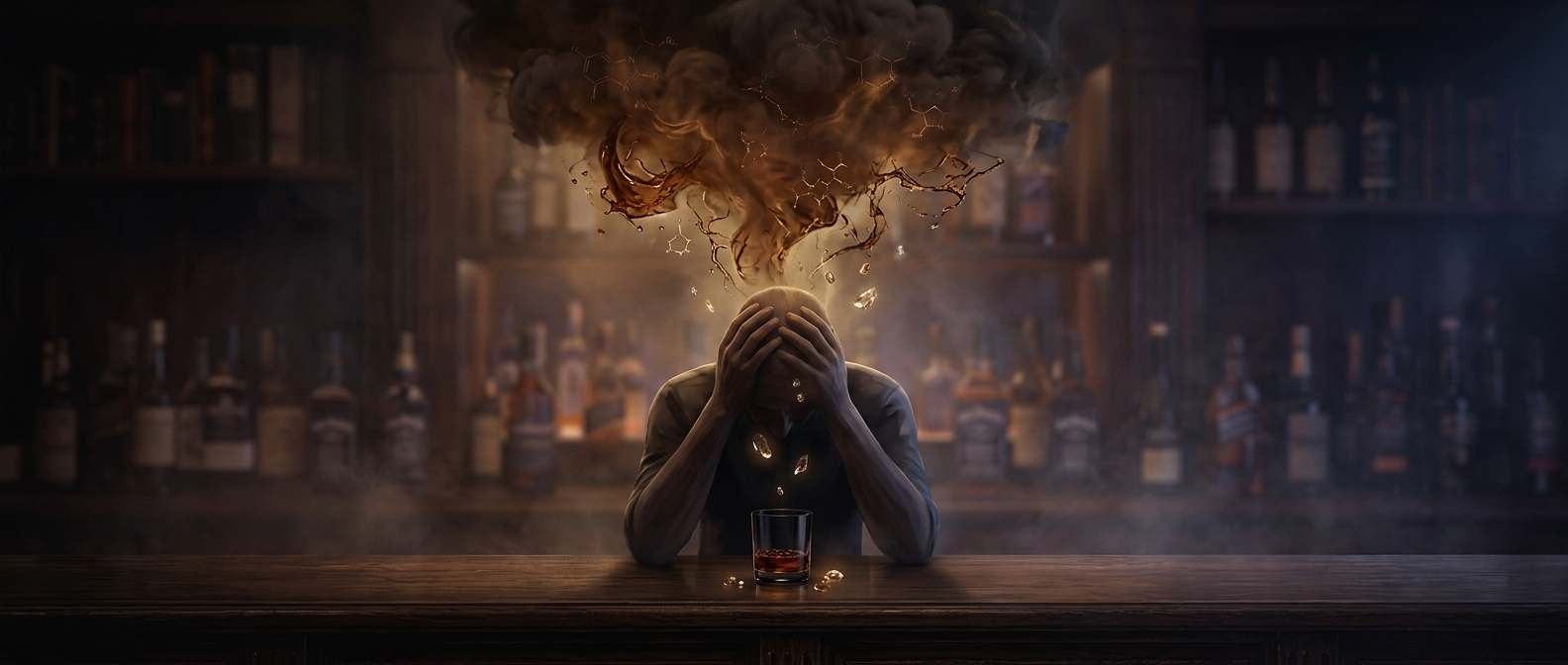
After drinking, the body has to process ethanol—the alcohol in both drinks—as well as these other compounds. Ethanol remains the main driver of a hangover, but congeners may add to symptoms. That helps explain why bourbon can leave someone feeling worse than vodka even when the alcohol amount is similar.
The dose still matters most
A darker color is a useful clue to a spirit’s character, not a reliable measure of how severe a hangover will be. Bourbon is not guaranteed to cause one, and vodka is not hangover-proof. The amount and pace of drinking matter substantially; sleep disruption and other effects of alcohol can also contribute to feeling rough the next day.
So the practical comparison is not simply “dark versus clear.” It is the same dose of ethanol, plus a different mix of accompanying compounds. Choosing vodka may reduce exposure to congeners, but drinking less is the more dependable way to reduce the chance of a punishing morning.