A monster gives the village a speaking part
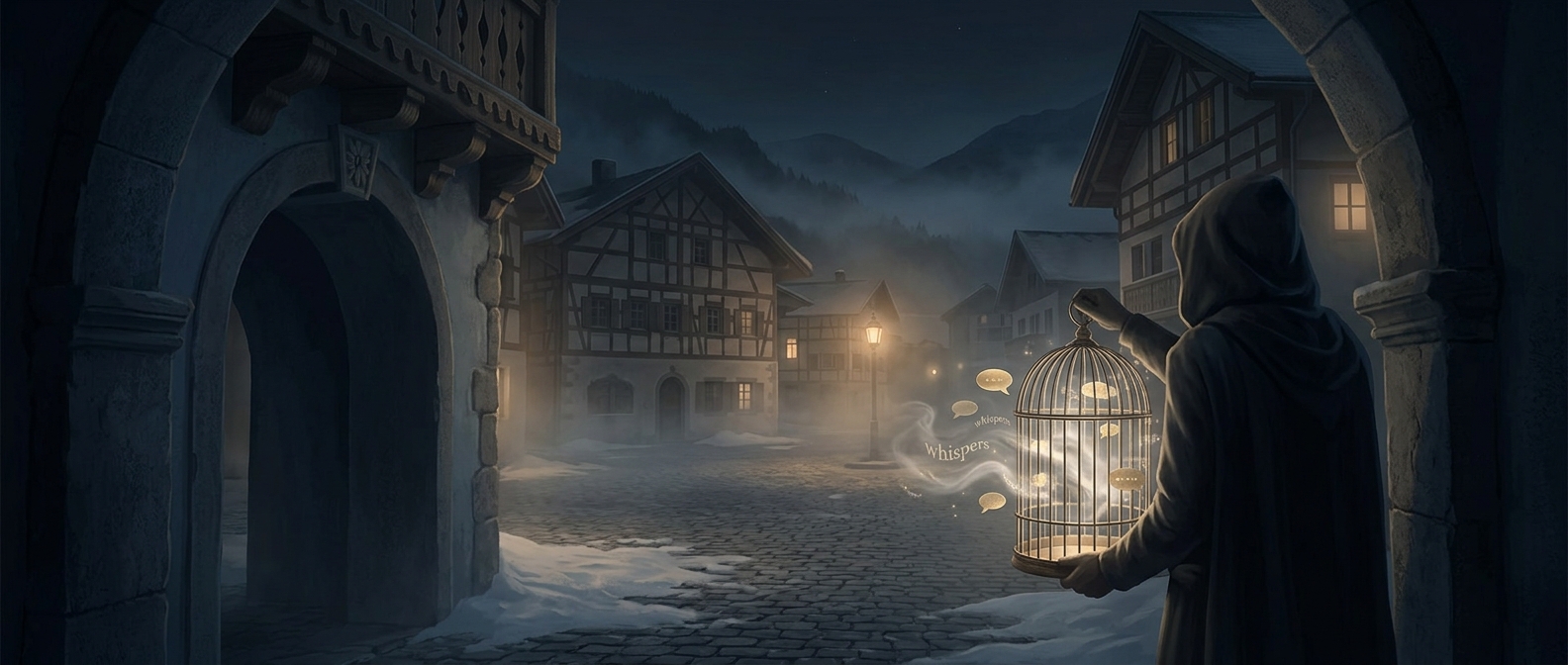
The Badalisc turns gossip into a public performance. A villager wears the creature’s costume, but the voice that matters comes through a rhyming address delivered on its behalf. That separation lets the community treat the speaker as a character: the creature can expose awkward behavior without making the occasion feel like a formal accusation by one neighbor against another.
The verses draw on recognizable events from the year, so listeners can catch the references even when names are not spelled out. Rhymes and comic exaggeration make the material easier to hear—and easier to repeat—than a blunt list of grievances. The audience is not just watching a monster parade; it is decoding a shared account of village life.
The joke works because everyone knows the setting
A mythical creature is a useful mask for a very human activity. The Badalisc is imagined as an outsider who can observe the village and report what people would rather keep quiet. That fiction gives local criticism a ritual frame: the speech belongs to the annual custom, not simply to a quarrel that has spilled into the street.
But the humor depends on real familiarity. A reference that means little to an outsider may be instantly legible to residents, who know the people and circumstances behind it. The monster’s huge mouth is theatrical; the information coming out of it is local knowledge. By turning private dramas into shared entertainment, the tradition lets a village laugh at itself—and makes the year’s gossip part of its public memory.