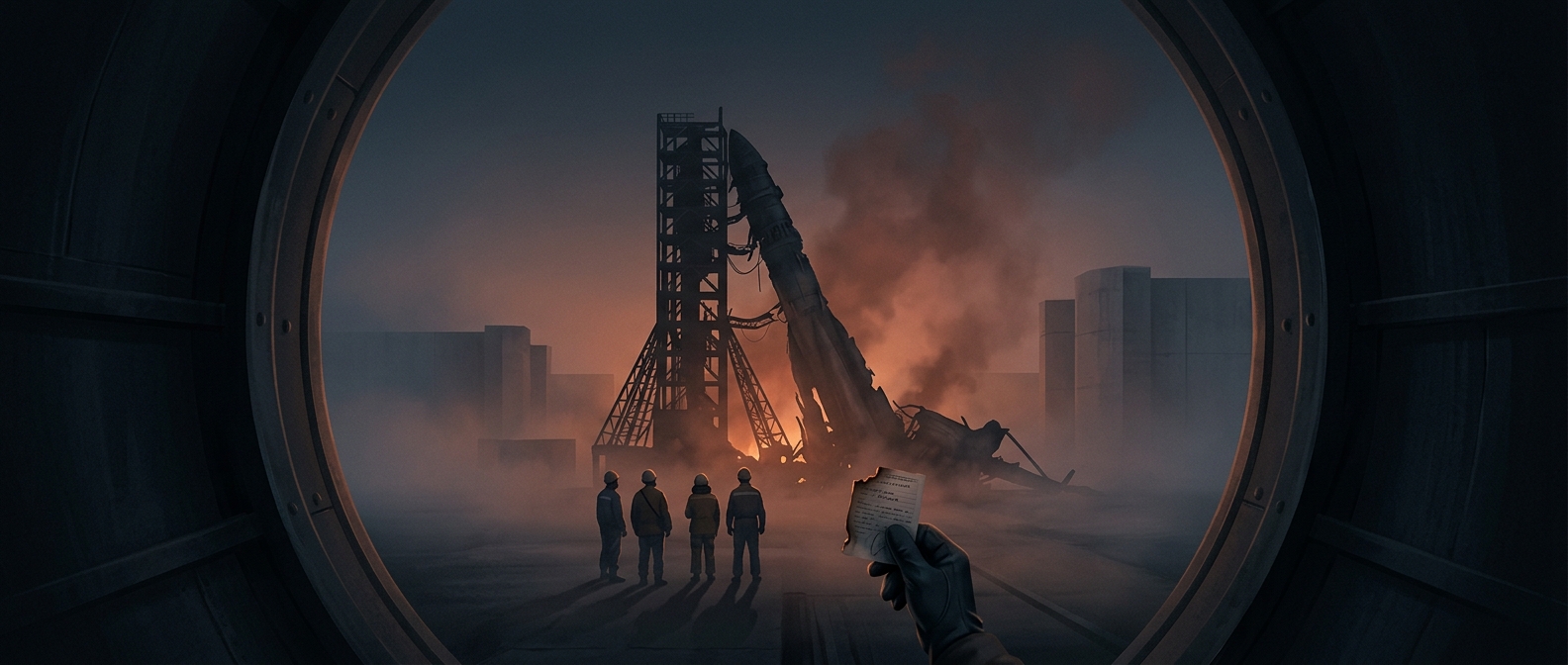
A missile was being prepared as if it were already safe
On October 24, 1960, the Soviet Union’s R-16 intercontinental ballistic missile was still undergoing launch preparations at the Baikonur test range in Kazakhstan. The rocket used two stages—sections that ignite in sequence—and highly reactive propellants. Technicians were working close to the fueled missile while trying to resolve problems before a planned test.
The launch schedule was under pressure, and the work continued despite unresolved faults. In the crowded, hazardous conditions, a premature ignition set off the rocket’s second stage. The resulting fire and explosions swept across the pad. Among the dead was Marshal Mitrofan Nedelin, the senior officer overseeing the test.
Why the failure became a secret
A disaster at a military test site could reveal more than a technical failure: it could expose the state of a strategic weapons program and invite questions about who had allowed dangerous preparations to continue. Soviet authorities kept the catastrophe out of public view. Nedelin’s death was attributed to an airplane crash, giving the loss of a prominent official a cover story that concealed what had happened at the launch site.
That secrecy also kept the victims’ deaths and the launch failure from becoming part of the public record. Accounts surfaced only much later, as greater openness in the late Soviet period and the collapse of the Soviet Union made suppressed history harder to contain.
The human cost of a rushed test
The explosion was not simply a rocket malfunction: it was a chain of decisions that left people exposed beside a fueled missile. Testing a new weapon meant confronting technical problems, but continuing work in unsafe conditions turned those problems into a mass-casualty disaster. The secrecy that followed hid the scale of the loss—and, for decades, the decisions that made it possible.