A tiny hole changed what a hide could become
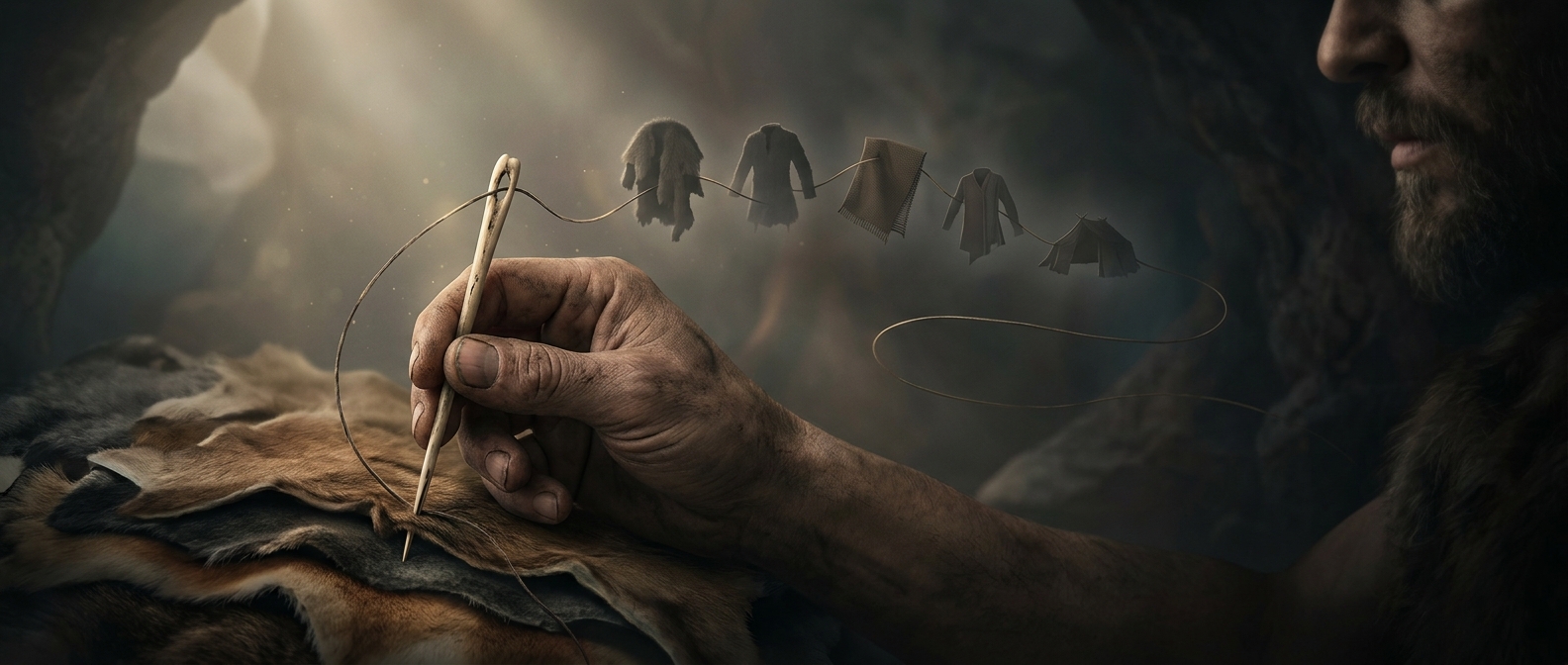
A bone needle is more than a sharp point. Its eye—the small hole near one end—lets a maker pull a strand through the material, joining separate pieces with repeated stitches. That made it possible to shape animal hides into garments rather than simply drape them over the body.
The distinction mattered in cold conditions. A close-fitting layer can cover gaps that a loose hide leaves exposed, while seams allow pieces to be joined around the body. Needles therefore expanded the ways people could use the materials they had, though the precise cut and style of garments from this period are not known.
Making the tool took control
Bone is hard enough to hold a point but can be worked into a slender form. To make a needle, a craftsperson had to shape and smooth the shaft, sharpen its tip, and create an eye without breaking it. The eye also had to be large enough for a strand to pass through; a needle too thick or rough could damage the hide or make stitching difficult.
That combination of a fine point and an eye separates a sewing needle from a pointed tool used only to pierce. With an awl, for example, a person can make holes, but must handle the joining material separately. An eyed needle carries the strand through as it goes.
Sewing made clothing more adaptable
Stitching let people join smaller pieces and adjust how clothing sat, instead of relying only on the shape of an intact hide. That offered a practical way to make coverings fit different bodies and conditions. Bone needles preserve evidence of this skill even though the clothing itself—made from perishable materials—rarely survives. The durable tool points to a more flexible use of animal hides than simply wrapping them around the body.