Why Bathrooms Make Emotional Breakdowns Feel Plausible
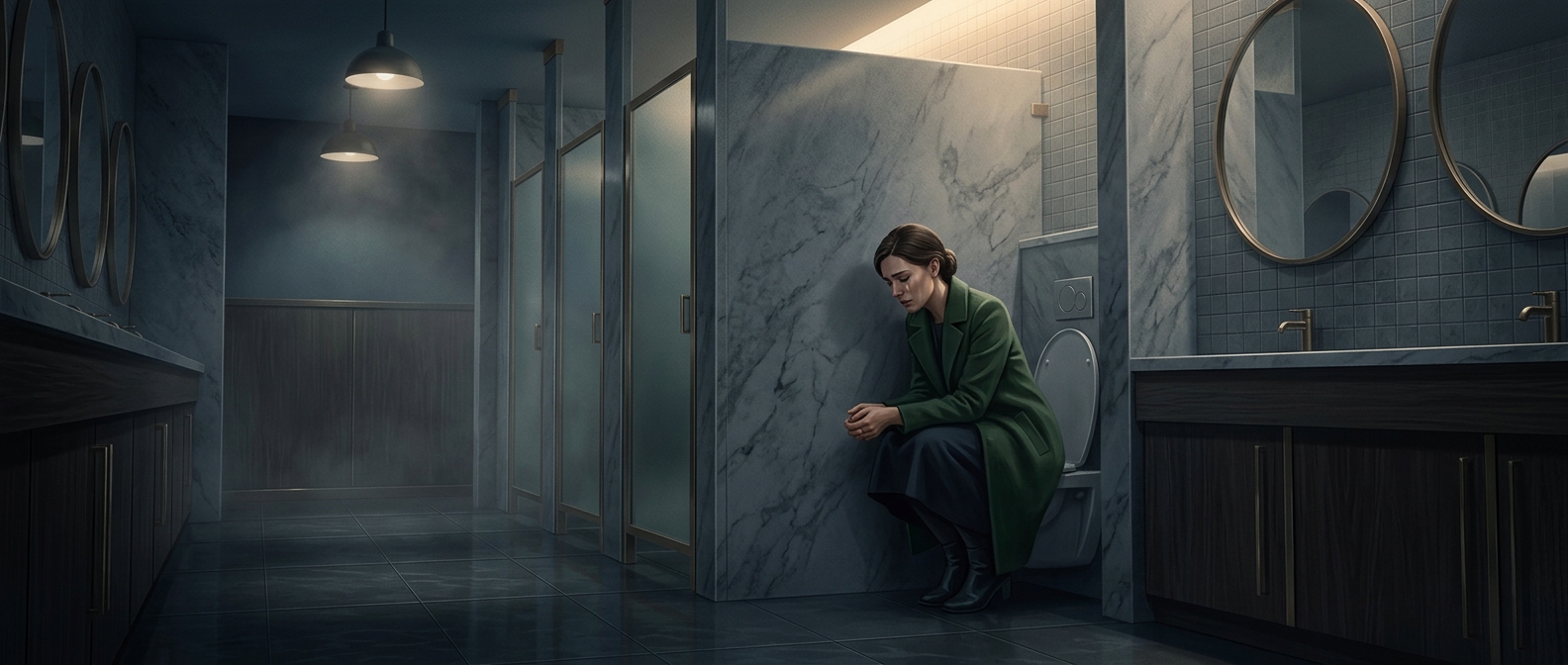
A character can leave a crowded party or a tense meeting and duck into a bathroom without anyone needing to ask why. That ordinary excuse gives a screenplay a believable way to move someone out of public view at the exact moment their composure is failing. The room is private, but only temporarily: footsteps outside or a hand on the door can remind viewers that the character is not truly safe from being discovered.
That mix of shelter and exposure creates tension. A bedroom may feel like a place where someone has chosen to be alone; a shared bathroom feels borrowed. The character gets a moment to recover, but the scene carries the question of whether someone will come looking.
A Small Room Full of Storytelling Tools
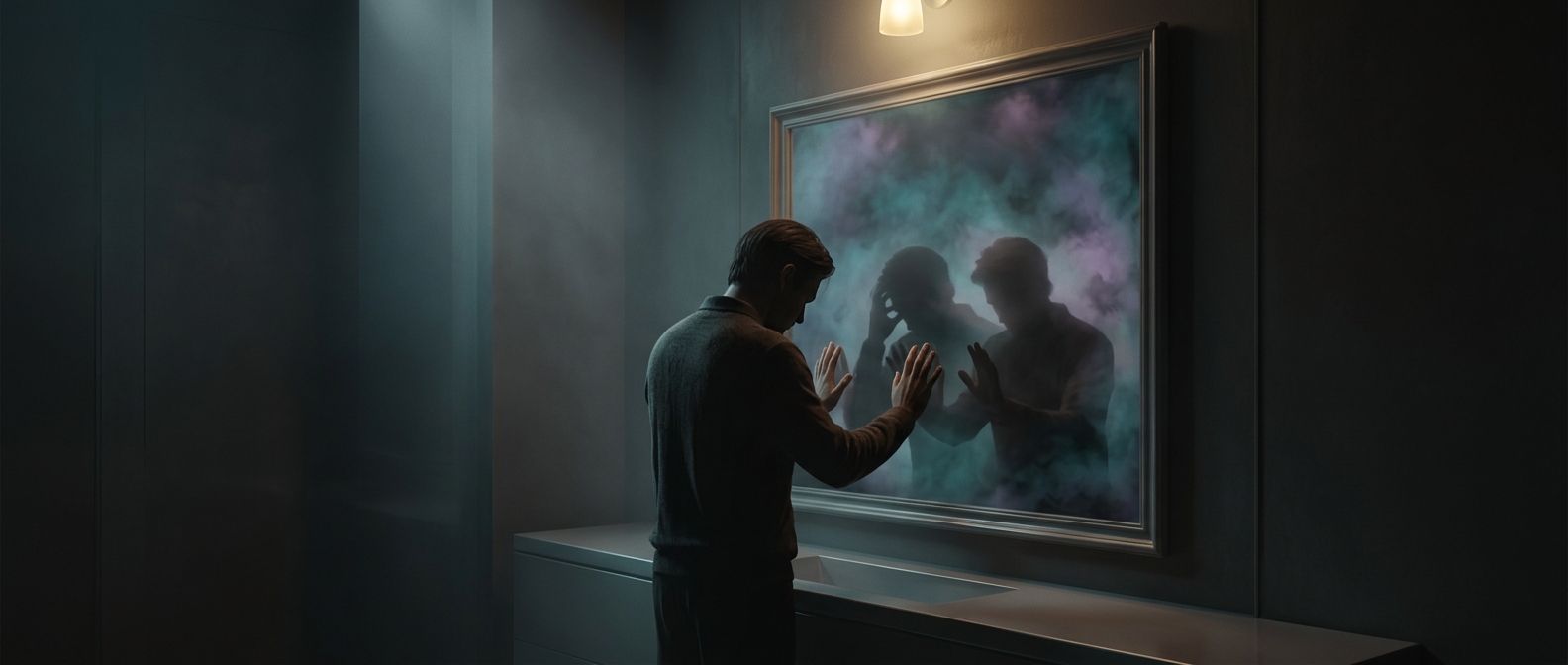
Bathrooms also make emotion visible. A mirror lets a character face their own expression, avoid their reflection, or try to arrange their face before returning to other people. A running tap can cover a sob or create a pause in conversation. A splash of water offers a simple physical action when a character has no words—or when the script needs to show an attempted reset without explaining it aloud.
The room’s fixtures provide useful business for actors, too. Someone can grip a sink, brace against a wall, or stare at their hands. Those actions turn an internal reaction into something the camera can show. The setting does not have to explain the entire crisis; it gives the character a few seconds and a few objects through which the audience can read it.
The Exit Is Part of the Scene
A bathroom breakdown often matters because the character must eventually leave. They may wipe their face, rehearse an expression, or simply open the door before they feel ready. That return to the social world makes the room more than a hideaway: it becomes a brief checkpoint between what the character feels and what they are willing to let others see.