A Crack That Changes the Picture
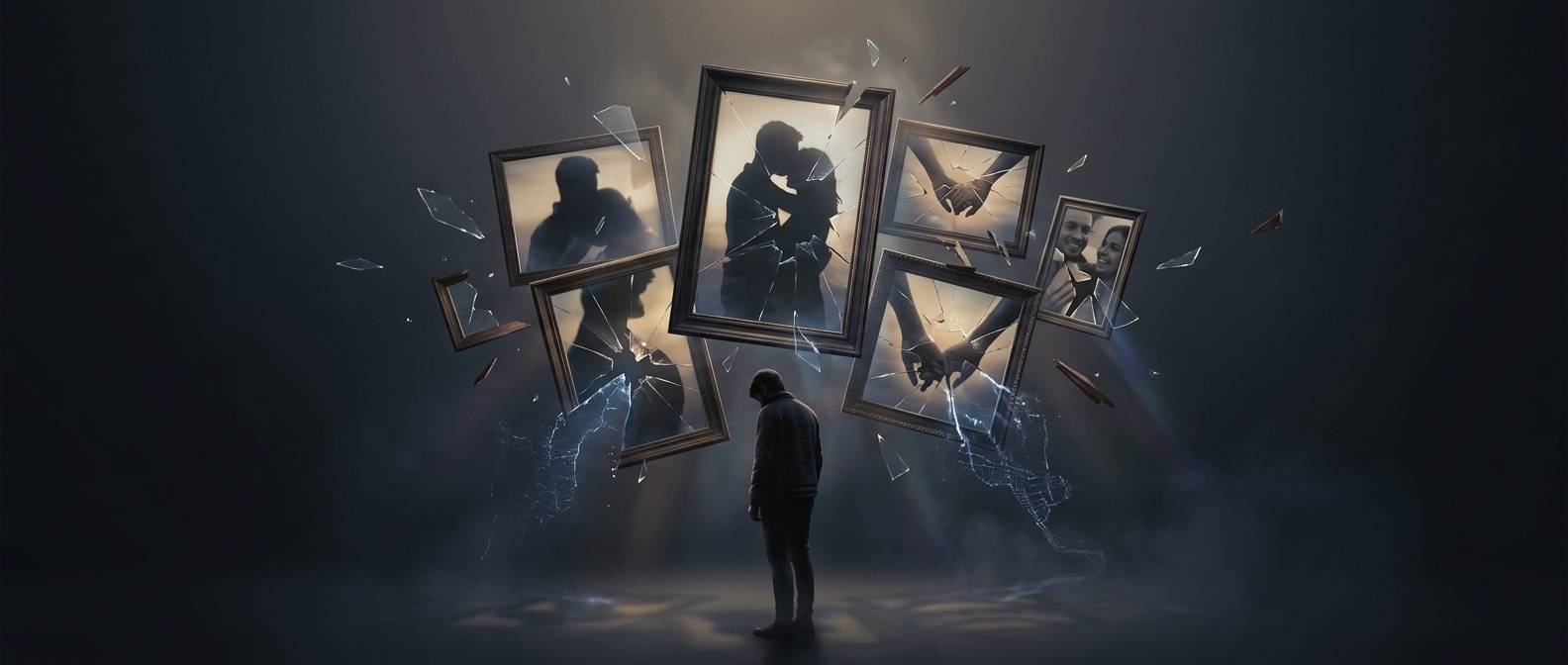
A photograph usually presents a relationship as a settled memory: two people posed together, smiling, held neatly inside a frame. When the glass or frame breaks, the image remains, but its appearance of wholeness does not. If the crack runs between the faces, one physical line turns the couple’s shared portrait into two visually separated halves.
That split gives the object its storytelling force. Viewers can read damage to the frame as damage to the bond without needing a character to explain what has gone wrong.
Why Filmmakers Use a Household Object
A broken frame is a compact visual cue. It can sit on a table in the background, appear in a close-up, or be discovered after an argument. Its meaning comes from the contrast between the intact, smiling moment preserved in the picture and the present-day conflict surrounding it. The prop lets a story place past happiness and current fracture in the same shot.
The image is not a fixed code: a cracked frame can also signal loss, anger, or simple accident. But when a story has already established the couple’s photograph as meaningful, a crack across their faces makes the rupture visible before anyone says it aloud.