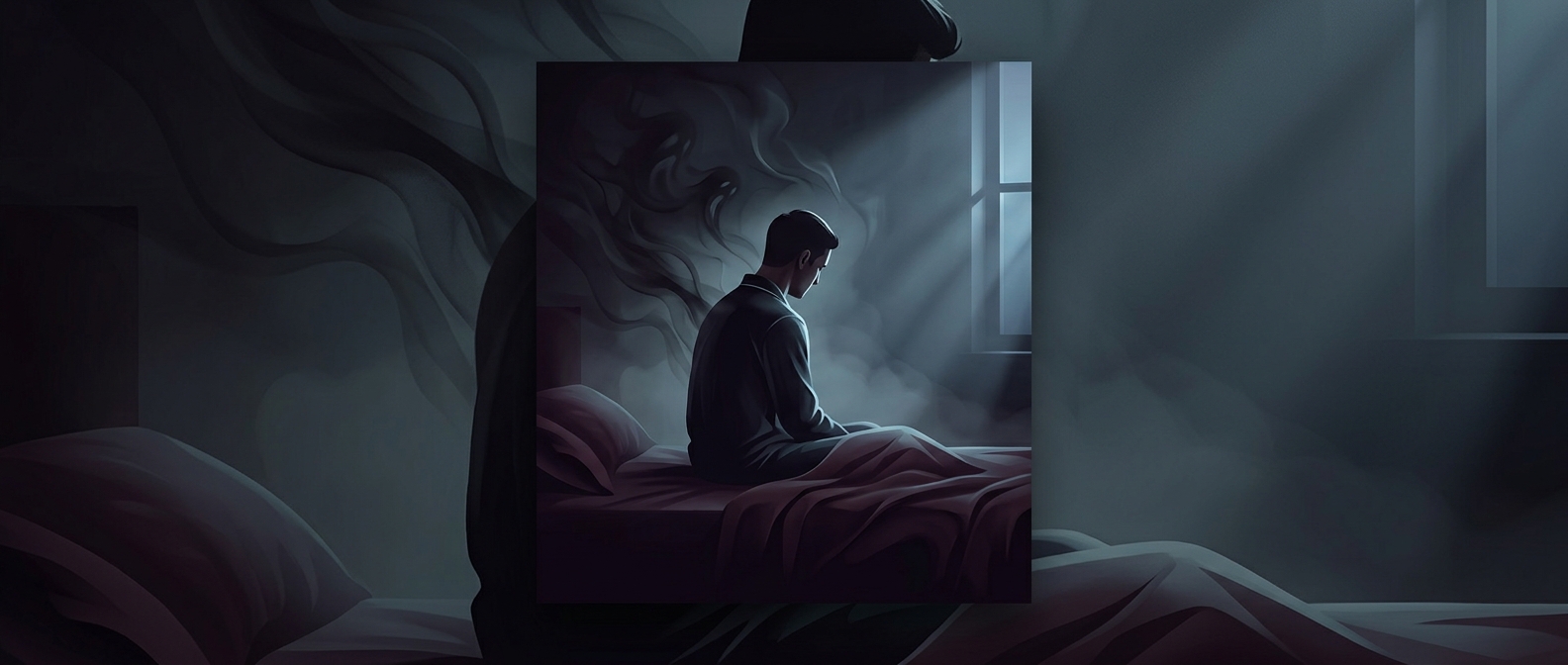
When the Brain Wakes Only Partway
Sleep terrors arise during deep, non-REM sleep, often early in the night. They are not simply frightening dreams: they involve a sudden, incomplete shift toward wakefulness. Parts of the brain that control movement and basic survival responses can become active while the systems responsible for clear awareness remain largely asleep.
That split helps explain the dramatic posture. A person may jerk upright or gasp because the body’s movement and alarm circuits are responding, even though the person is not fully awake and may not understand what is happening. The racing heart, rapid breathing, and sweating come from the autonomic nervous system—the network that automatically adjusts functions such as heartbeat and breathing during stress.
Why the Person May Seem Unreachable
Because the brain has not made a clean transition into wakefulness, someone having a sleep terror may stare, cry out, or resist comfort without recognizing people nearby. They often have little or no memory of the episode afterward. This differs from a typical nightmare, which happens during dreaming sleep and is more likely to be remembered after waking.
The episode can look like a conscious reaction to danger, but its intensity does not mean the sleeper is deliberately responding to a dream. It is a bodily alarm unfolding while awareness is still partly offline—one reason a person can sit bolt upright and sweat without being fully awake.