Why Fictional Thinkers Gravitate to the Window
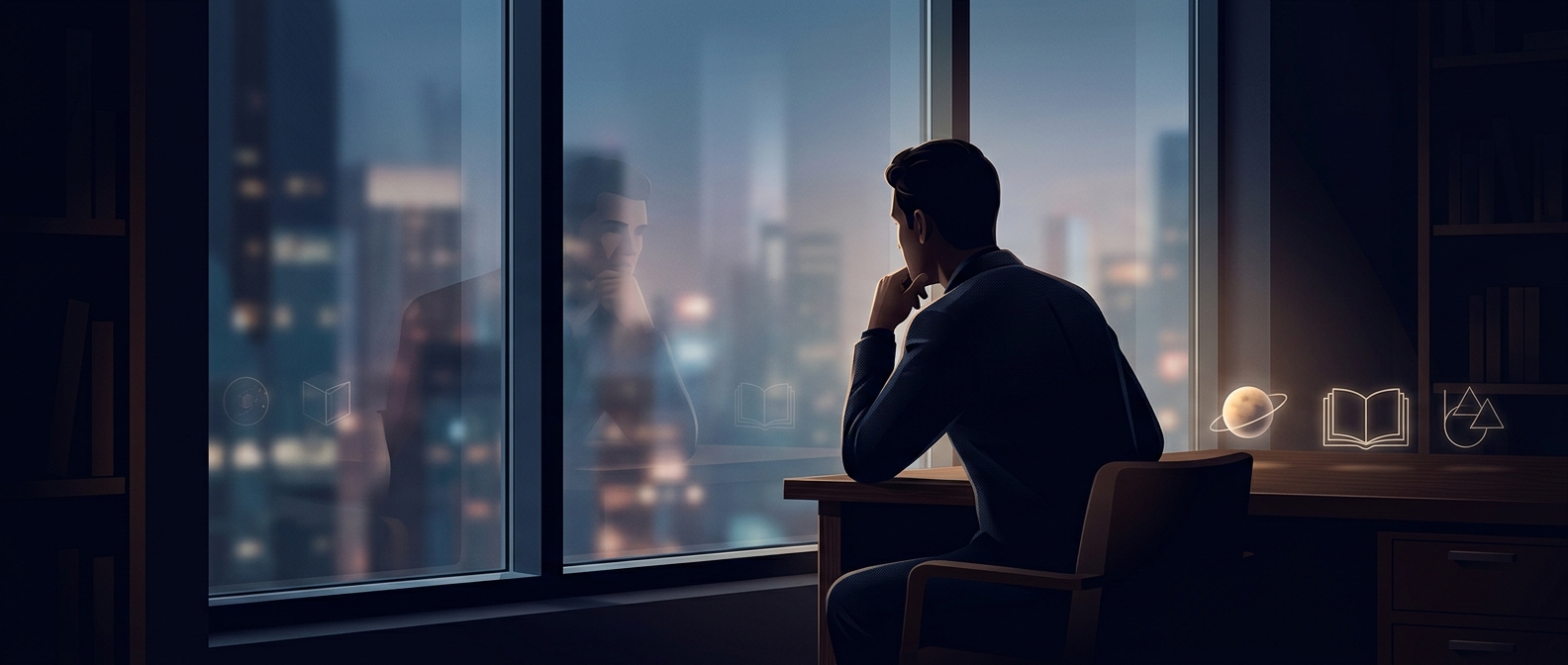
A person staring out a window gives a film or television scene something a couch alone may not: a visible direction for thought. The character can look outward while the audience wonders what is happening inward. Rain, city lights, or a reflection in the glass can make that pause feel charged without requiring the character to explain it.
The image also puts two worlds in one frame. The room is private and still; beyond the glass, weather and city life continue. A character caught between them can seem isolated, tempted by possibility, or simply deep in concentration. The window does not prove that a breakthrough is coming. It makes contemplation legible on screen.
A Small Scene With Built-In Atmosphere
A couch tends to suggest comfort, conversation, or therapy. The window offers a stronger visual composition: a figure in profile, a face reflected over the street, or a warm interior set against a dark exterior. Those contrasts help a quiet moment hold attention, especially when the plot needs to slow down before a decision.
The drink completes the ritual. Holding a mug gives the character something to do, while its warmth hints at domestic calm against a cold or rainy view. These details work as shorthand, not a recipe for real philosophical insight. Fiction can turn a silent pause into a memorable image—and make the window look like the place where an idea finally arrives.