A moon that solves a lighting problem
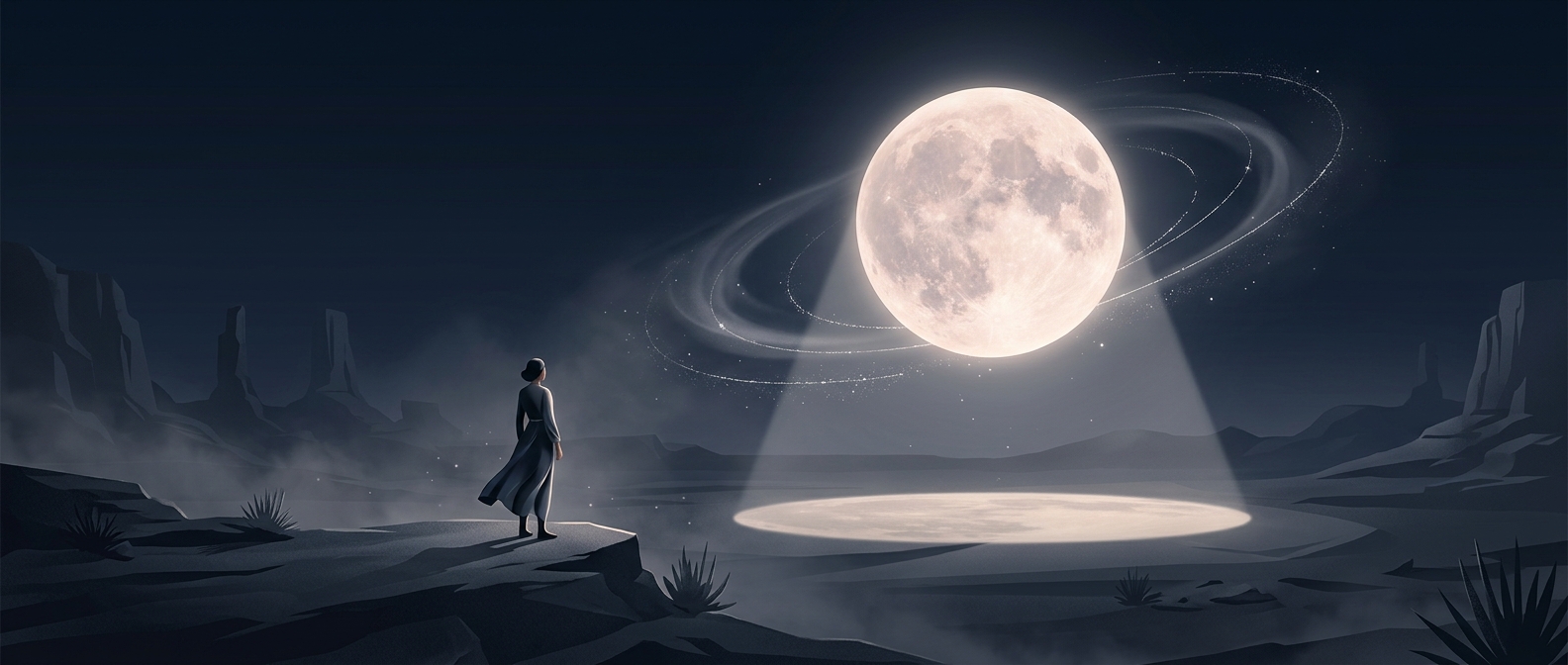
A real moonlit night is much dimmer than the bright, readable night scenes audiences expect. Cameras and film crews therefore rely on controlled lighting to reveal faces, movement, and the setting. A visible full moon gives that brightness a believable on-screen reason: the scene can look unusually well lit without seeming to take place under daylight.
The moon itself usually is not lighting the actors. The crew creates the scene’s illumination with lights, then uses the full moon as a visual cue that helps viewers accept the effect. It can also cast a familiar mood—romantic, eerie, or suspenseful—with one instantly recognizable shape.
The sky is not the shooting schedule
The moon’s phase depends on its position relative to Earth and the Sun, so a full moon is available only at certain times. A film, however, may need to shoot a night scene when the cast, location, and crew are ready, not when the lunar calendar cooperates. Even if a production films under a different phase—or without a clear view of the sky—the moon can be added or emphasized in the finished image.
That flexibility makes the full moon a kind of visual shorthand: it promises a bright, dramatic night, whether or not the real sky could have supplied one.