Why a Smooth Stop Is Harder Than It Looks
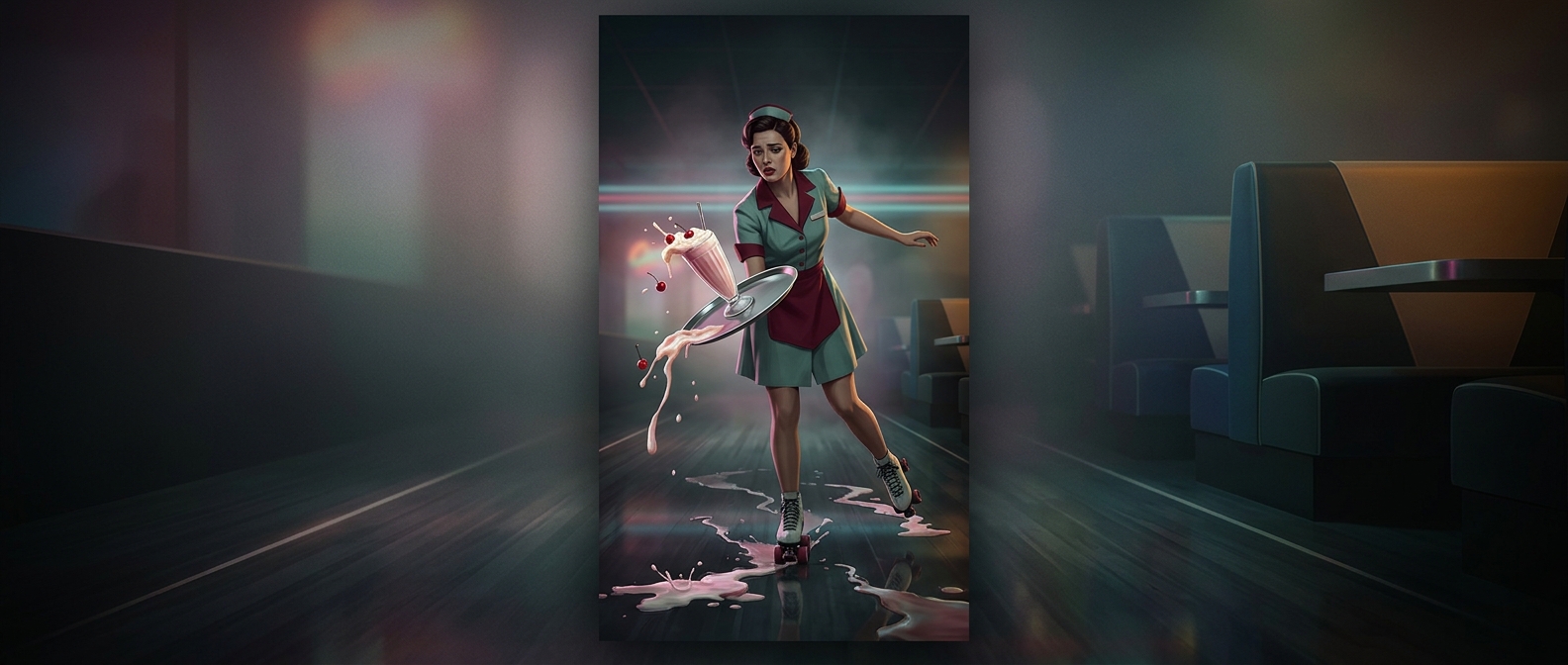
A milkshake does not instantly match the motion of its cup. When a skating server brakes, the cup slows with her hand, but the liquid keeps moving forward for a moment because of inertia—the tendency of moving objects to keep moving. The surface rises at the front, and a sharp stop can send a wave over the rim.
A turn creates a similar problem sideways. The cup changes direction, while the shake briefly continues along its old path. The faster the change in motion, the steeper the slosh and the greater the chance of a spill.
The Tray Becomes a Small Transport Problem
A waitress on skates must control both her own balance and the drinks’ movement. A sudden correction to avoid a customer can jolt the tray; leaning into a turn may keep her upright but still leave the cups sliding or tilting. The challenge is not simply carrying weight—it is keeping several loose liquids steady while the carrier accelerates, turns, and stops.
That makes gradual movement useful: easing into a turn or braking over more distance gives the liquid time to settle instead of driving it into the cup’s edge. A wide, stable tray and cups with room below the rim can also reduce the consequences of a wave. The smoother the server’s change in speed or direction, the less the milkshake has to catch up.