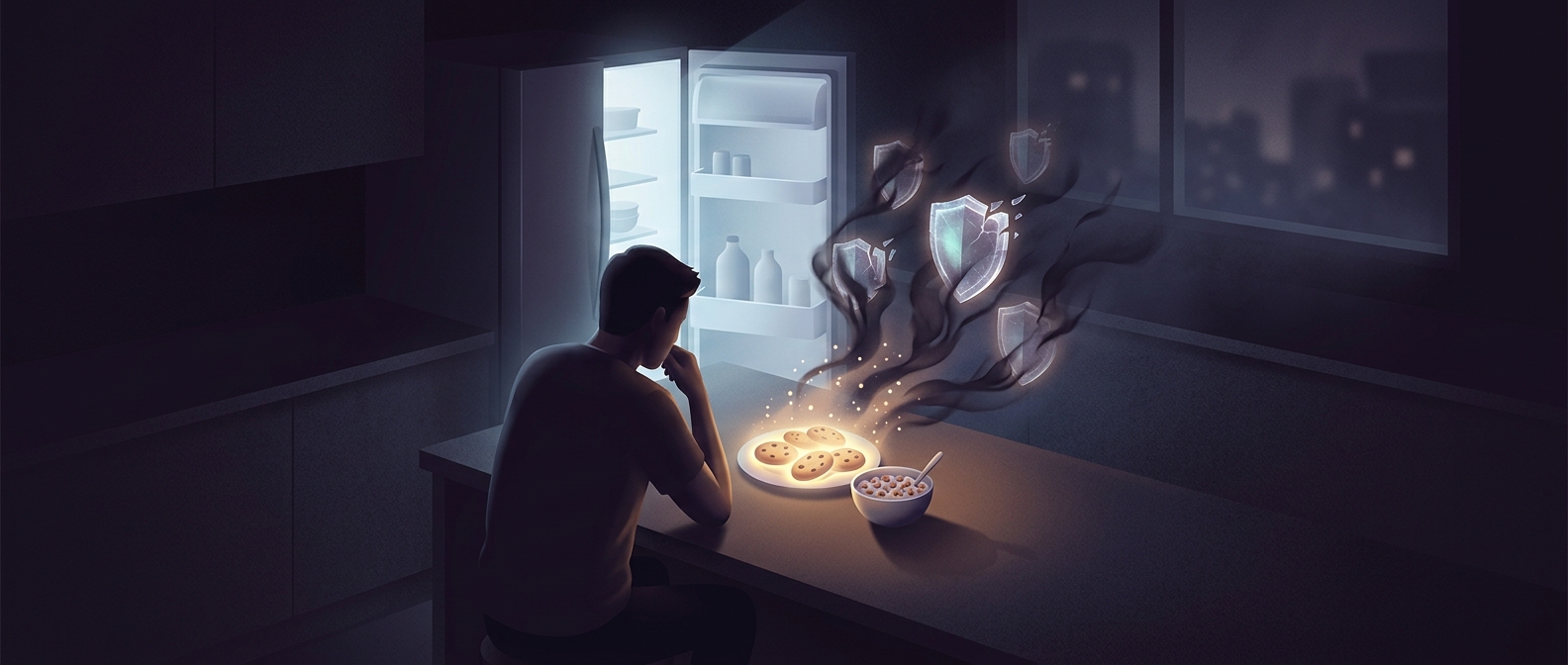
How meal timing can send mixed signals
The body’s daily clock helps coordinate sleep, digestion, hormone release, and immune activity. Eating is also a timing signal: after a meal, the gut and organs that manage blood sugar become more active. A late meal can therefore ask the body to handle incoming nutrients during a period when many of its daily rhythms are shifting toward overnight rest and maintenance.
That mismatch may affect how the body organizes its work. But the immune system is not a single overnight repair crew, and it does not simply switch off digestion to focus on defense. Immune cells and inflammatory signals follow daily rhythms, while other processes continue in parallel.
Timing is one factor, not a verdict
Researchers can study whether eating schedules change immune-related signals, but a change in one signal does not automatically mean a person is less able to fight infection. Sleep, the foods eaten, and a person’s overall routine also shape the picture. A late dinner by itself cannot establish that someone’s defenses have been harmed.
The practical point is that when we eat can matter to the body’s rhythms, even though the specific immune consequences of a late meal are not settled by timing alone. A meal does not halt overnight maintenance; it adds digestive work to a body already coordinating many jobs.