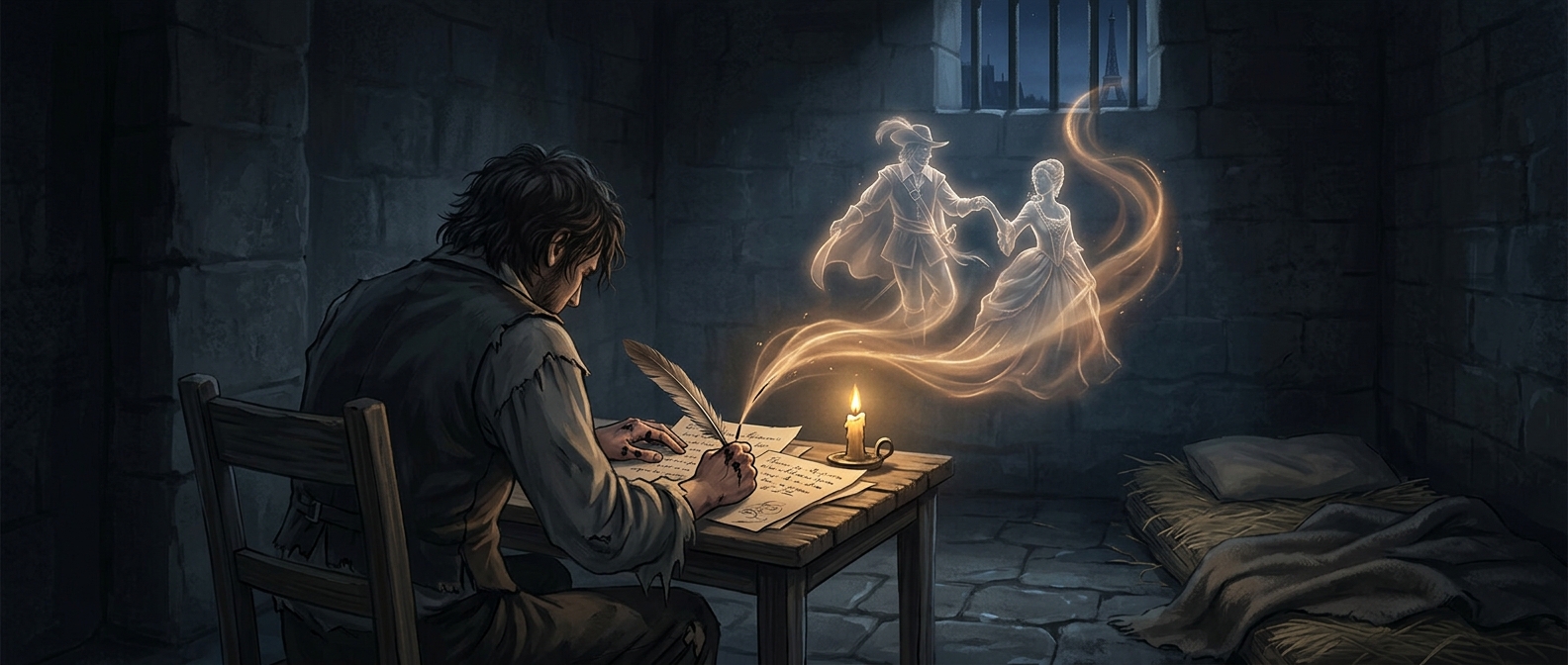
The Story Inside a Pardon Plea
For a poor person accused of killing someone, the account of a fight could matter beyond establishing what happened. A royal pardon offered a route to mercy: the king could spare a person from the punishment the law otherwise allowed. Because that mercy depended on a decision, the plea had to make a case for why the accused deserved it.
That made a narrative more than a plain list of events. A petitioner could present a killing as the unintended end of a quarrel rather than a deliberate murder, emphasizing the moments that made the accused seem less blameworthy. In a bar fight, for example, the same violence might be framed as an accident arising from an affair of honor. The events were not necessarily invented; their selection and interpretation could change what they seemed to mean.
Making Violence Legible as Misfortune
A compelling account gave the king a recognizable reason to show mercy. It could portray the accused as caught up in a sudden, tragic turn of events rather than as someone who had planned a killing. That distinction mattered because a pardon was not simply a verdict that no crime had occurred. It was an appeal for the ruler to spare the person despite the offense.
The strategy also reveals an unequal feature of the process: people seeking mercy had to make their experiences fit a persuasive form. The violence itself might be chaotic, but the plea needed a clear sequence and a sympathetic explanation. Survival could depend not only on what had happened, but on whether it could be told as a story the king might accept.