A border-town improvisation became a familiar snack
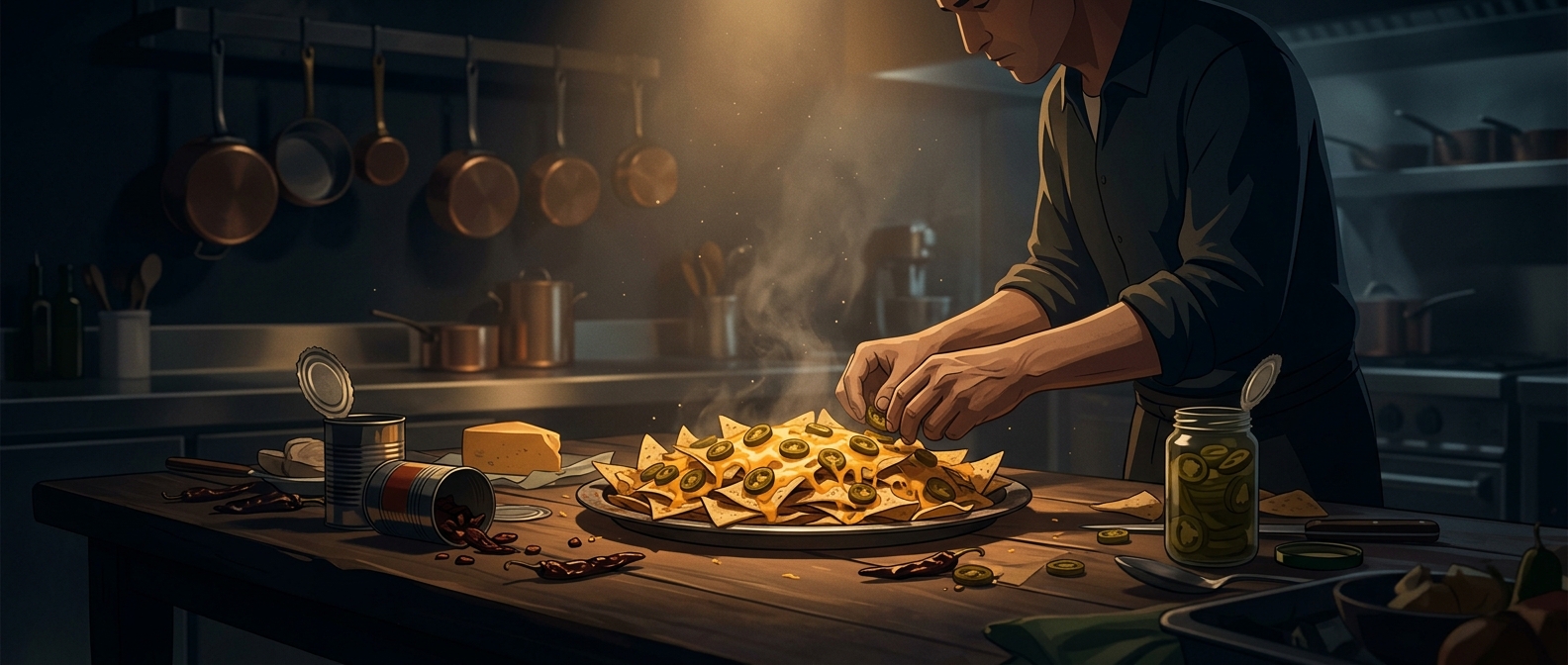
The story of nachos is tied to Piedras Negras, a Mexican city just across the Rio Grande from Eagle Pass, Texas. In the familiar account, Ignacio Anaya was working at a restaurant when a group of visitors arrived after the kitchen had closed. He made them a quick plate from what was available: tortilla chips, melted cheese, and jalapeños.
The important trick was simplicity. The chips could be arranged on a plate, topped, and warmed without the preparation of a full meal. The result combined crisp corn tortillas with creamy cheese and the sharp heat of peppers—contrasts that made the improvised dish satisfying on its own.
From “Nacho’s” plate to nachos
Anaya was nicknamed “Nacho,” and the dish became known as “Nacho’s especiales.” As people carried the idea beyond that restaurant, the name shortened to nachos. The recipe also proved easy to adapt: cooks could add toppings or change the cheese while keeping the same basic structure.
That flexibility helps explain why the dish traveled so well. Its origin is not a complicated recipe or a planned culinary invention, but a quick solution to a closed kitchen—and a combination simple enough for other cooks to recreate on either side of the border.