How a mustache became part of a man’s silhouette
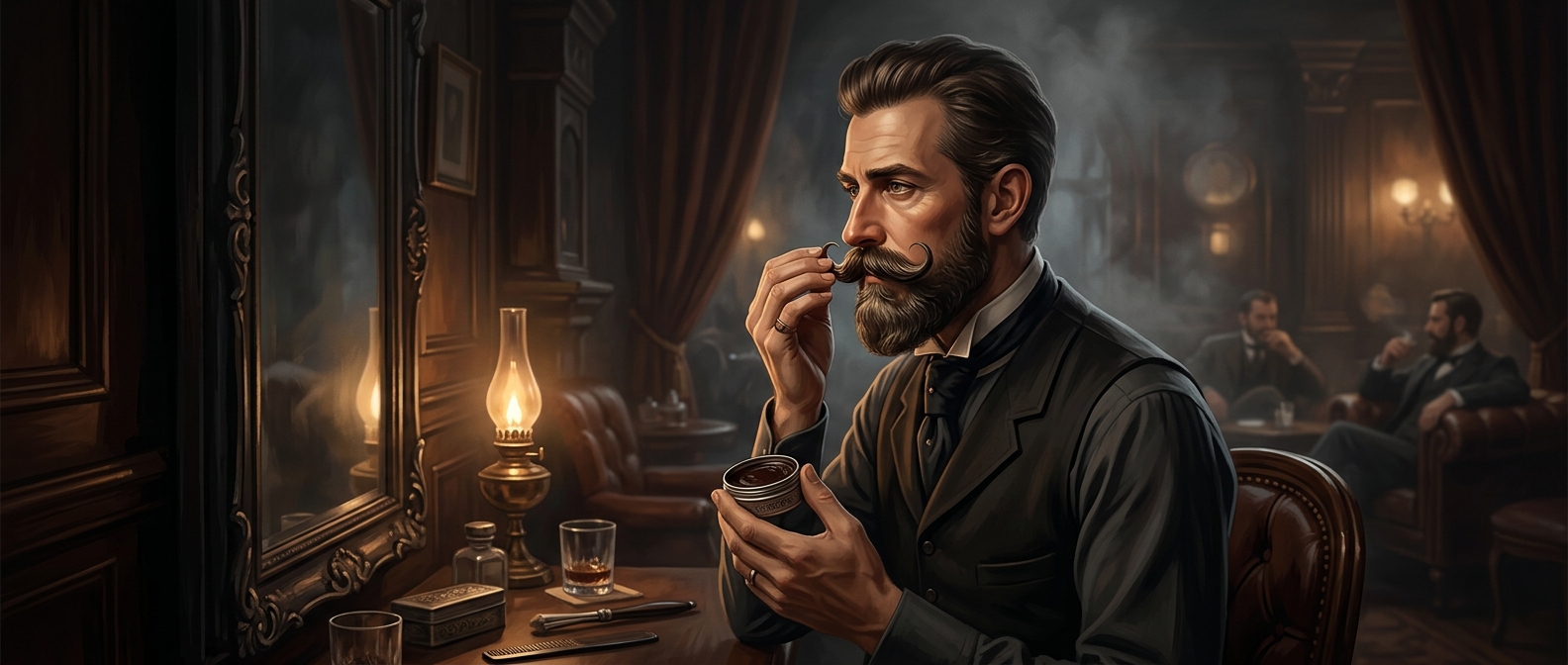
In the nineteenth century, facial hair was often deliberately shaped rather than left to grow as it pleased. A broad, horizontal mustache could make the face look more imposing and signal attention to fashionable grooming. But hair naturally curls, droops, and shifts, so the sharply defined ends seen in portraits and illustrations needed help staying in place.
Mustache wax supplied that hold. A small amount was worked through the hairs and the ends twisted or drawn outward into the desired shape. Once the wax cooled and set, it kept the hair from quickly falling back toward the lips. The result was less like a soft fringe and more like a pair of narrow, stiff projections.
Style had a physical cost
That structure could survive ordinary movement, but it also changed the distance at which a man could comfortably approach someone. Leaning close to speak, greeting a friend, or sharing a crowded space risked bringing a rigid tip into contact with another person. The fashionable outline was therefore not just an image in a portrait: it occupied real space.
The inconvenience was part of the tradeoff. Wax made an elaborate shape possible and helped preserve it through the day, but the same stiffness that kept the mustache looking deliberate could make intimate conversation awkward. A tiny grooming choice could turn a close approach into a matter of careful positioning.