The color is in the iron’s chemistry
“Rust” is a useful shorthand, but Martian dust is not simply ground-up flakes of the material on a bicycle. Its red tint comes largely from iron-bearing minerals that have been oxidized: iron atoms have combined with oxygen and changed into forms that absorb and reflect sunlight differently from unoxidized iron. The resulting iron oxides—minerals in the same broad chemical family as rust on Earth—give fine dust a reddish hue.
That distinction matters because the oxygen in these minerals need not have come from a thick, oxygen-rich atmosphere like Earth’s. Oxygen can be chemically bound into minerals, and scientists continue to investigate how Mars’s iron became oxidized. Water may have helped in the planet’s past; other reactions involving the atmosphere and surface dust may also have contributed.
A thin coating can color a whole world
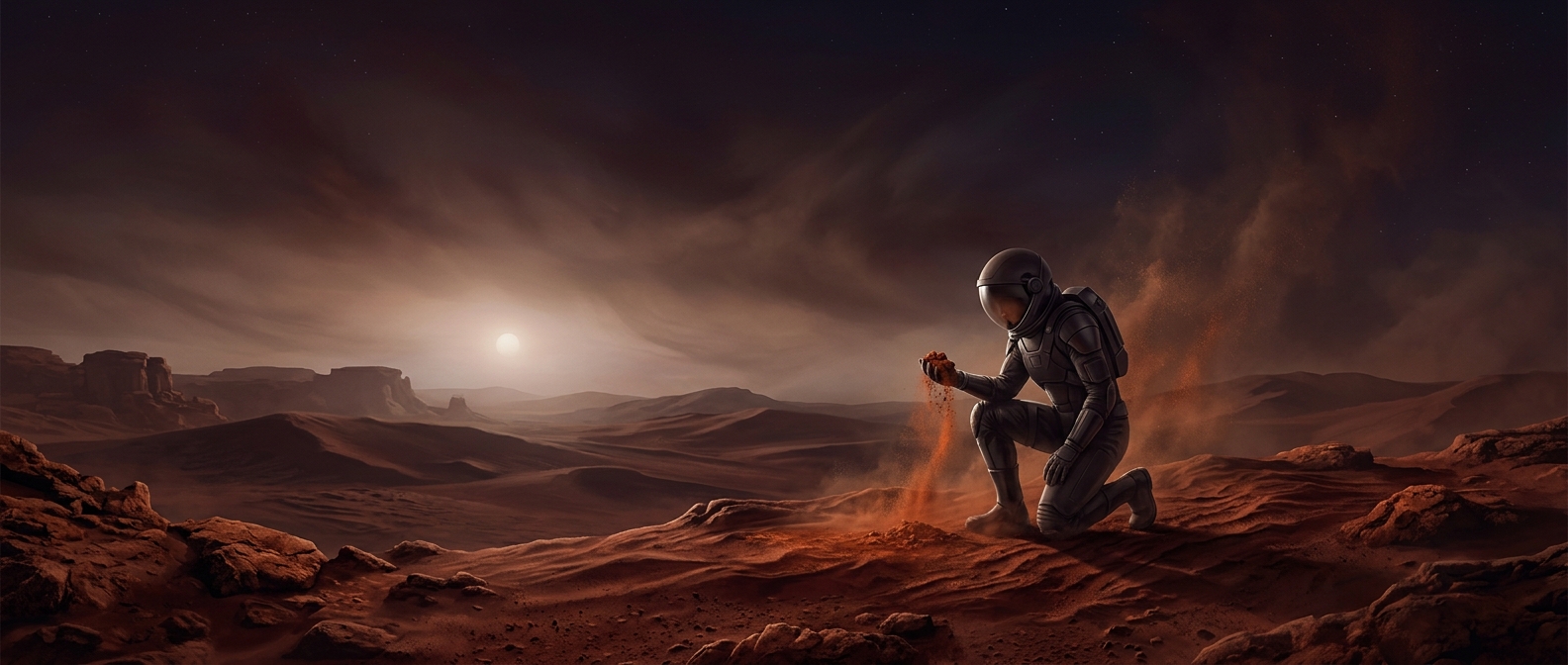
The color becomes planetary because the grains are so small and easily moved. Dust settles over darker rock, gathers in broad deposits, and can be lifted again by winds. Once airborne, it tints the atmosphere and settles far from where it began. A surface’s appearance therefore depends not only on the rock beneath it but also on how much dust is covering it.
Mars’s familiar red is not uniform: exposed rock, dust deposits, and shifting patches can look different. But a thin layer is enough to dominate the view. The planet’s color is less a coat of paint than a continually redistributed mineral powder, made conspicuous by sunlight and spread across the landscape by the Martian atmosphere.