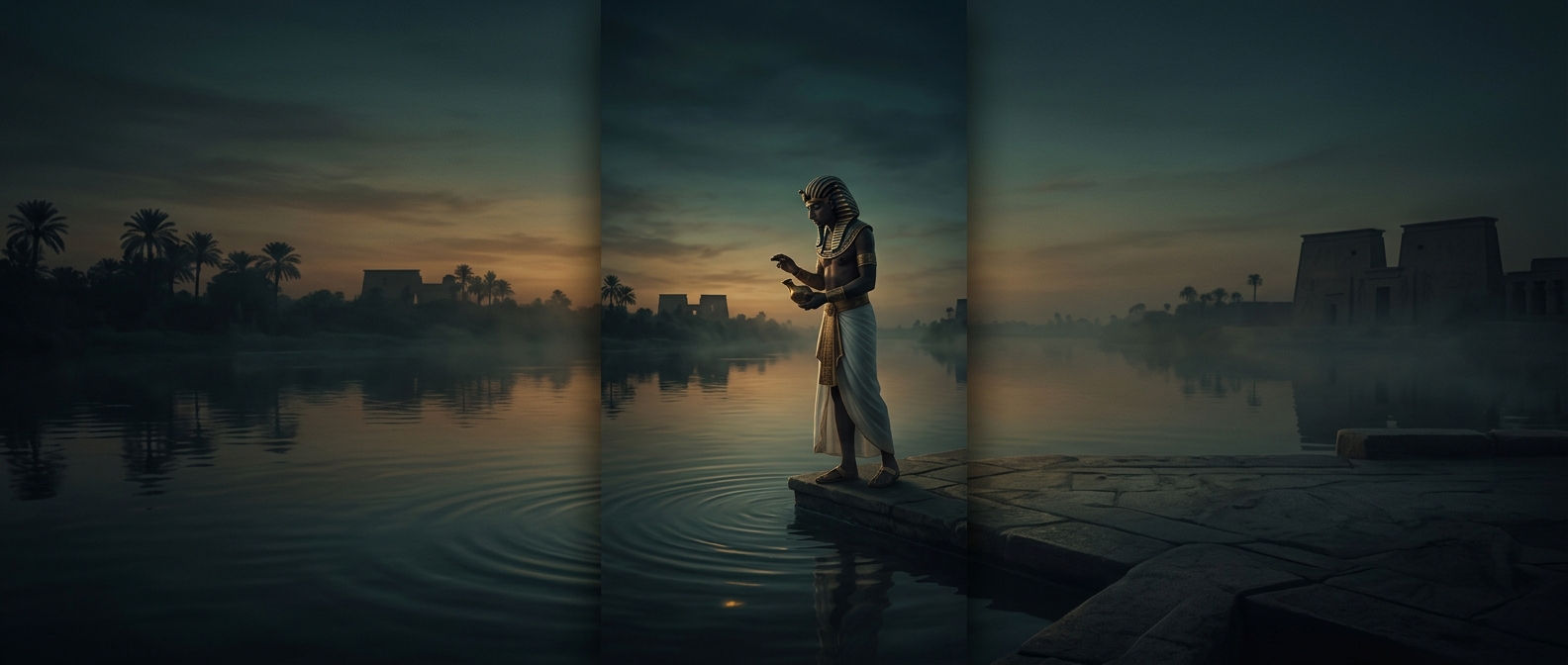
A Creation Myth Turned Into a Royal Act
In the Heliopolitan creation story, the god Atum brings the first generation of gods into being through an act of self-pleasure. The image makes creation bodily and fertile: life begins when a creative force is released. A ritual in which the pharaoh ejaculated into the Nile would echo that myth, casting the king as a human participant in the renewal of the world.
The Nile was not just a river in Egyptian life. Its annual inundation spread water and nutrient-rich silt across farmland, helping crops grow in a landscape where rain was scarce. The flood’s timing and height mattered enormously, but Egyptians could not command them with canals or royal orders. Ritual offered a way to express the hope that cosmic order—and the land’s fertility—would continue.
Symbolism, Not Hydraulic Engineering
The act’s imagined purpose was to join royal power to the Nile’s life-giving force. The pharaoh was understood as responsible for maintaining order between people, gods, and nature; a fertility rite could dramatize that responsibility in the most direct possible way. The king’s body stood for the kingdom’s capacity to renew itself.
That symbolism should not be mistaken for a practical method of controlling the flood. The Nile rose through seasonal processes beyond the pharaoh’s physical reach. The ritual’s significance lay instead in what it represented: the ruler performing his duty to sustain fertility, while the river’s return made that duty visible year after year.