Why Cassini turned its antenna forward
During its first dive between Saturn and the inner edge of its rings, Cassini faced a problem that is easy to miss in pictures: the gap was not necessarily free of debris. Even small grains can hit a spacecraft at high speed and damage exposed instruments, wiring, or other delicate hardware. The danger came not from a solid ring wall, but from particles moving through a narrow passage the spacecraft had to cross.
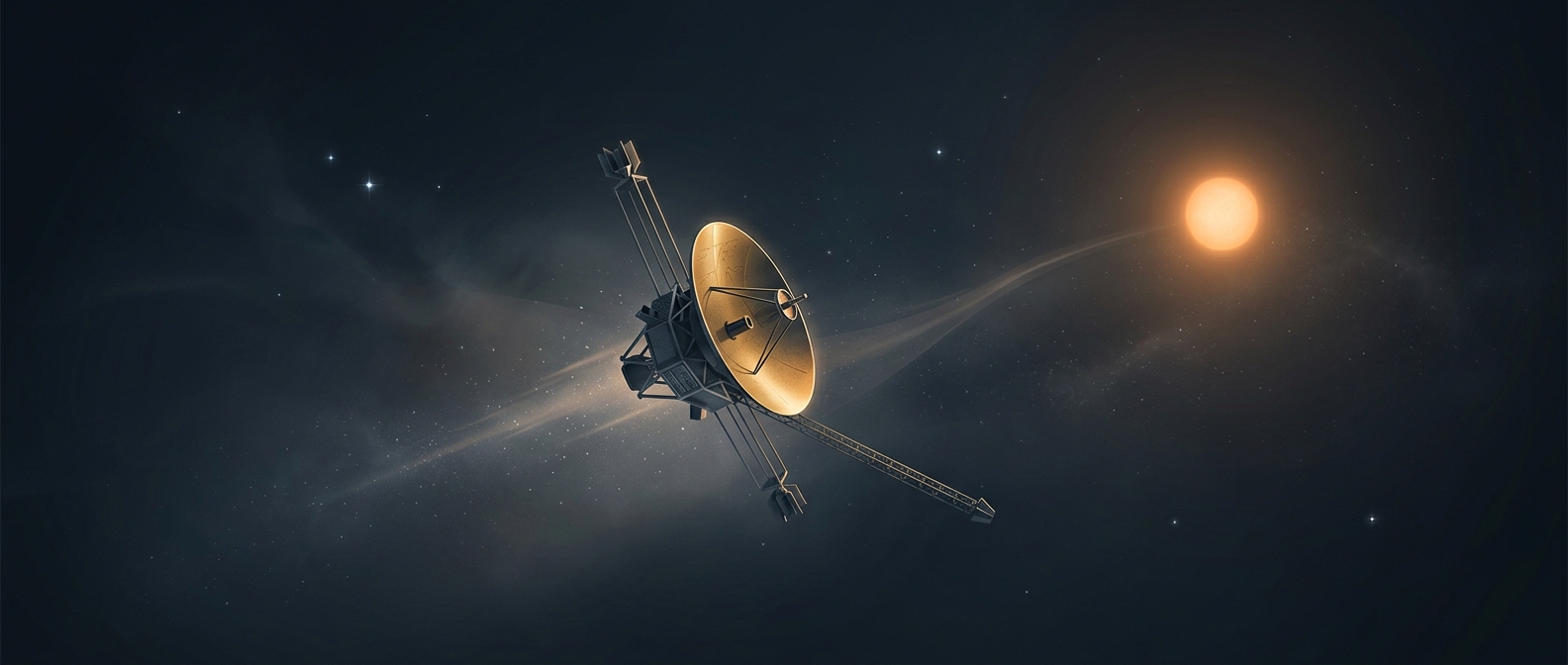
Cassini’s large high-gain antenna—the dish normally used to communicate with Earth—offered a broad, sturdy surface. Engineers pointed it in the direction of travel so that it would meet incoming dust first, shielding more vulnerable parts behind it. The maneuver temporarily sacrificed the spacecraft’s usual orientation for communication and observation: while the antenna faced forward, Cassini could not use it to keep its normal link with Earth.
A shield with a cost
This was a practical engineering tradeoff. A shield works only if it stands between the hazard and what must be protected, so Cassini had to enter the gap with its antenna pointed away from Earth. It could not simply steer around every particle; the ring environment was too complex, and the spacecraft needed a planned trajectory through the passage.
The first crossing also served as a cautious start to Cassini’s final series of close orbits. By passing through the gap with its antenna acting as a barrier, the spacecraft could make the initial encounter while reducing the risk to its instruments. Once it was through, it could turn back toward Earth and resume sending the information gathered on the journey.
The striking detail is that Cassini’s most recognizable dish briefly had a second job: not transmitting a signal, but taking the first hit in a place that only looked empty.