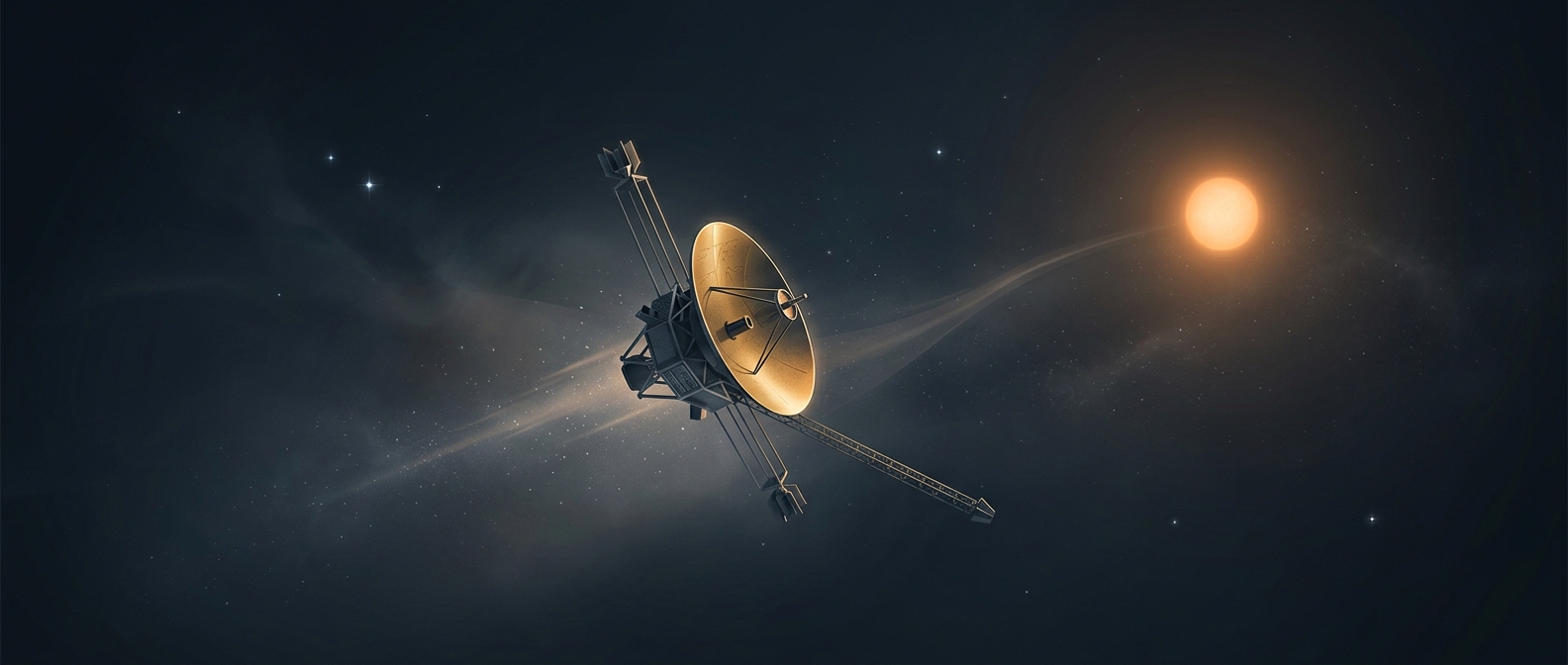
Jupiter gave Pioneer 10 its outward path
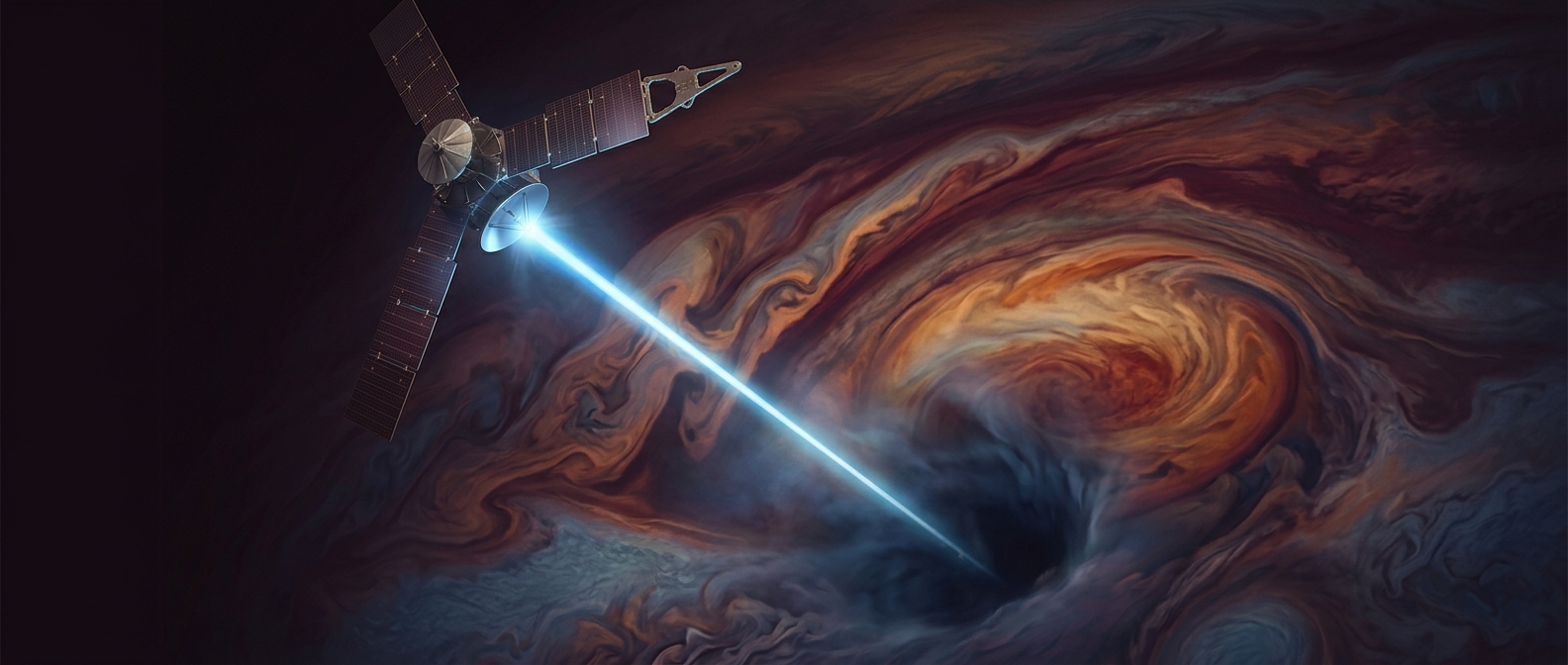
Pioneer 10 did not leave Earth pointed at Aldebaran. Its first major destination was Jupiter. In December 1973, the spacecraft swept past the planet, whose gravity bent and accelerated its path. This maneuver—often called a gravity assist—let the probe depart the inner solar system on a trajectory that would carry it outward without needing a long engine burn.
The flyby changed Pioneer 10’s direction, but did not put it under continuous guidance toward a star. Once the brief encounter was over, the spacecraft continued along the path it had gained. In the near-vacuum of space, an object keeps moving unless gravity or some other force changes its motion.
A direction is not a rendezvous
Pioneer 10’s outbound trajectory points generally toward Aldebaran, the bright star in the constellation Taurus. That does not mean the probe is steering toward it or can adjust to meet it. Its main engine is no longer firing, and the craft has no active navigation correcting its course. Its motion is largely a long coast, shaped by gravity along the way.
Aldebaran is tens of light-years away, so even a spacecraft traveling many miles every second would need roughly two million years to reach its vicinity. The star and the probe are both moving, too; “heading toward” describes the broad direction of the spacecraft’s path, not a carefully planned arrival at a fixed target.
That immense travel time is the consequence of the same simple bargain that sent Pioneer 10 beyond Jupiter: a brief gravitational nudge can set a spacecraft on a lasting course, but after the encounter, distance and inertia do the rest.