How Roman glass made color change with the light
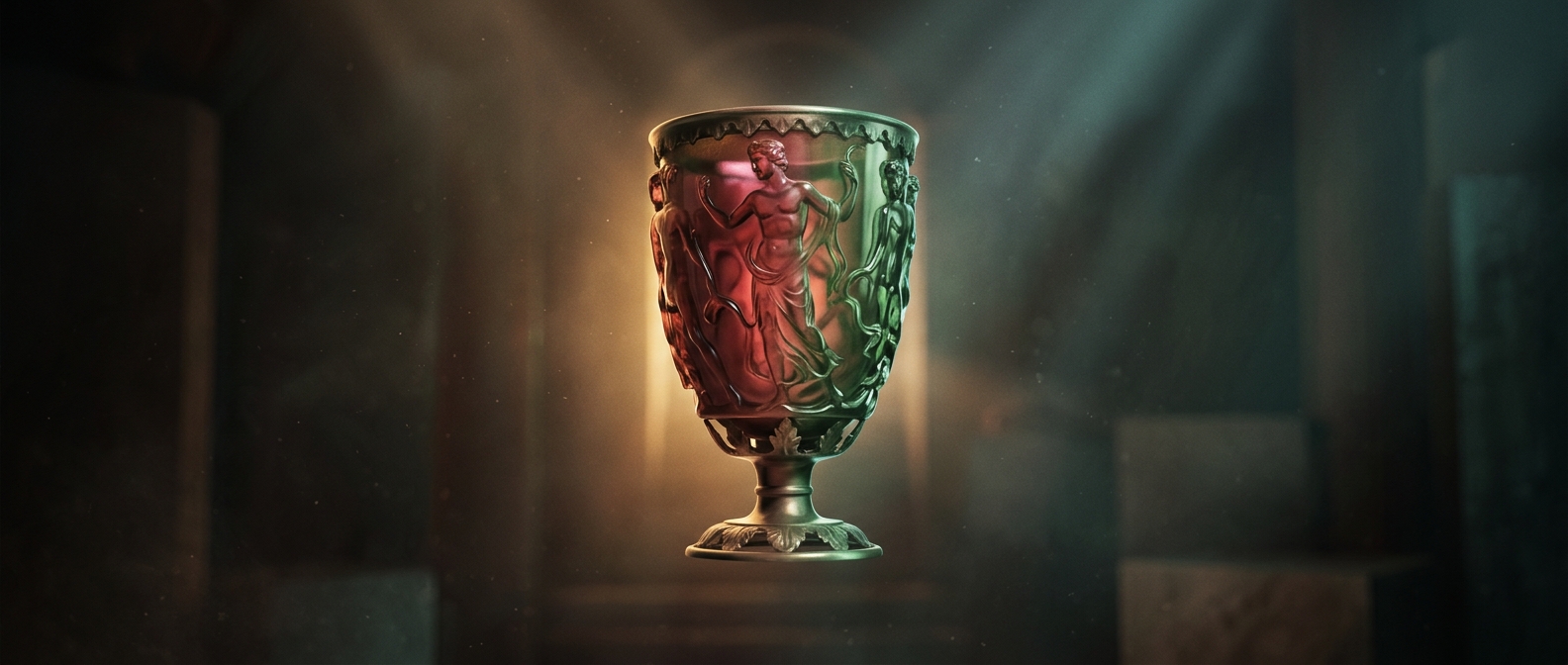
The cup’s shifting color comes from what happens when light meets particles far smaller than a grain of dust. Gold and silver embedded in the glass respond to incoming light by moving their electrons together. This collective motion—called a plasmon—absorbs and scatters some colors more strongly than others.
The result depends on the light’s path. Light passing through the glass loses much of its blue-green component, so the cup appears red. Light bouncing back from its surface is scattered differently, making the glass look green. The color change is not a painted coating switching shades; it emerges from the particles within the glass itself.
A craft effect, not a modern recipe
Roman glassmakers could produce this striking effect without knowing the modern physics behind it. Tiny metallic particles formed within the glass during its making, but the precise conditions that determine their size and distribution are difficult to control. Those details matter: change them, and the glass can look different or lose the dramatic contrast.
That makes the cup more than an ingenious optical trick. Its appearance preserves evidence of a material process that modern science can explain in detail, even though the ancient makers’ exact methods remain uncertain. A small shift in where a viewer stands—or whether light shines through the vessel or reflects from it—can make the same piece of glass seem to change color.