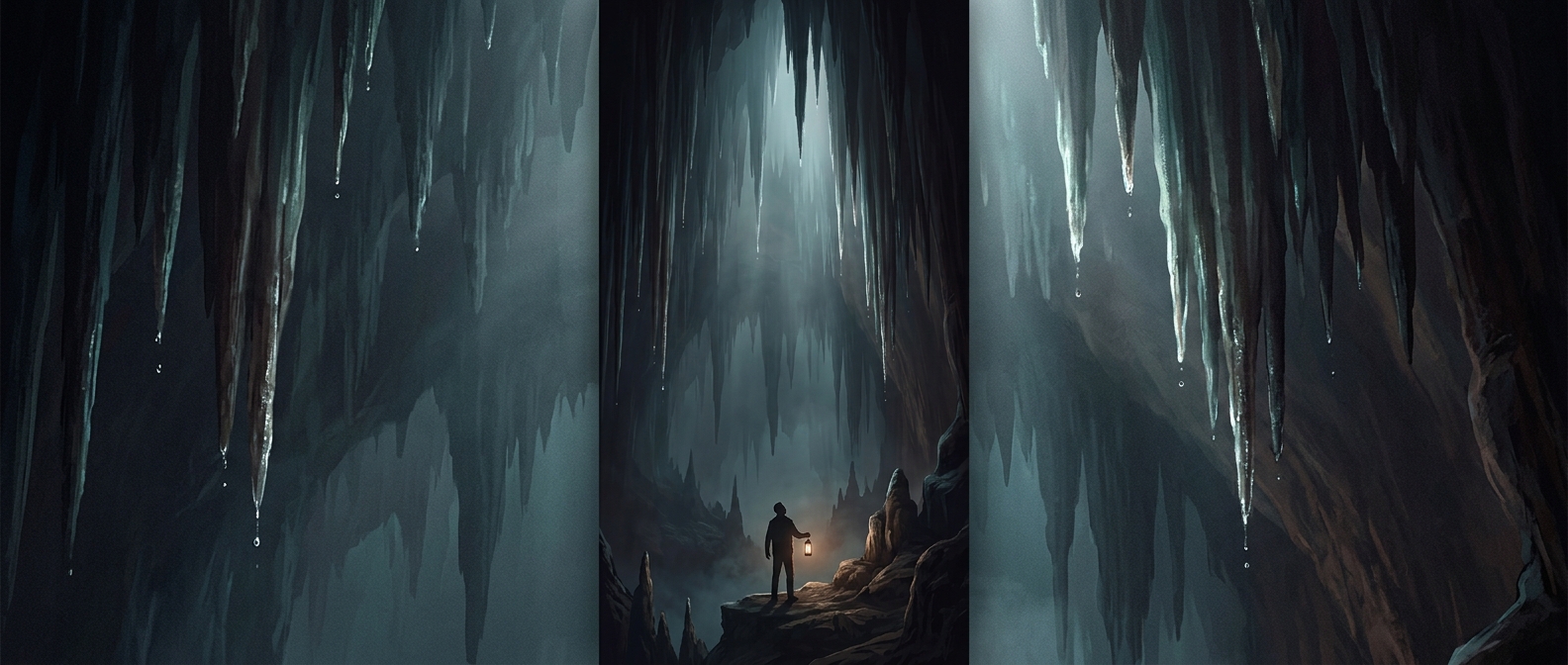
How a drip becomes a hanging mineral
The water that feeds a stalactite has usually traveled through cracks in limestone, dissolving a little of the rock along the way. It carries dissolved calcium and carbonate ingredients toward the cave ceiling. When a drop reaches open air, some dissolved carbon dioxide escapes. That changes the water’s chemistry, making it easier for solid calcium carbonate—the mineral in limestone—to form.
A thin mineral rim is left where each drop clings before falling. Repeated deposits extend that rim into a hollow, tapering tube. If water keeps flowing along the tube’s outside rather than through its tip, it can coat the surface and make the formation thicker or more irregular.
Why the growth points down
The ceiling fixes the starting point; gravity pulls the water and its dissolved minerals toward the floor. Each new deposit forms at the wet edge, so the stalactite lengthens from its hanging tip. Its shape also records the drip: a steady, concentrated flow tends to build differently from water that spreads across a wider patch.
The fallen drops may leave some of their remaining calcium carbonate on the cave floor, building a stalagmite upward. If the two formations eventually meet, they can form a continuous stone column—but until then, the stalactite’s mineral growth remains attached to the ceiling and extends downward.