He checked the wound, then went onstage
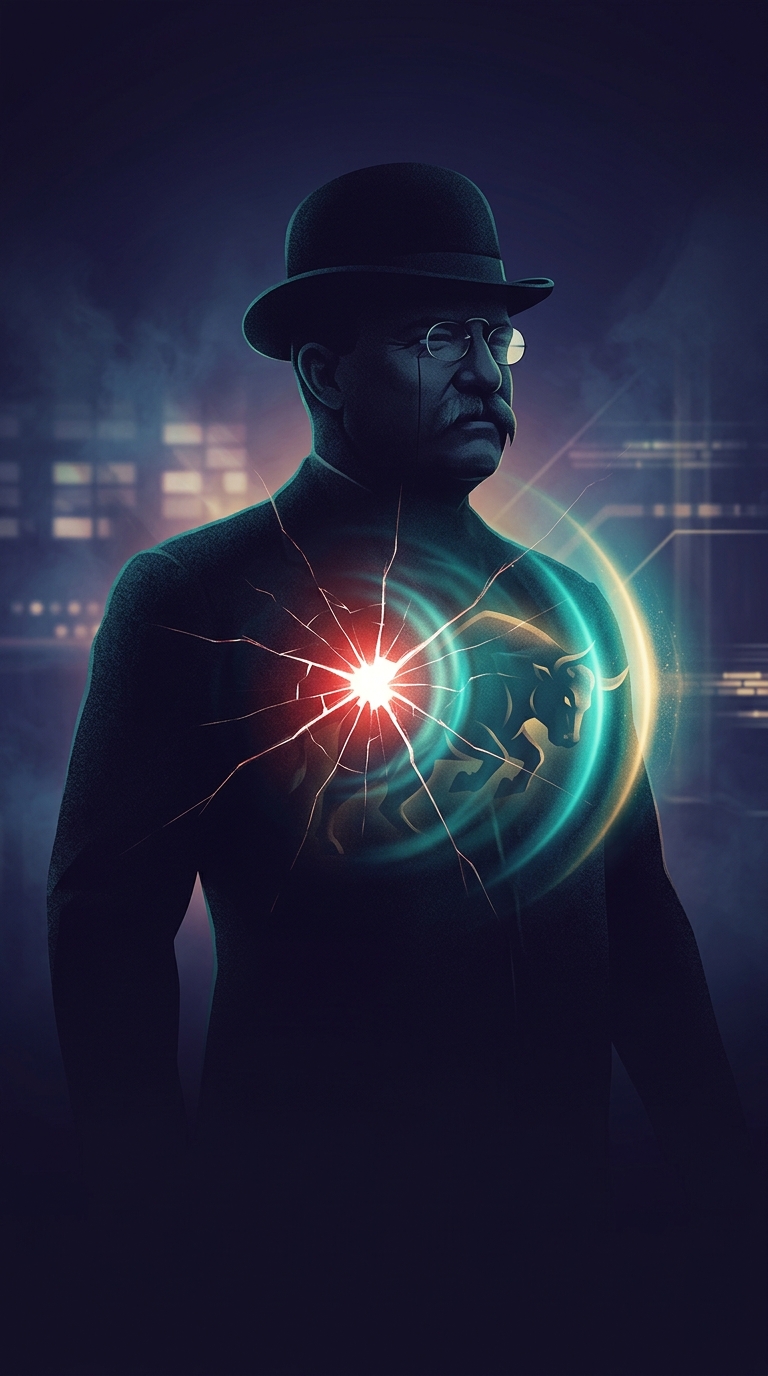
On October 14, 1912, while campaigning in Milwaukee, Theodore Roosevelt was shot at close range by John Schrank. The bullet struck Roosevelt in the chest, but a thick bundle of folded speech pages and the metal case holding his eyeglasses slowed it. It still entered his body and lodged in his chest muscle; it did not reach his lung.
Roosevelt reportedly judged that his lung was intact because he was not coughing blood. Rather than leave immediately for medical care, he decided to deliver his speech. He spoke for roughly 80 minutes, beginning by telling the crowd he had been shot. His composure was striking, but he was not unharmed: the bullet remained in his chest.
The papers changed what the bullet could do
The speech manuscript was not armor in any dependable sense. It happened to be folded thickly in Roosevelt’s breast pocket, and the eyeglass case added another layer. Together, they absorbed some of the bullet’s force, helping turn a potentially fatal wound into one that could be treated without removing the bullet.
After the speech, Roosevelt went to the hospital. Doctors decided that taking the bullet out posed more danger than leaving it where it was, so it remained in his body for the rest of his life. The episode’s famous toughness had a very physical assist: a pocketful of paper helped keep the shot from reaching a vital organ.