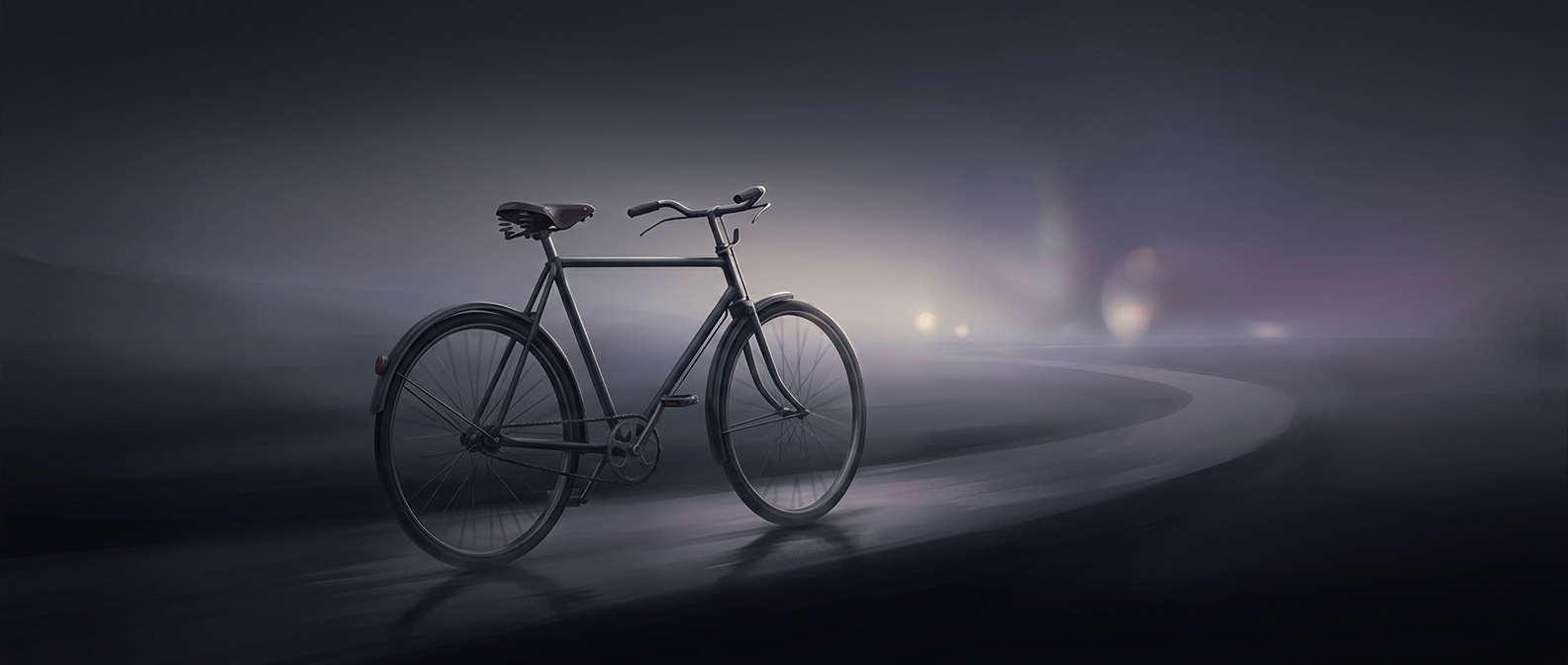
How a rolling bicycle can catch a lean
A bicycle does not need a rider actively steering every moment to remain upright. If it is already moving and begins to tip, its front end can turn in a way that curves the bike’s path beneath the leaning frame. That change in direction helps keep the wheels under the bicycle rather than letting the frame continue falling sideways.
The steering geometry helps shape this response. On many bicycles, the front wheel’s contact point trails behind the point where the steering axis would meet the ground. This offset, called trail, helps the front wheel align with its direction of travel and influences how the bike steers when it leans. The frame, fork, wheels, and their distribution of mass all affect the result.
More than spinning wheels
A spinning wheel resists changes to the direction of its rotation, a gyroscopic effect that can influence the bicycle’s motion. But it is not a single, sufficient explanation for self-balancing. The steering response and the motion of the bicycle as a whole matter too; different combinations of wheel size, frame geometry, and component masses can produce different behavior.
At a suitable speed, these effects can work together: a small lean prompts a steering change, the bike follows a curved path, and the resulting motion can reduce the lean. The sequence is dynamic, not a mechanical lock that holds the bicycle upright in every situation. Slow down, start from an unfavorable position, or disturb the bike strongly enough, and it may still topple.
That is why a riderless bicycle can roll upright for a while but cannot simply balance while standing still. Its stability depends on motion—and on the particular bicycle’s design.