Compatibility, Not a Catalog of Sexes
In Schizophyllum commune, “mating type” describes whether two fungal individuals can cooperate reproductively—not whether they belong to one of thousands of bodily sexes. Compatibility is controlled by two genetic regions, often called mating-type loci. Each comes in many versions, and a partner must carry versions different from its own at both regions for the pairing to be fully compatible.
That arrangement is sometimes called a tetrapolar mating system: the two loci act as separate compatibility checks. The many possible pairings of their variants produce more than 23,000 distinct mating types.
What Happens When Two Fungi Match
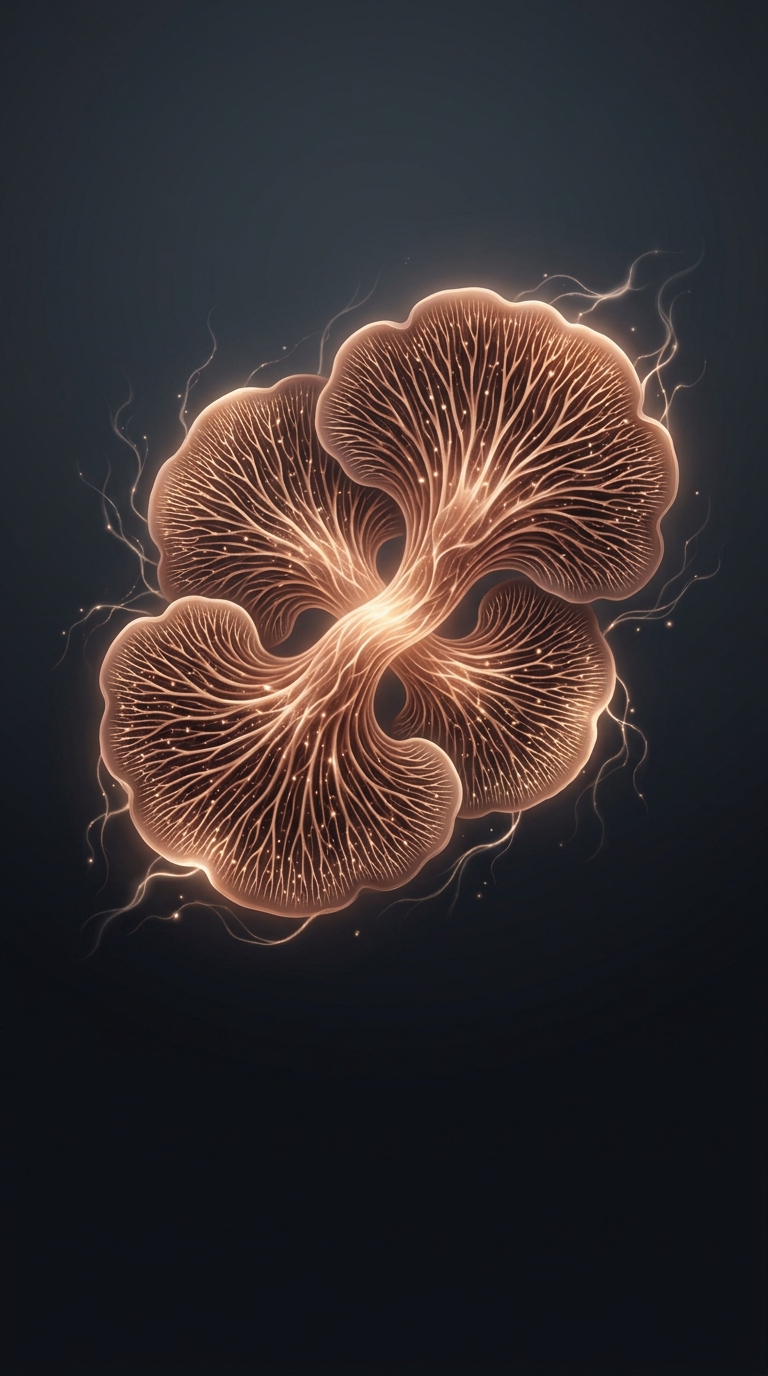
The fungus grows as a network of fine threads called hyphae. When compatible hyphae meet, they can fuse and exchange cellular contents. The result is not an immediate blending of all their genetic material: in the reproductive mycelium, cells typically maintain two genetically distinct nuclei side by side. This stage can later produce the structures that make spores.
The mating genes help determine whether that partnership can proceed. Their products recognize differences between potential partners and trigger the changes needed for the joined fungal network to develop reproductively. A genetic mismatch at either compatibility check can prevent that full progression.
Why So Many Combinations Matter
A small menu of mating types would make it more likely that two nearby individuals shared the same type and could not pair successfully. With thousands of combinations, a fungus has a much better chance of encountering a compatible neighbor—even when its local population is limited.
The striking point is that fungal reproduction can be organized around recognizing genetic difference, rather than around a few familiar sex categories. In a patch of S. commune, a potential partner’s compatibility is written in two highly varied genetic addresses.