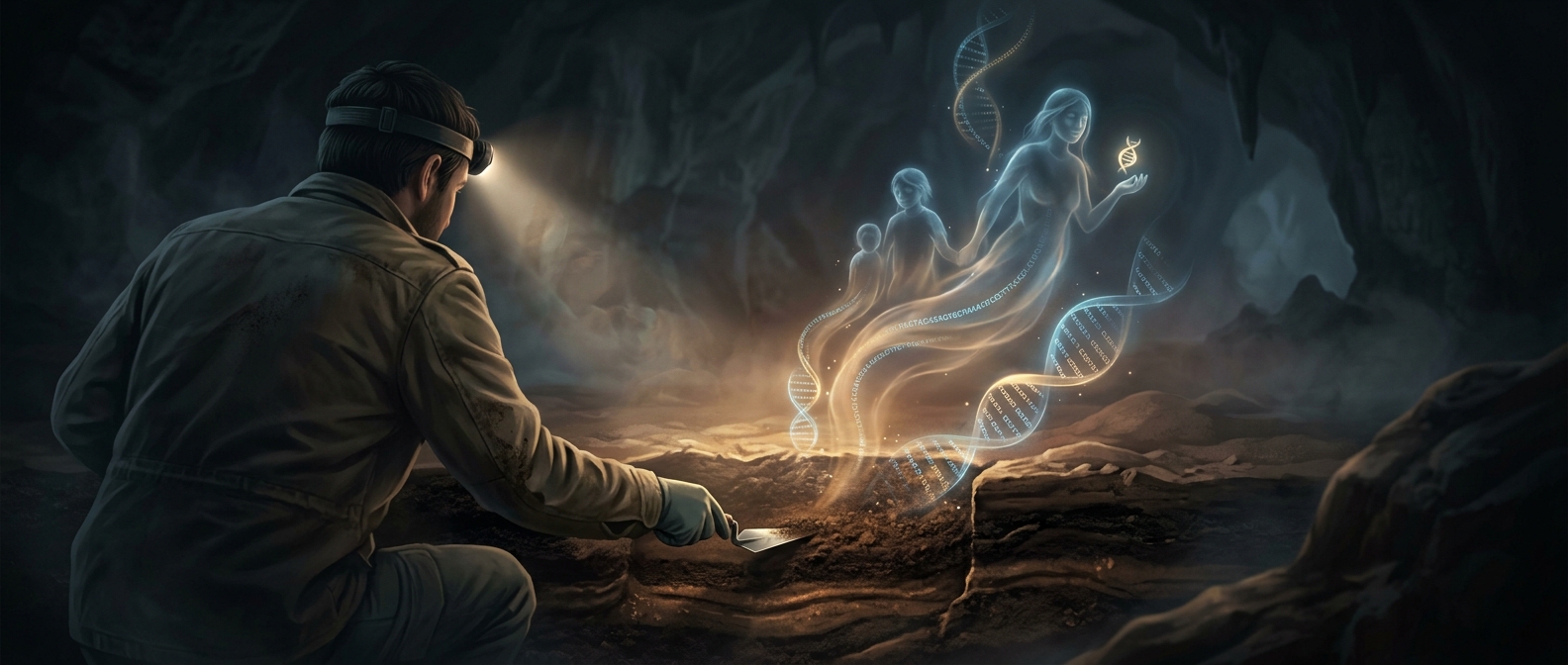
How a cave floor becomes a genetic archive
People leave microscopic material as they move through a place: skin cells, hair, saliva, and other biological traces. In a cave, some of that material settles into dust and sediment. DNA can attach to mineral grains, which may shield it from water and other conditions that would otherwise speed its breakdown. Cool, sheltered environments can help preserve fragments for long periods, though preservation varies from one layer of sediment to another.
Reading DNA from a handful of sediment
Researchers collect small samples from carefully chosen layers and extract whatever DNA remains. The fragments are often short and damaged, so the task is not to recover an intact genome. Instead, scientists sequence many fragments and compare their patterns with reference DNA from known human groups. A match can indicate that a group such as Neanderthals or Denisovans contributed biological material to that sediment.
The surrounding layer matters. Sediment builds up over time, so its position can help place a trace in sequence with other evidence in the cave. But layers can be disturbed, and DNA can move or be introduced during excavation. Researchers therefore have to consider contamination and the possibility that a genetic signal does not neatly represent one visit at one moment.
Evidence without a skeleton
Bone and teeth preserve a durable record, but they are not the only way to detect ancient people. Sediment DNA can reveal a human presence even when no identifiable remains survive. That changes what a cave’s history can include: a layer that looks like ordinary dirt may retain evidence of visitors whose bodies left no trace that archaeologists can see.