How a bacterial RNA switch reads its surroundings
A bacterium does not always need to build a protein sensor to detect a change in its environment. In some genes, the RNA made from the gene can do the sensing itself. These RNA control elements are called riboswitches: part of the RNA binds a particular small molecule, while another part helps determine whether the gene will be used.
One binding event changes the RNA’s shape
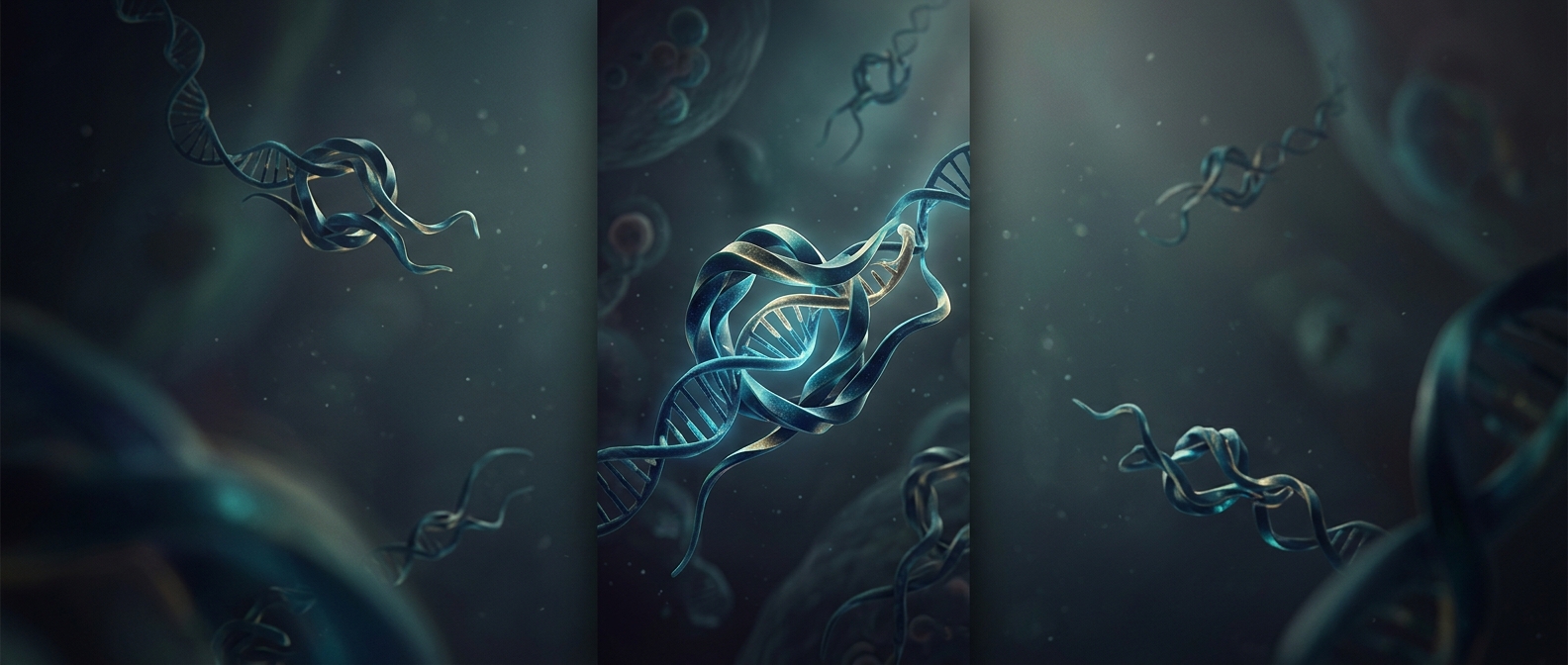
RNA is a flexible strand that can fold back on itself. When the matching nutrient—or a molecule the cell makes from it—fits into a pocket in the riboswitch, chemical attractions hold the two together. That contact favors one RNA shape over another. The molecule is not sending a message through a chain of proteins; its binding directly shifts the RNA’s structure.
The new fold can affect what happens next in gene expression, the process by which information in DNA is used to make a useful product. For example, a riboswitch in a bacterial gene can form a structure that causes RNA copying to stop early. With less complete messenger RNA—the working copy used to make a protein—the cell produces less of the gene’s product.
A feedback loop built into the RNA
This arrangement can regulate the supply of a nutrient or the molecules needed to make it. When the relevant compound is scarce, the RNA is less likely to bind it, so the gene can remain active. As the compound becomes plentiful, binding becomes more likely, and the altered fold can reduce further production. The cell thus uses the product’s availability to help decide whether to keep making it.
Because the sensor and control element are parts of the same RNA, the response can begin as that RNA is being made. A small molecule can change gene activity simply by stabilizing a different fold in the RNA itself—an economical form of control that lets bacteria adjust production without a separate protein messenger.