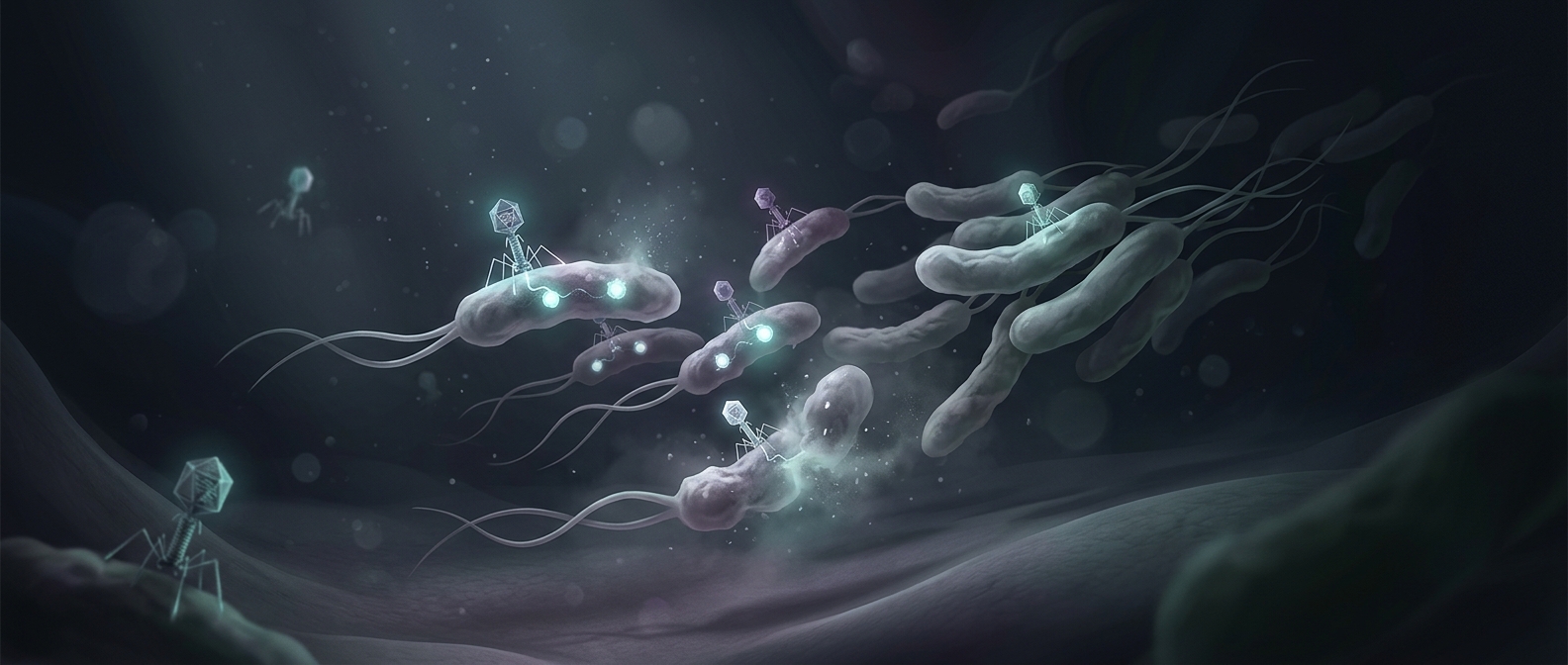
DNA can move without a parent-and-offspring link
A plasmid is a small piece of DNA that exists apart from a bacterium’s main chromosome. Many plasmids are circular, and some carry genes that can help a cell survive particular conditions—for example, genes that confer resistance to an antibiotic.
When a plasmid-carrying bacterium meets a compatible recipient, it can transfer a copy directly. In a common process called conjugation, the cells make temporary contact; DNA passes from one cell to the other, where the recipient can maintain the plasmid and use its genes. The transferred DNA is copied, so the donor generally keeps its own plasmid too.
Why the route matters
Inheritance through cell division follows a lineage: a cell passes its DNA to its descendants. Plasmid transfer creates another route. A bacterium can acquire a useful gene from a neighboring cell that is not its ancestor, then pass the plasmid on as it divides or, in some cases, transfer it again.
That means a trait can spread through a bacterial community faster, or along different branches, than reproduction alone would allow. The transfer is not automatic: cells must be compatible, and a new gene helps only if the recipient can keep and use it. But when those conditions are met, resistance genes can move between bacterial lineages—making the spread of a trait less like a family tree and more like a handoff between neighbors.