How selecting for calm foxes changed more than behavior
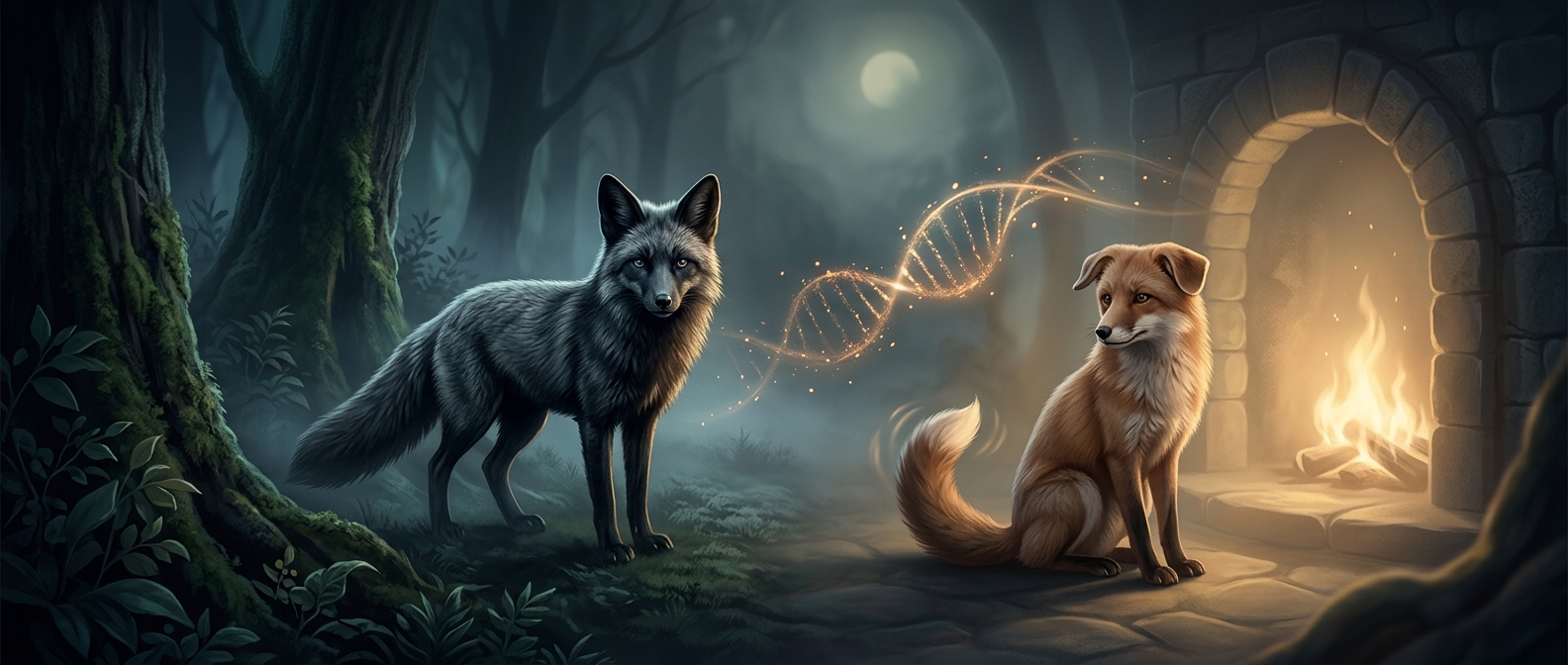
In a long-running breeding experiment, researchers chose foxes that were less fearful and aggressive around people, then bred those animals. The goal was temperament—not a fox that looked like a dog. But as the generations passed, some foxes developed traits often associated with domestic animals, including floppy ears and patches of white in their coats.
Why behavior and appearance can shift together
An animal’s temperament is shaped by many genes and by development. Genes that influence fearfulness may also affect other parts of the body, or the selected foxes may carry nearby genetic variants that tend to be inherited together. When breeders repeatedly favor one behavioral trait, these linked effects can become more common too. This is called correlated selection: choosing for one feature can indirectly shift another.
The changes are not evidence that foxes consciously became more doglike, nor that every tame fox developed the same appearance. Rather, selection altered which animals reproduced, and traits that accompanied tameness accumulated in part of the population.
A visible record of domestication
The foxes’ changing ears and coats made an otherwise hidden process easier to see. Domestication is not simply an animal learning to tolerate people; across generations, selection can reshape a population’s behavior and, as a consequence, its physical traits. A breeder choosing the calmest fox may therefore influence what its descendants look like—even without ever selecting for a particular ear shape or coat pattern.