How a Thin Water Film Changes the Ride
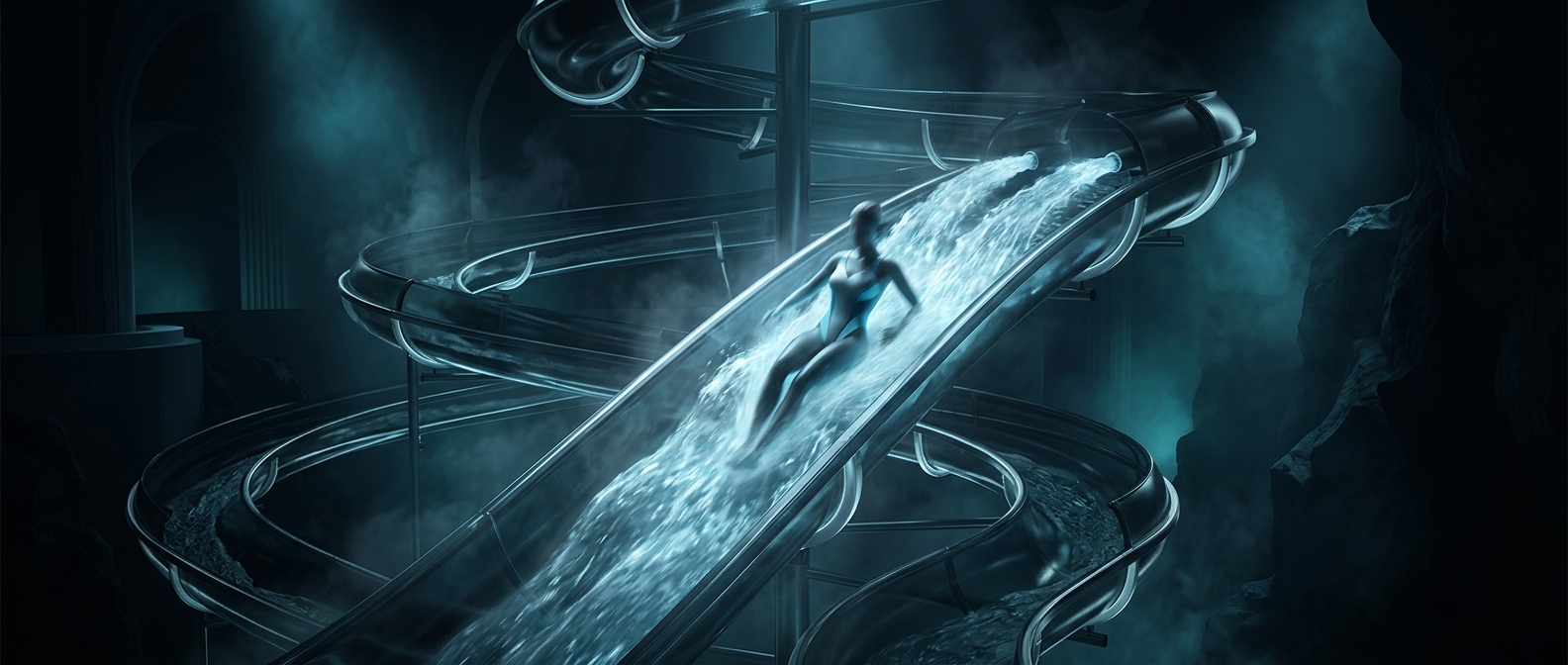
On a dry slide, skin would press directly against the surface, and tiny rough spots would resist that motion. Flowing water gets between the rider and the slide, so the two surfaces make less direct contact. The result is less rubbing and a smoother descent—not a friction-free one. Water itself also resists motion, especially when it is moving against the rider.
The water has to keep arriving as the rider passes. A thin film can be pushed aside under pressure, so slide systems send a continuing flow down the channel to wet the path ahead and replenish what the rider displaces. The fiberglass shape guides both the rider and the water through bends and dips, while gravity supplies the force that carries the rider downhill.
Why the Flow Must Be Balanced
Too little water can leave patches where the rider rubs more directly against the slide. More water is not automatically faster: a deeper or more turbulent flow can create additional drag or make the ride feel less predictable. Designers therefore have to match the water supply to the slide’s slope and shape, keeping the surface reliably wet without turning the ride into a fast-moving pool.
At the bottom, the water and rider enter a runout area that slows the ride and collects the flow. That makes the slide part of a continuous system: water lubricates the descent, then is gathered and sent back through the attraction. The slick feeling comes not from a magically slippery surface, but from keeping a moving layer between the rider and the fiberglass.