What a phone does when you pinch to zoom
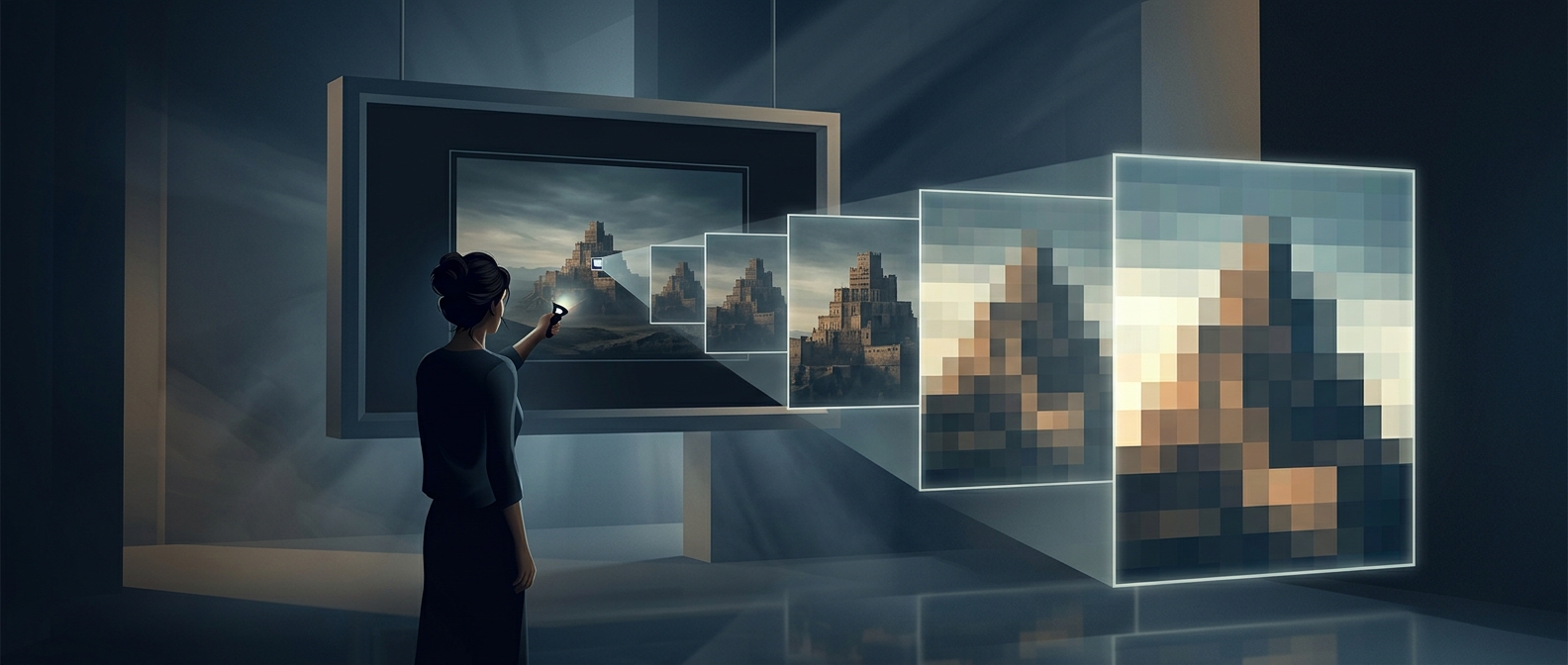
A camera sensor records a grid of light measurements called pixels. With digital zoom, the camera uses a smaller area of that grid—the part showing the subject—and scales it up to fill the screen or image. The subject looks larger because it occupies more of the frame, not because the camera gathered a closer, more detailed view.
Scaling requires the camera to make the cropped image fit the original dimensions. It can enlarge existing pixels or estimate intermediate ones, a process called interpolation. Those estimates smooth the image but cannot restore fine detail that the crop left out. At high zoom, edges may look blocky or soft, and small textures can disappear.
Why optical zoom holds more detail
An optical zoom changes the lens so the subject projects larger onto the sensor before the image is recorded. That puts more sensor pixels on the subject, preserving more of its detail than simply enlarging a crop. Moving closer can have a similar advantage when it is practical.
Some cameras also use software to combine multiple frames or sharpen an enlarged image. These methods can make a zoomed picture look clearer, especially at modest magnification, but they work with the light and detail the camera captured. If a distant sign’s letters never occupied enough pixels in the original image, zooming afterward cannot reliably make them legible.