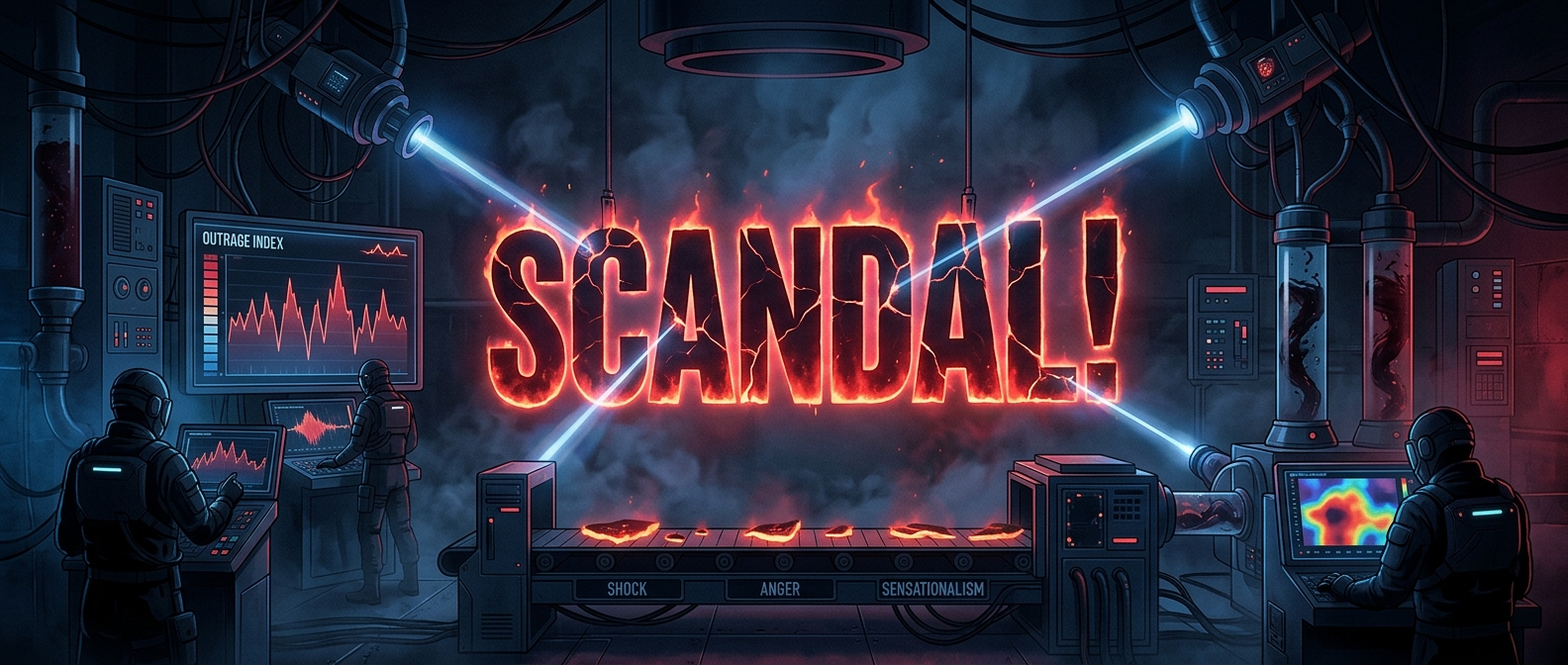
How a Gas-Station Photo Becomes a Misery Story
A person squinting in bright light, looking down at a phone, or concentrating on a pump can appear unhappy in a single photograph. But a still image captures only one instant; it cannot show what happened just before or after, or what the person was thinking. At a gas station, the setting supplies an especially ordinary backdrop, making the contrast with a celebrity’s public image easy to emphasize.
The Headline Supplies the Missing Plot
Entertainment coverage can turn that visual ambiguity into a story by pairing the picture with language about heartbreak, stress, or a life unraveling. The headline tells readers how to interpret the expression before they know anything about the errand. A routine stop becomes apparent evidence of a private emotional state.
That framing works because readers recognize the scene. Pumping gas is familiar, while celebrity coverage invites people to look for clues about lives they otherwise see only in polished appearances. A mundane moment can therefore feel revealing—even when the photograph itself establishes little beyond where the person was and what they were doing.
Why the Framing Sticks
The image and headline reinforce each other: the words make a neutral expression seem significant, and the expression makes the dramatic words feel plausible. The result is a small, shareable narrative built from a real picture but an uncertain interpretation. The memorable detail is not necessarily that a star looked miserable; it is how readily an ordinary face can be made to look like proof of a much larger story.