Why Uneven Focus Stretches a Point of Light
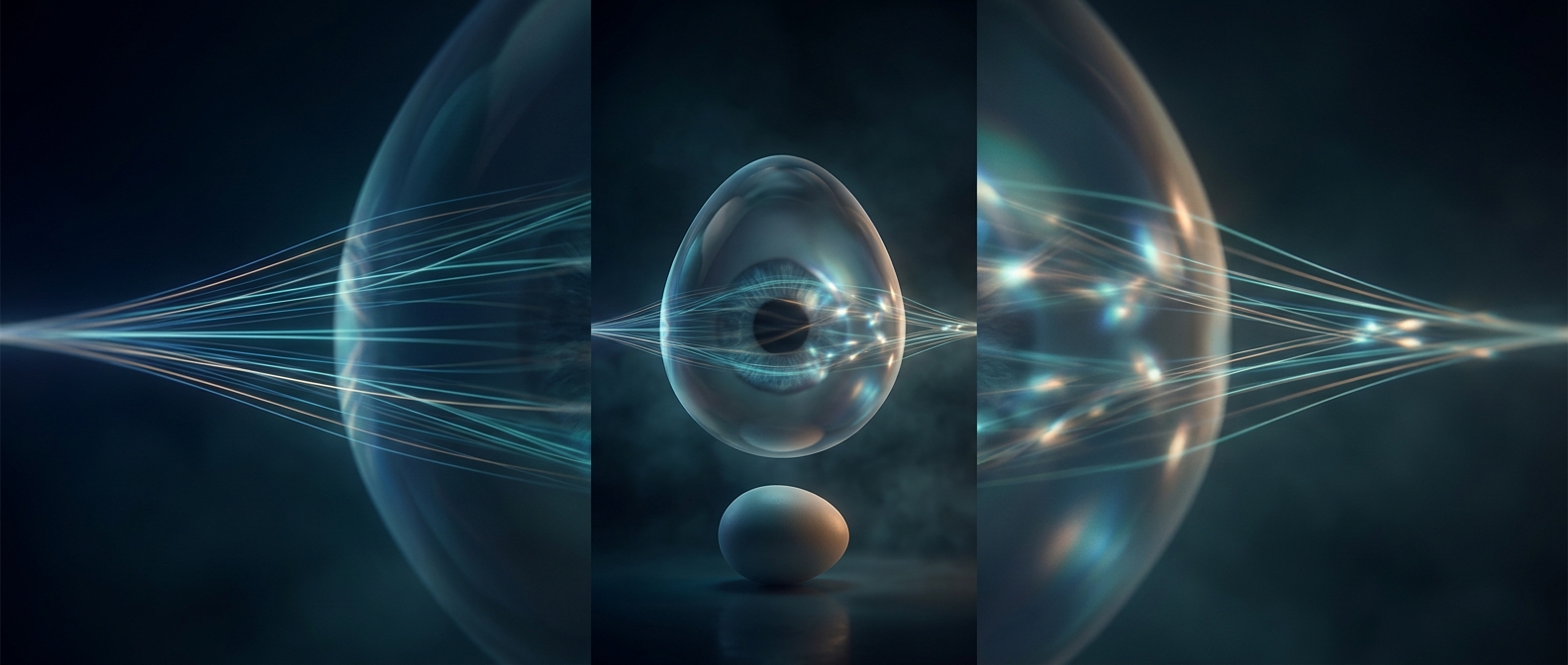
A crisp image depends on light from each point in the scene landing in a compact spot on the retina, the light-sensitive tissue at the back of the eye. With astigmatism, the cornea’s uneven curvature gives light different focusing power in different directions. Instead of meeting at one sharp point, rays may focus at different positions, leaving the image blurred or stretched.
Why Night Lights Become Starbursts
A distant lamp or headlight is close to a point of light, so its blur is easy to notice against a dark background. The eye’s unequal focusing can spread that point into lines or rays, creating a starburst effect. The streaks are not light physically radiating from the lamp; they are part of how the eye forms its image.
Astigmatism can affect vision at any distance, but bright lights make the distortion especially conspicuous. A similar focusing difference can also arise from the eye’s lens, though uneven corneal curvature is a common cause.
How Correction Helps
Glasses or contact lenses prescribed for astigmatism compensate for the eye’s directional focusing differences. By bending light in a tailored way, they help bring the image into clearer focus on the retina. The practical payoff is not just sharper letters: a light that once seemed to have rays can look more compact and defined.