A robot made tape storage searchable
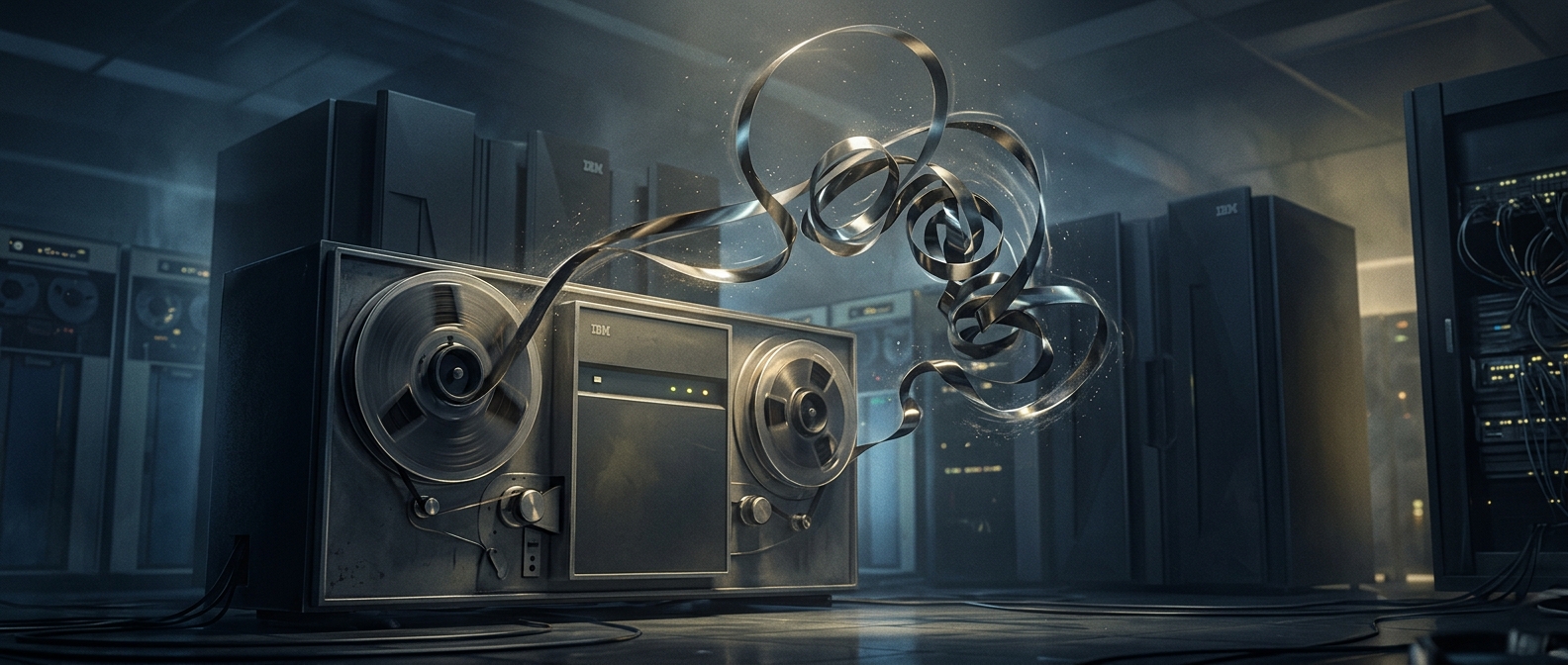
Magnetic tape is an economical way to hold large amounts of data, but ordinary tape drives read it in order: to reach a distant record, the drive may have to wind past everything before it. IBM’s “noodle picker” tackled that access problem by turning many separate tape stores into an automated system.
The machine’s arm selected a tape strip from a storage bin and carried it to a drum. There, the strip could be moved past a read head—the sensor that detects the magnetic pattern encoding the data. Afterward, the arm put it back. The robot did not make tape behave exactly like a disk; it fetched the right piece of tape so the system could read it without a person loading reels by hand.
The tradeoff behind the nickname
This design joined two different strengths: tape could store data compactly, while mechanical retrieval made a particular stored section available on demand. But access depended on a physical sequence—locate the strip, move it, read it, return it—so it involved noise, moving parts, and more complexity than simply consulting a stationary storage device.
That is what made the “noodle picker” memorable: it gave a computer a mechanical librarian, handling flexible magnetic strips one at a time. The unusual choreography was the price of making a medium normally read in sequence useful for a system that needed to fetch selected data.