The fax survives at the edges of digital medicine
A patient’s record may live in an electronic health-record system, but sending it to another clinic is a separate problem. The two offices may use different software, and a digital transfer works only when their systems can identify each other, agree on a format, and route the information to the right person. A fax number offers a simpler destination: send pages to the number the receiving office already uses.
That makes fax useful at the boundaries between organizations. Referrals, test results, and chart copies can move between clinics, hospitals, pharmacies, and insurers without building a new technical connection for every pair of institutions.
Familiar workflow beats a better tool that is not connected
Replacing fax is not just a matter of buying newer equipment. Staff need a reliable way to send records, confirm where they went, and fit the exchange into existing routines. A secure electronic portal may work well for one partner but be unavailable—or unfamiliar—to another. When a patient’s care depends on getting a document to that office, the established route can be the practical choice.
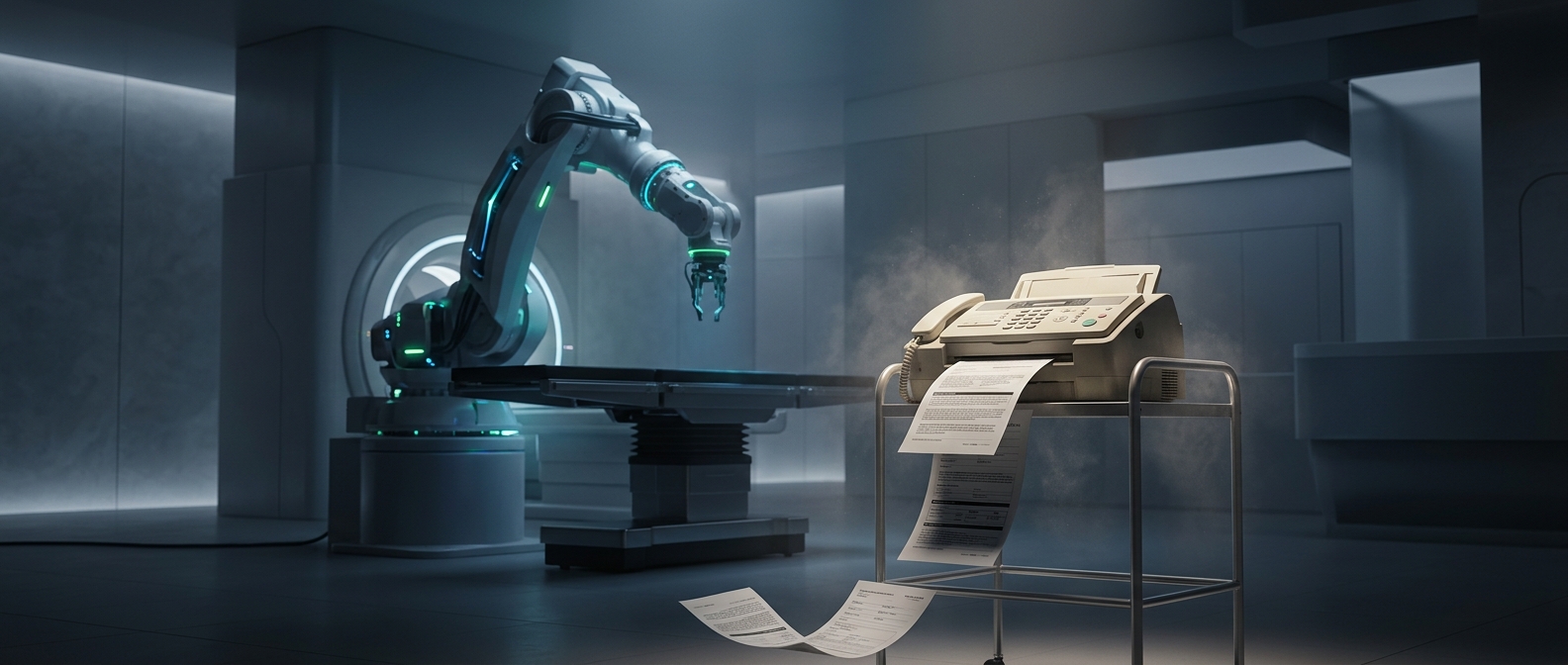
Fax also does not always mean a paper machine humming in a back room. Many offices use digital fax services that send and receive documents electronically while preserving the familiar fax-number workflow. The old interface can persist even when the underlying equipment has changed.
The cost of compatibility
Fax makes it possible to exchange information across mismatched systems, but it does not make the information easy to use. A received document may need to be checked, scanned, or entered into the recipient’s electronic record. Staff can still face misdirected pages, poor image quality, and extra handling—steps that a well-connected digital exchange could avoid.
So the fax remains not because it is the most capable way to share a chart, but because it is a widely recognized fallback between organizations that have not fully connected. The paper-like handoff can bridge a digital gap, while leaving people to do the work of joining the records on the other side.