How a Painting Became a Place
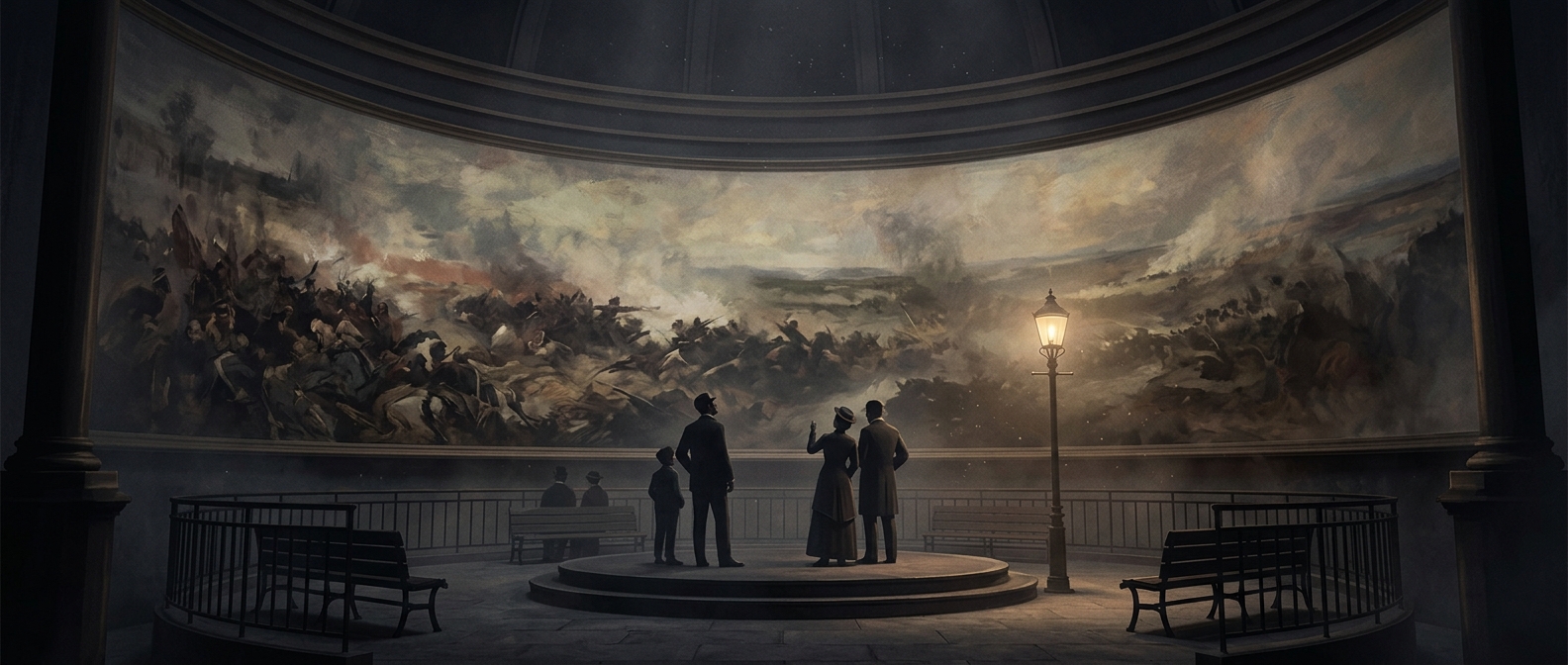
A panoramic canvas was designed to surround its viewers, not hang in front of them. From a platform near the center, an audience could look in every direction and see a continuous scene—perhaps a battlefield or a city—without the frame of a conventional picture interrupting the view. The arrangement changed the basic task of looking: instead of studying a painted scene from outside, visitors stood within its apparent space.
That effect depended on controlling what the audience could see. The canvas filled the surrounding field of vision, while the central viewing position helped its carefully arranged perspective read as a coherent landscape. The painting itself stayed still; its apparent scale and depth did the work of making the setting feel expansive.
The Show Around the Canvas
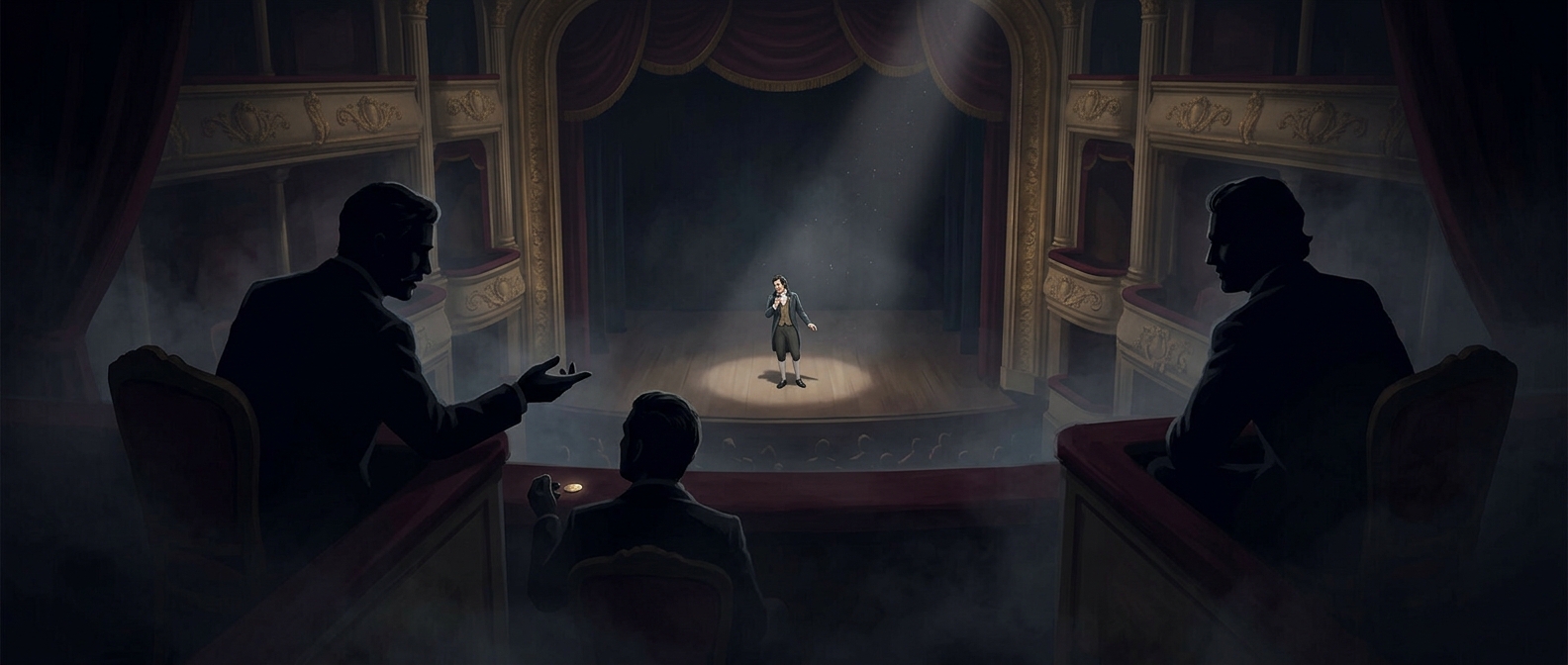
Lighting and music supplied what the image could not. Theatrical light could make parts of the scene more vivid or shift its mood, while a live orchestra gave the spectacle a changing emotional pace. A battle could feel tense; a distant city could seem grand or mysterious. These additions guided attention and feeling much as stage effects and a score would later do in other forms of entertainment.
The result was a hybrid: part painting, part theater, and part public attraction. Its central platform offered a practical advantage as well as a dramatic one—many people could share the same sweeping view at once. The canvas did not need to move to transport its audience; it only needed to close around them.