Turning a Swing Into a Score
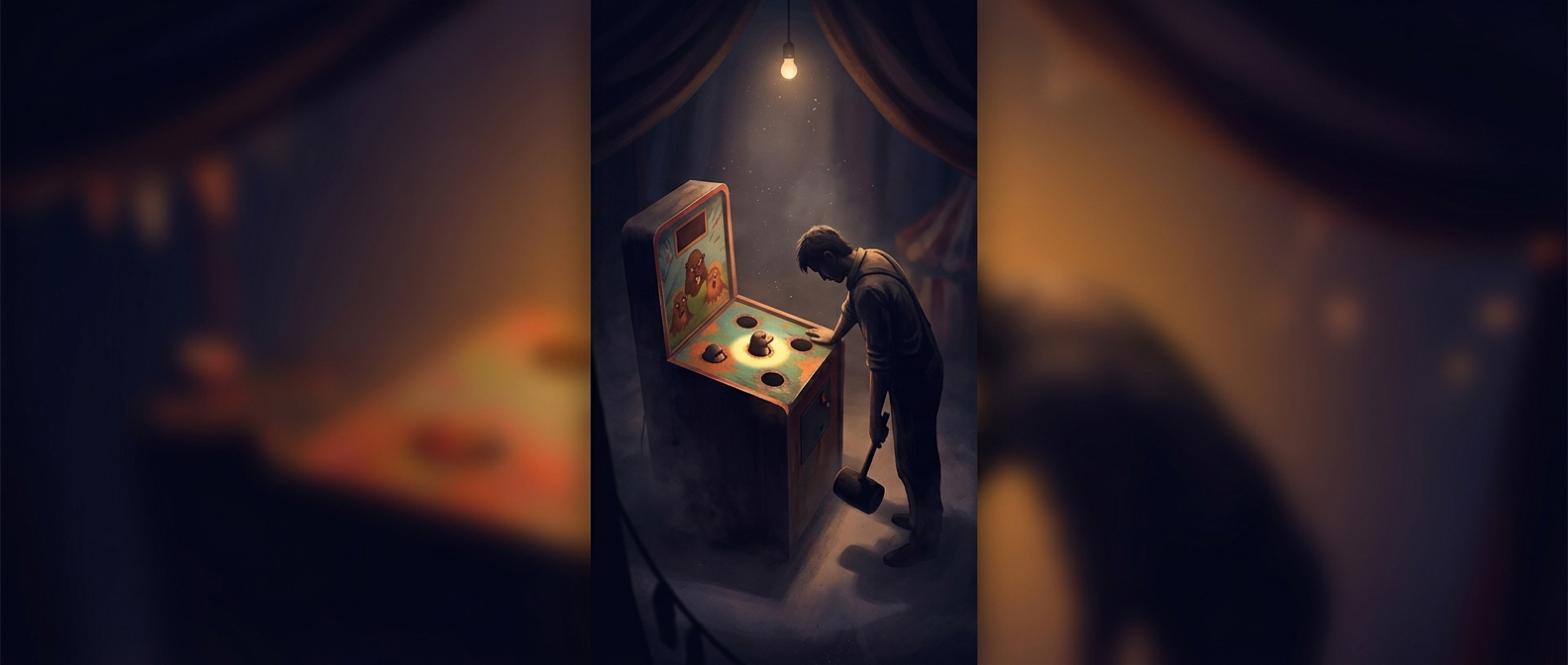
The idea behind Whac-A-Mole was reportedly practical: give restless arcade patrons something they could hit without sending them after the machines. Instead of striking a cabinet, a player swings a mallet at padded targets that pop up from holes. The blow lands on the game, not the equipment around it.
That small change redirects force. A swing that might otherwise be destructive becomes a move with an immediate, harmless result: hit a mole, earn a point. The player gets the physical release of striking something, while the machine turns that action into part of the challenge.
Why the Game Keeps Its Grip
The targets appear and disappear quickly, so players have to watch, react, and swing again. Misses are built into the rhythm; there is always another mole to chase. That makes the mallet feel less like a tool for smashing and more like a controller—one that works through a satisfying, physical motion.
The design also gives the arcade operator a useful tradeoff. Players can hit hard, but the intended target is built to take repeated blows, while the cabinet itself remains out of the swing path. Whac-A-Mole channels the urge to bash into a game mechanic: the same force that could threaten a machine becomes the reason to keep playing.